Chao Dau Xanh, Vietnamese Mung Bean Congee
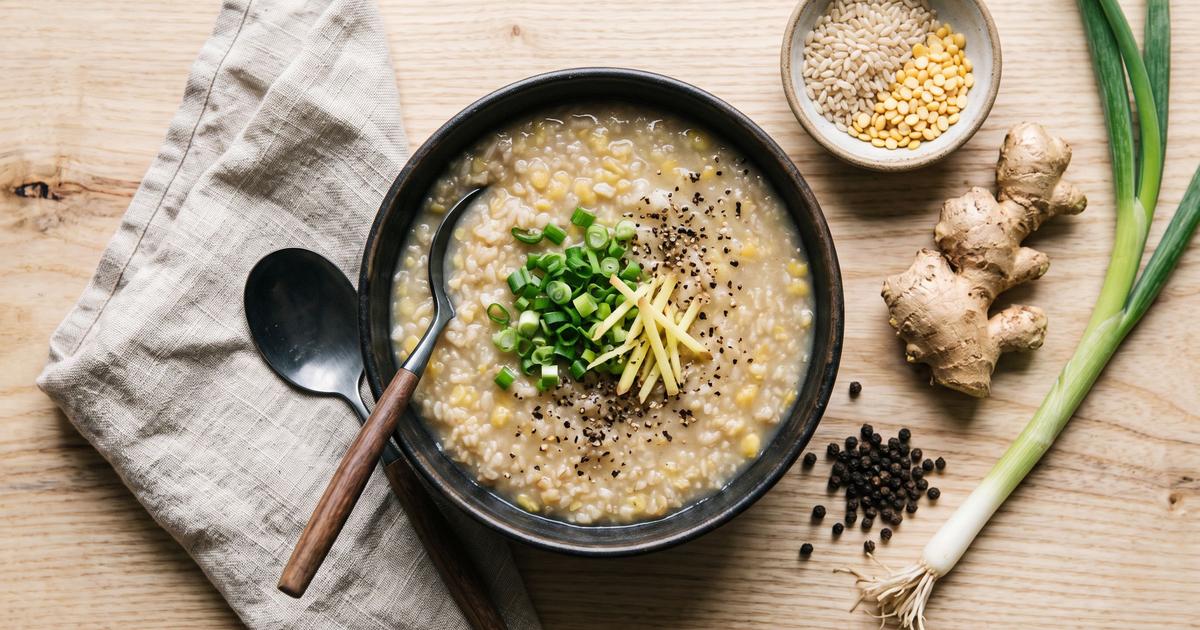
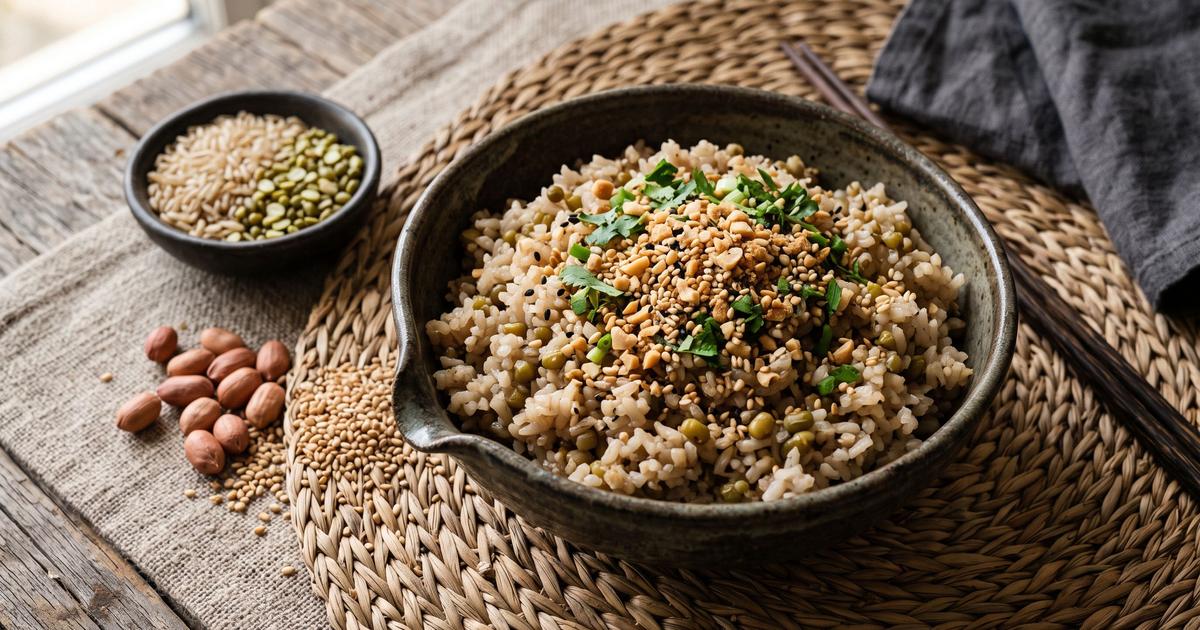
Chao is the Vietnamese rice porridge eaten for breakfast, for recovery, and for comfort, and the mung bean version, chao dau xanh, is among the plainest and most nourishing. Skinless mung beans dissolve into the rice as it cooks, thickening the bowl and adding real protein, so it holds you the way plain rice congee does not. It needs almost nothing: ginger simmered in from the start, a spoon of tamari for the savory depth that fish sauce usually provides, and white pepper and scallion at the table. The technique is only patience and a wide ratio of water to grain, plus the occasional stir to coax the starch out. Make a big pot; it keeps for days and thickens as it sits, so loosen it with a splash of water when you reheat.
Ingredients
- 3/4 cup long grain brown rice, rinsed
- 1/2 cup Mung beans, rinsed
- 1 tbsp Ginger, cut into thin coins
- 1 tbsp Low-sodium tamari
- 3 Scallions, thinly sliced
- 1/2 tsp White pepper, freshly ground
Method
- Combine the rice, mung beans, and ginger with 8 cups (1.9 L) water and bring to a boil, then drop to a low simmer. The large ratio of water to grain is what makes congee: the starch has room to loosen out of the rice and thicken the whole pot.
- Simmer uncovered 40 to 45 minutes, stirring every so often and scraping the bottom so nothing catches. The stirring rubs the softening grains against each other and releases their starch, which is what turns a thin porridge creamy without any dairy.
- When the rice has burst and the mung beans have collapsed, stir in the tamari. Adding it at the end keeps its savory depth forward; cooked in from the start it would just fade and you would reach for more salt.
- Ladle into bowls and finish each with scallion and a good hit of white pepper. White pepper is the warm, slightly funky note that reads as Vietnamese here, and the raw scallion cuts the softness of the porridge.
Nutrition
Estimated per serving: 210 calories, 9 g protein, 5 g fiber, 190 mg sodium. Computed from USDA FoodData Central reference values for the main ingredients. This is an approximation, not a laboratory measurement. How these are computed.
Cost per serving is estimated from US national-average retail prices for cheap staple forms, using BLS dried-bean prices and USDA produce prices. Prices vary by store and season, so treat it as a guide, not a receipt. How this is computed.