Xoi Bap, Vietnamese Sticky Rice with Corn
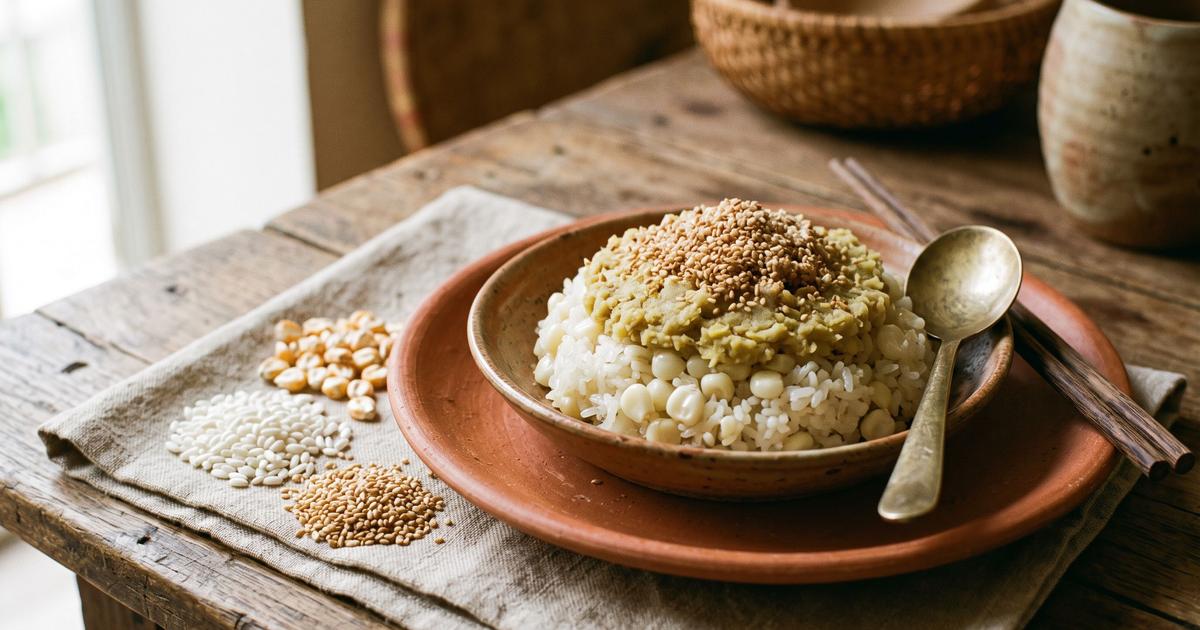
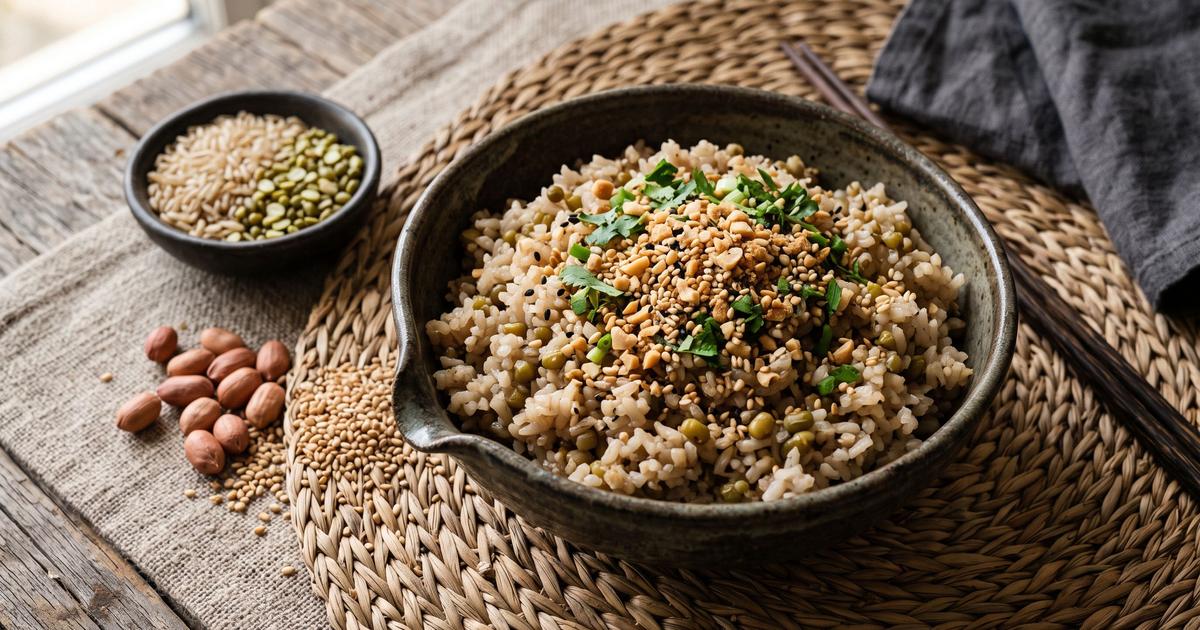
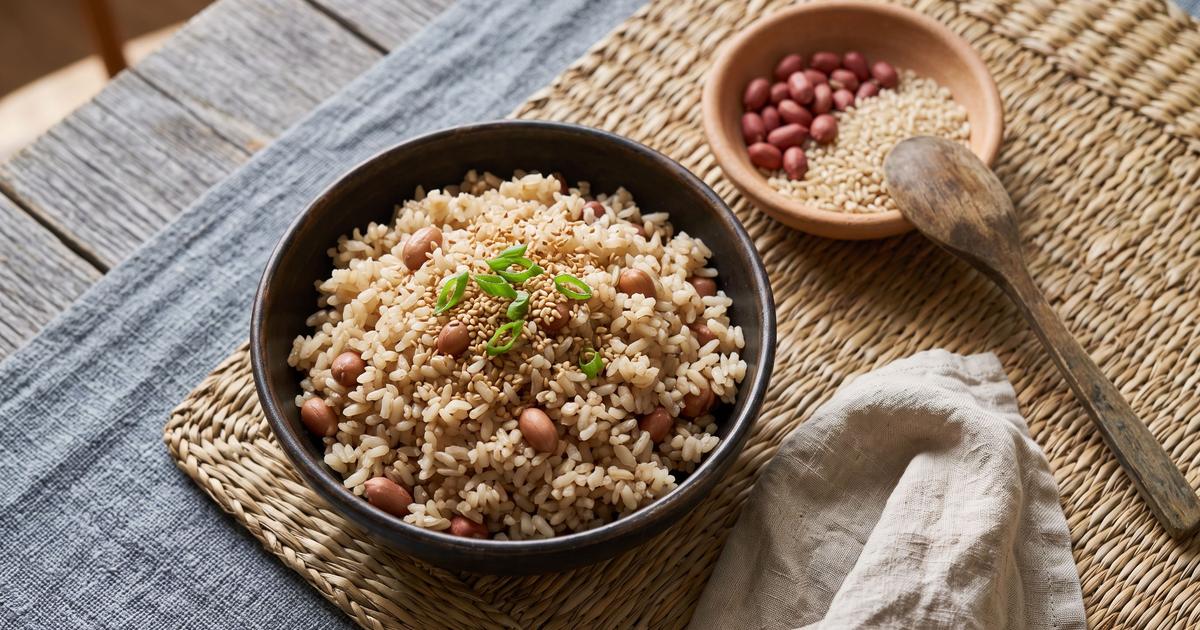
Xoi bap is a cold-weather breakfast sold from baskets on Hanoi street corners: sticky rice cooked with soft yellow corn, packed into a banana leaf, and topped with mashed mung bean, fried shallots, and a sweet sesame dust. It is filling, cheap, and quietly nourishing, built from three whole starches and a scatter of seeds. This version keeps the corn as hominy and the mung bean crown, trades white glutinous rice for chewy short-grain brown, and sweetens the sesame topping with dates instead of sugar, so a substantial breakfast comes together from pantry staples.
Ingredients
- 1 cup short grain brown rice, soaked 4 hours, drained
- 1 1/2 cups Hominy, drained and rinsed
- 1/2 cup Mung beans, soaked overnight, drained
- 3 tbsp Sesame seeds, toasted
- 3 Deglet noor dates, pitted, finely chopped
Method
- Steam the soaked short-grain rice with the hominy over simmering water for about 35 minutes, until the rice is tender and clings in sticky clumps. Short-grain brown rice gives the cling that white glutinous rice normally would, and keeps its bran, while the hominy is the bap: soft, split field corn that is the whole identity of this xoi.
- While it steams, simmer the mung beans in water until completely soft, about 25 minutes, then drain well and mash to a stiff, dry paste. This golden mash is the traditional crown of xoi bap, adding protein and a soft counterpoint to the chewy rice.
- Make the topping: in a mortar or small processor, grind the toasted sesame with the chopped dates to a coarse, sweet rubble. This stands in for muoi vung, the sesame-sugar-salt that finishes the bowl, with dates carrying the sweetness and no salt needed.
- Mound the sticky rice and corn into bowls. Spread a layer of the mung bean mash over each, then shower generously with the sesame-date crumble. Eat warm, pressing the topping down so every spoonful catches some.
Nutrition
Estimated per serving: 320 calories, 9 g protein, 7 g fiber, 15 mg sodium. Computed from USDA FoodData Central reference values for the main ingredients. This is an approximation, not a laboratory measurement. How these are computed.
Cost per serving is estimated from US national-average retail prices for cheap staple forms, using BLS dried-bean prices and USDA produce prices. Prices vary by store and season, so treat it as a guide, not a receipt. How this is computed.