Dau Dua Xao Toi, Vietnamese Garlic Long Beans
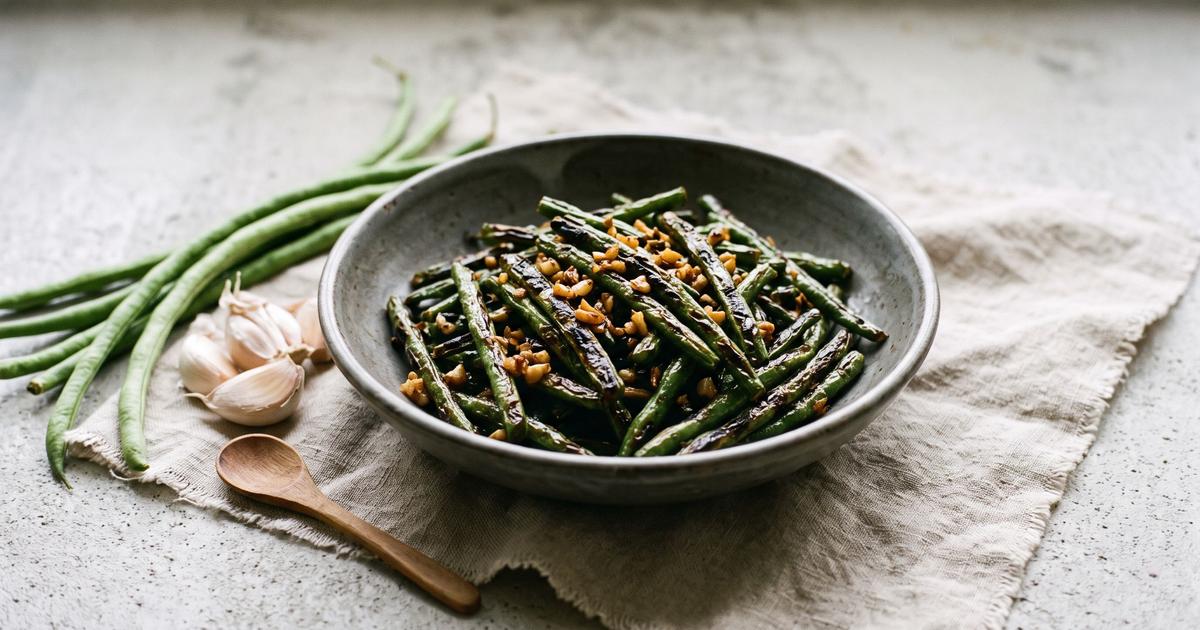
Long beans, the yardlong snake beans of Southeast Asian markets, are made for this treatment: denser and less watery than green beans, they blister and char without going limp. Xao is the Vietnamese stir-fry, and the trick to doing it without oil is a genuinely hot pan and the discipline to leave the beans alone so they brown rather than steam. A short covered minute with a splash of water cooks them through, then garlic goes in late so it perfumes the dish instead of burning, and a little tamari off the heat glazes everything with savor. Green beans work if you cannot find long beans; just cook them a touch longer. Serve it alongside rice and a soup, where a plain, garlicky green plays its usual supporting role.
Ingredients
- 4 cups Long beans, cut into 3-inch (7.5 cm) lengths
- 5 cloves Garlic, thinly sliced
- 1 tbsp Low-sodium tamari
- 1/2 tsp Black peppercorns, cracked
- 2 Scallions, cut into 1-inch (2.5 cm) batons
Method
- Heat a wide pan or wok until very hot and lay in the long beans dry, letting them sit undisturbed a minute at a time so they blister and take on brown spots. The dry, direct heat gives the char that oil-frying would, and the beans do not need fat to blister, only patience and a hot pan.
- Add 2 tablespoons water and cover for 1 minute. The trapped steam finishes cooking the beans through to the center, since blistering alone would leave them raw inside; then let the water cook away.
- Push the beans aside, add the garlic, and toss for 30 seconds until fragrant but not browned. Garlic added at the end this way stays sweet and aromatic; thrown in early over this heat it scorches and turns bitter.
- Off the heat, add the tamari, cracked pepper, and scallion and toss to coat. Finishing off the heat keeps the tamari from burning to the hot pan and lets it glaze the beans instead.
Nutrition
Estimated per serving: 65 calories, 3 g protein, 4 g fiber, 200 mg sodium. Computed from USDA FoodData Central reference values for the main ingredients. This is an approximation, not a laboratory measurement. How these are computed.
Cost per serving is estimated from US national-average retail prices for cheap staple forms, using BLS dried-bean prices and USDA produce prices. Prices vary by store and season, so treat it as a guide, not a receipt. How this is computed.