Do Chua, Vietnamese Pickled Daikon and Carrot
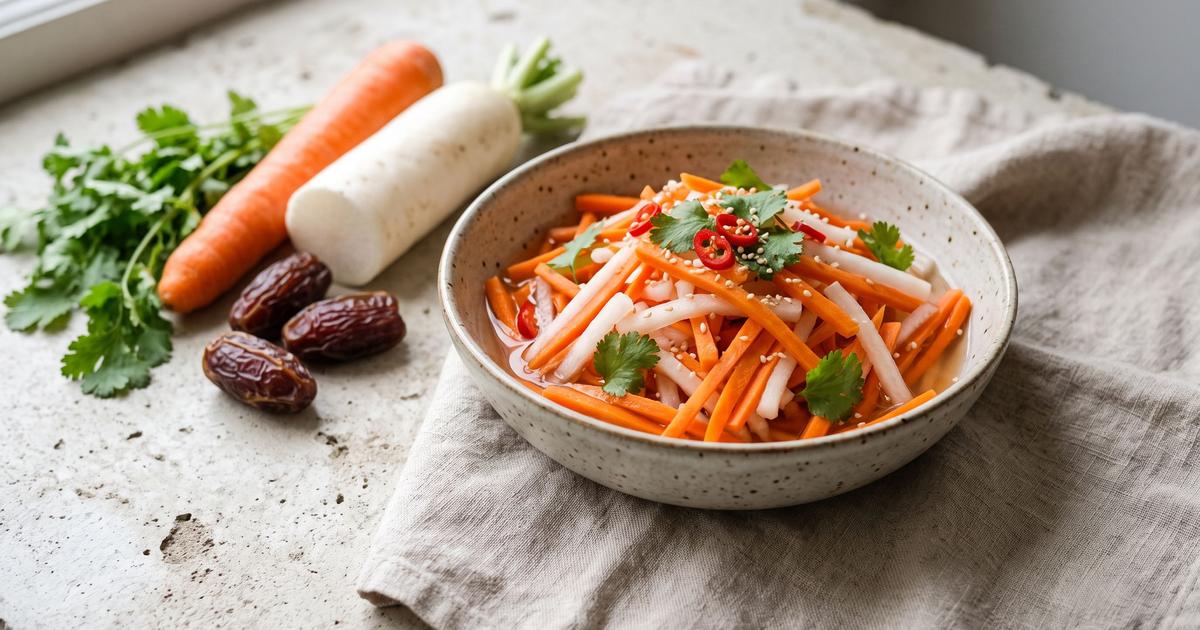
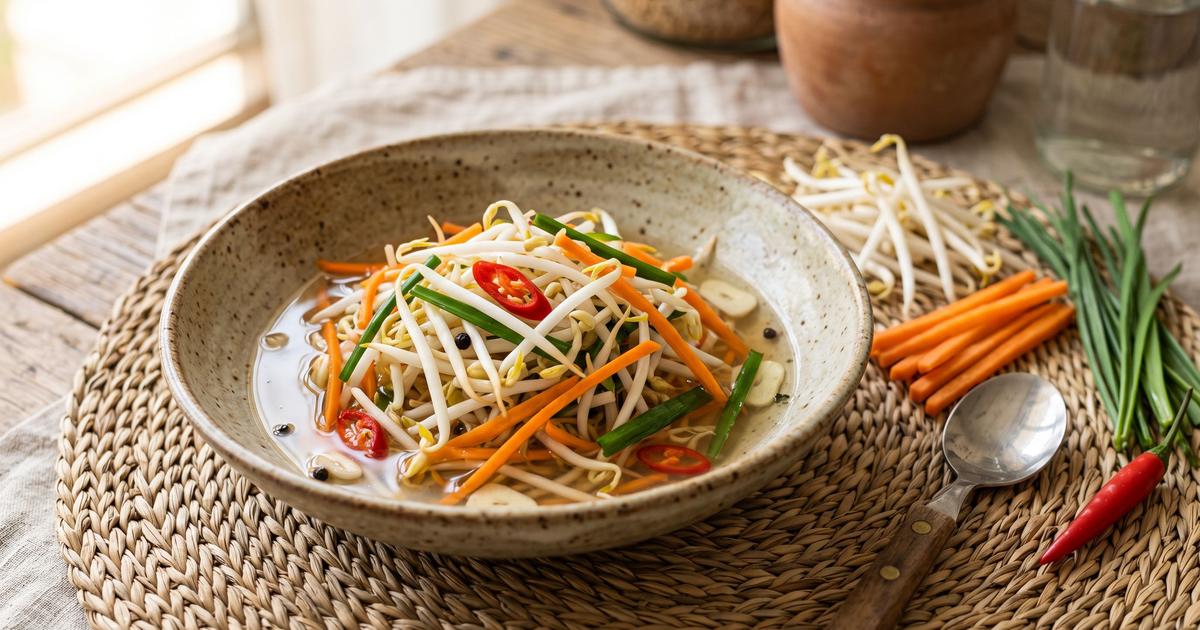
Do chua is the pink-and-white tangle of pickled daikon and carrot that shows up on Vietnamese rice plates, in sandwiches, and beside grilled and simmered dishes to cut their richness. It is usually built on white sugar and a good deal of salt. Here blended dates carry the sweetness and a hard knead replaces the salting step, so the pickle stays every bit as bright while it earns its place on this site. Make it a day ahead if you can.
Ingredients
- 1 lb Daikon radish, peeled and cut into matchsticks
- 3 Carrots, peeled and cut into matchsticks
- 1 cup unseasoned rice vinegar
- 3 dateses Medjool dates, pitted
Method
- Put the daikon and carrot matchsticks in a bowl and knead them firmly with your hands for a minute or two, until they soften, bend without snapping, and release some water. Traditional recipes pull this water out with salt; kneading does the same job and keeps the sodium out. Drain off the liquid and pat the vegetables dry.
- Warm 1 cup (240 ml) water. Blend it with the pitted dates until smooth, then stir in the rice vinegar. This is the brine: sour from the vinegar, sweet from the dates, with the fruit fiber softening the vinegar's edge the way sugar would, minus the sugar.
- Pack the daikon and carrot into a clean jar and pour the brine over to cover. Press the vegetables down so they stay submerged. Let them sit at room temperature for at least 1 hour before eating; they are better after a night in the fridge.
- Keep refrigerated and use within two weeks. The color will fade and the crunch will slowly relax, which is normal. Lift the pickle out with a fork, letting the brine drip back, and pile it onto anything that needs a sharp, sweet-sour counterpoint.
Nutrition
Estimated per serving: 35 calories, 1 g protein, 2 g fiber, 20 mg sodium. Computed from USDA FoodData Central reference values for the main ingredients. This is an approximation, not a laboratory measurement. How these are computed.
Cost per serving is estimated from US national-average retail prices for cheap staple forms, using BLS dried-bean prices and USDA produce prices. Prices vary by store and season, so treat it as a guide, not a receipt. How this is computed.