Sinamak, Visayan Spiced Vinegar
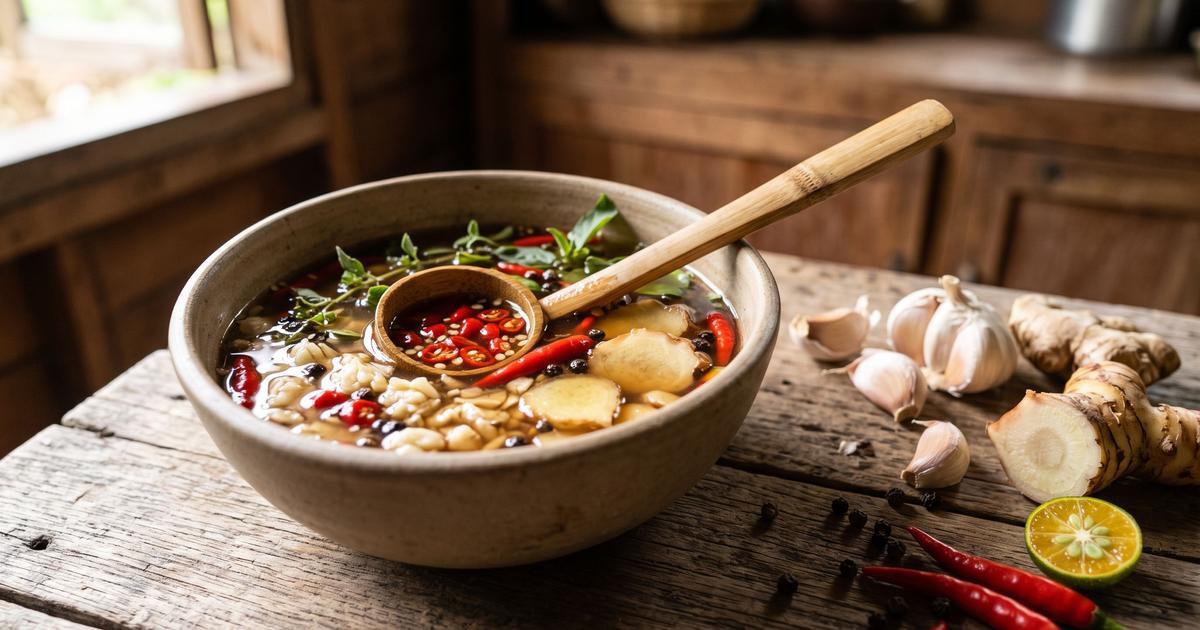
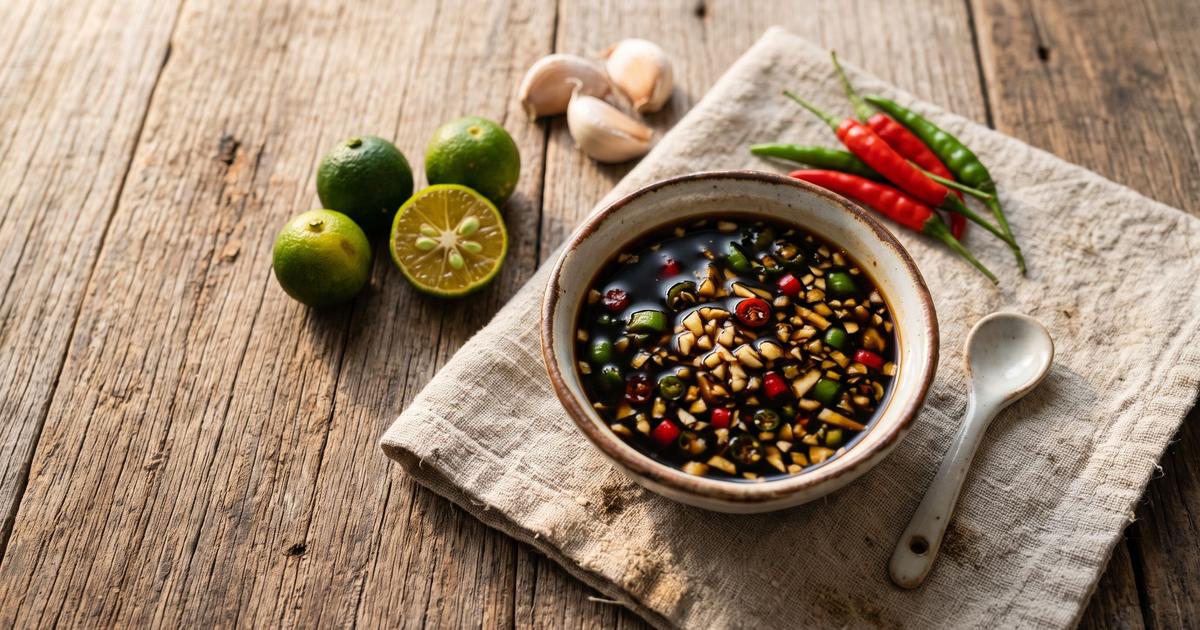
Sinamak is the spiced vinegar of the Visayas, the Filipino condiment that lives on the table beside anything fried, grilled, or fatty and cuts straight through it. At its heart it is only vinegar, cane vinegar traditionally, with apple cider vinegar a clean stand-in, steeped with garlic, ginger, the pine-and-citrus note of galangal known locally as langkawas, whole siling labuyo, and cracked peppercorns. There is nothing to cook and nothing to balance, no oil and no sugar, just aromatics giving themselves up to the acid over time. Warming the vinegar before you pour it speeds things along without boiling off its bite. It is less a recipe than a thing you start and forget: a day makes it good, a month makes it fierce, and a jar lasts on the shelf for the better part of a year.
Ingredients
- 2 cups Apple cider vinegar
- 6 cloves Garlic, smashed
- 2 tbsp Ginger, sliced
- 2 tbsp Galangal, sliced
- 8 Thai bird chiles, left whole and slit
- 1 tsp Black peppercorns, lightly cracked
Method
- Pack the garlic, ginger, galangal, slit chiles, and cracked peppercorns into a clean glass jar. Slitting the chiles and cracking the pepper opens them up so their heat and aroma bleed into the vinegar instead of staying locked inside whole.
- Warm the vinegar in a small pot until it just steams, then pour it over the aromatics. Warming, not boiling, speeds the steeping by opening the aromatics; boiling would drive off the vinegar's sharpness, which is the whole reason the condiment exists.
- Let it cool uncovered, then seal and leave it at room temperature at least a day before using. The steep is what turns plain vinegar into sinamak, and it deepens for weeks, so patience is the only real ingredient.
- Serve it in a small dish as a dip, spooning out the sharp liquid to cut through grilled vegetables, beans, or rice. The longer it sits the hotter and more fragrant it gets, and it keeps for months unrefrigerated.
Nutrition
Estimated per serving: 10 calories, 0 g protein, 0 g fiber, 5 mg sodium. Computed from USDA FoodData Central reference values for the main ingredients. This is an approximation, not a laboratory measurement. How these are computed.
Cost per serving is estimated from US national-average retail prices for cheap staple forms, using BLS dried-bean prices and USDA produce prices. Prices vary by store and season, so treat it as a guide, not a receipt. How this is computed.