Atchara, Filipino Pickled Green Papaya
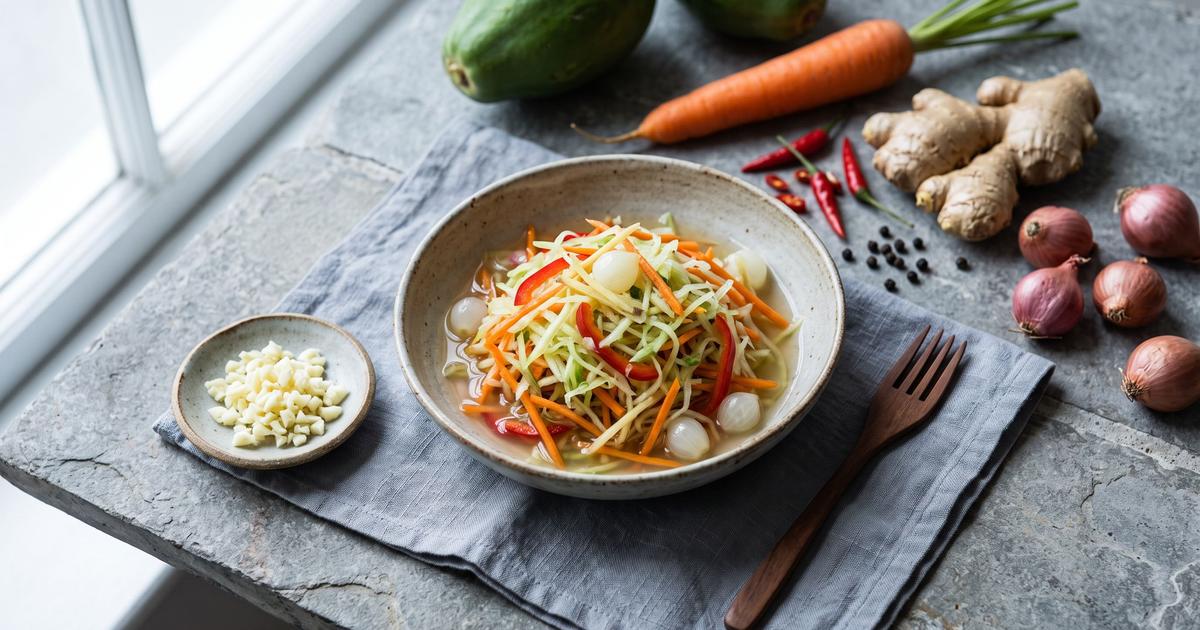
Atchara is the bright pickle that sits on nearly every Filipino table, the sharp, sweet foil to grilled and fried food. It is built on grated unripe papaya, with carrot, ginger, and often raisins and bell pepper for color. The classic recipe salts the papaya to firm it and sweetens the brine with a lot of cane sugar; this version presses the papaya dry by hand and sweetens the vinegar with blended dates instead, so it stays true to the sour-sweet balance while dropping the salt and sugar. Make it a day ahead, because the flavor needs time to sink in.
Ingredients
- 4 cups Green papaya, peeled, seeded, and grated
- 1 Carrot, cut into thin matchsticks
- 1 Bell pepper, cut into thin strips
- 2 tbsp Ginger, cut into thin matchsticks
- 3 cloves Garlic, thinly sliced
- 3 tbsp Raisins
- 1 cup Apple cider vinegar
- 4 Medjool dates, pitted, blended smooth with the vinegar
- 1/2 tsp Black peppercorns
Method
- Put the grated papaya in a clean cloth or your hands and squeeze out as much liquid as you can, then discard it. Traditional atchara salts the papaya to draw this water off; pressing it out by hand does the same thing without salt, and it matters because leftover water would dilute the brine and make the pickle go soft.
- Blend the dates with the vinegar until smooth, pour into a saucepan with the peppercorns, and warm over low heat just until it steams. A warm brine melds the dates in and mellows the raw bite of the vinegar; do not let it boil hard, or the vegetables you add will lose their crunch.
- Combine the pressed papaya, carrot, bell pepper, ginger, garlic, and raisins in a bowl or jar. Pour the warm brine over and toss so everything is coated and submerged.
- Cool to room temperature, then cover and refrigerate at least overnight. Atchara needs the rest to let the sour-sweet brine work all the way through the papaya, and it is noticeably better on the second day. It keeps about a week refrigerated.
Nutrition
Estimated per serving: 50 calories, 1 g protein, 2 g fiber, 15 mg sodium. Computed from USDA FoodData Central reference values for the main ingredients. This is an approximation, not a laboratory measurement. How these are computed.
Cost per serving is estimated from US national-average retail prices for cheap staple forms, using BLS dried-bean prices and USDA produce prices. Prices vary by store and season, so treat it as a guide, not a receipt. How this is computed.