Ginisang Kalabasa at Sitaw, Filipino Squash and Long Beans
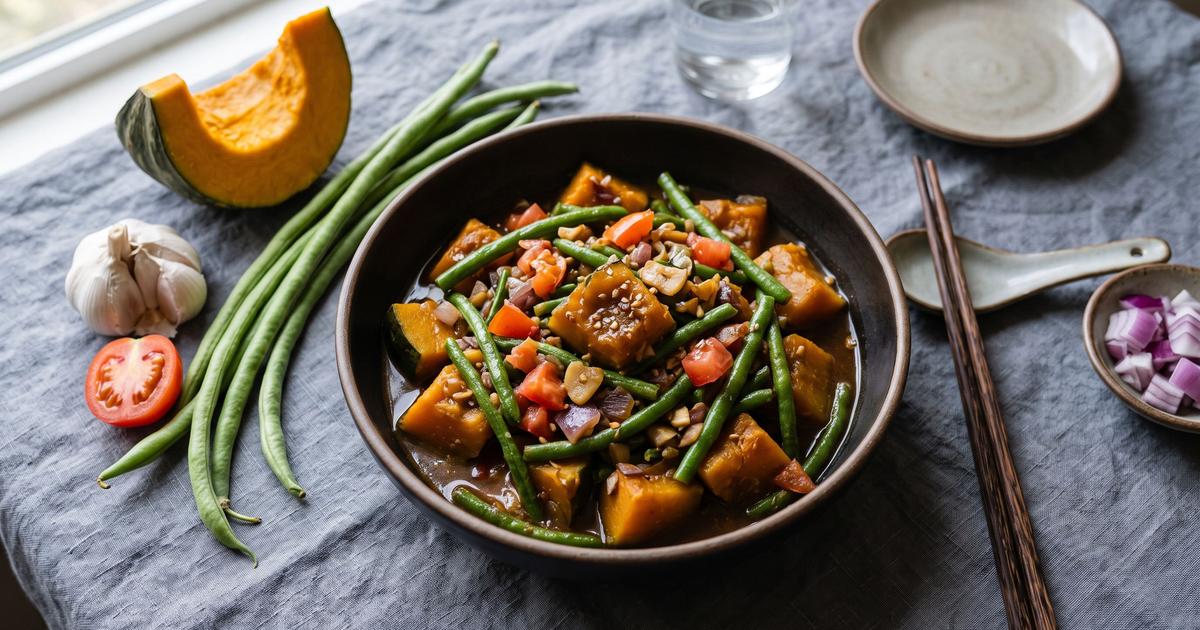
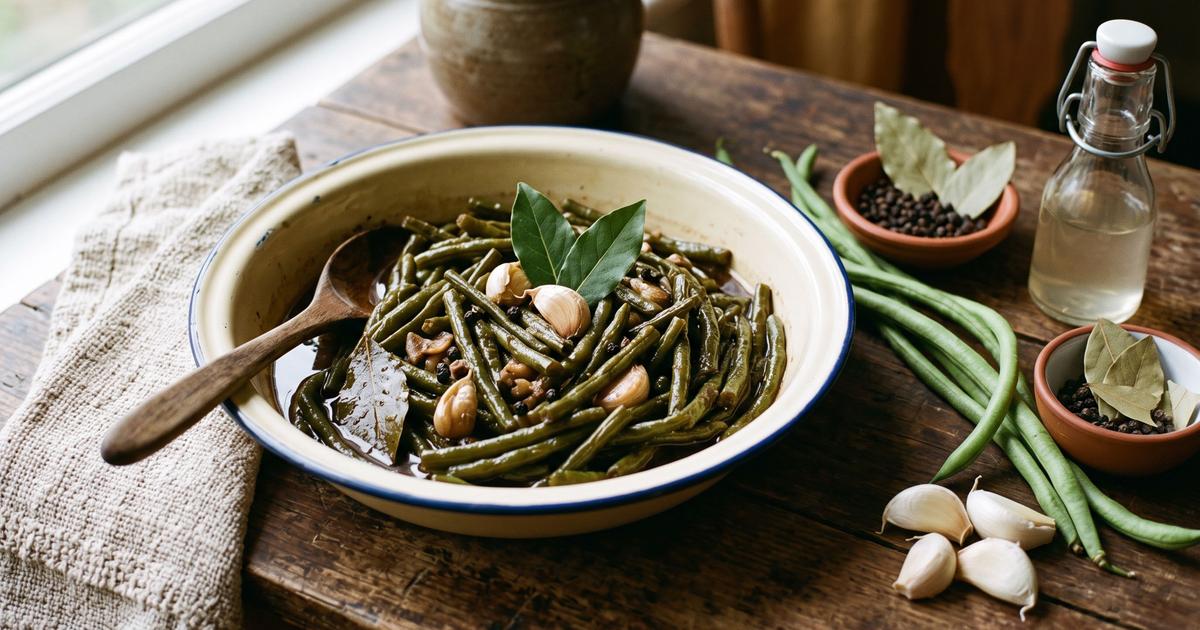
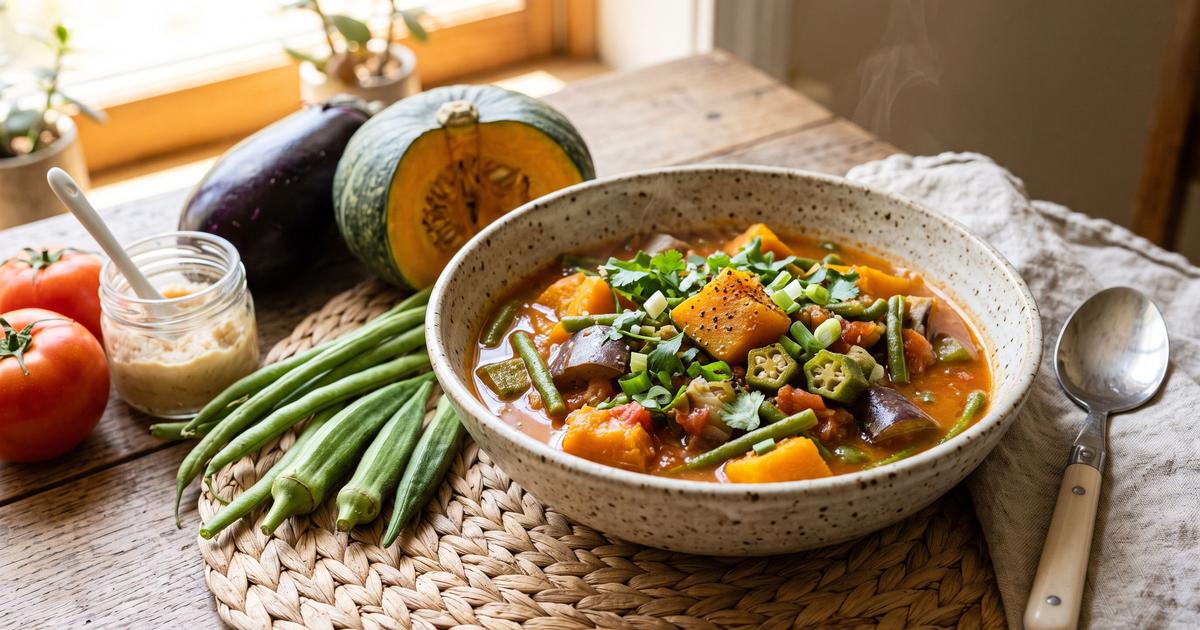
Ginisang kalabasa at sitaw is one of the plainest and most common dishes in a Filipino kitchen: kabocha squash and long beans stewed down together in a tomato and garlic base until the squash half-collapses into its own sauce. It is home food, cheap and quick, usually seasoned with a spoon of bagoong for its salty, fermented depth. Tamari does that job cleanly, and the squash brings enough natural sweetness that the dish tastes full without any sugar or oil. Serve it over rice as the vegetable that anchors the meal.
Ingredients
- 1 lb Kabocha squash, peeled and cut into 1-inch (2.5 cm) cubes
- 8 oz Long beans, cut into 2-inch (5 cm) lengths
- 2 Fresh tomatoes, chopped
- 1 Yellow onion, sliced
- 4 cloves Garlic, minced
- 1 tsp Ginger, minced
- 1 tbsp Low-sodium tamari
- 1/2 tsp no-salt vegetable bouillon
- 1/4 tsp Black peppercorns, cracked
Method
- Sweat the onion, garlic, and ginger in 3 tablespoons water until soft and translucent. This is the gisa, the sauteed aromatic base that starts nearly every Filipino savory dish, done here in water rather than the usual oil.
- Add the tomato and cook until it slumps and breaks down into a rough sauce, pressing it with the spoon. Softened tomato gives the dish its body and a little acid, so it needs no stock beyond a splash of water.
- Add the squash, tamari, bouillon, and 0.5 cup (120 ml) water. Cover and simmer 12 minutes, until the squash is nearly tender. The tamari stands in for the bagoong, the fermented shrimp paste that usually seasons this, supplying the salt and the savory funk.
- Stir in the long beans and simmer 6 to 8 minutes more, until they are tender but still green. Sitaw dulls and goes olive if cooked too long, so keep an eye on it.
- By now some of the squash at the edges will have melted and thickened the pan into a light sauce. Crack the pepper over and serve hot with brown rice.
Nutrition
Estimated per serving: 130 calories, 5 g protein, 6 g fiber, 250 mg sodium. Computed from USDA FoodData Central reference values for the main ingredients. This is an approximation, not a laboratory measurement. How these are computed.
Cost per serving is estimated from US national-average retail prices for cheap staple forms, using BLS dried-bean prices and USDA produce prices. Prices vary by store and season, so treat it as a guide, not a receipt. How this is computed.