Adobong Sitaw, Filipino Long Beans in Vinegar and Garlic
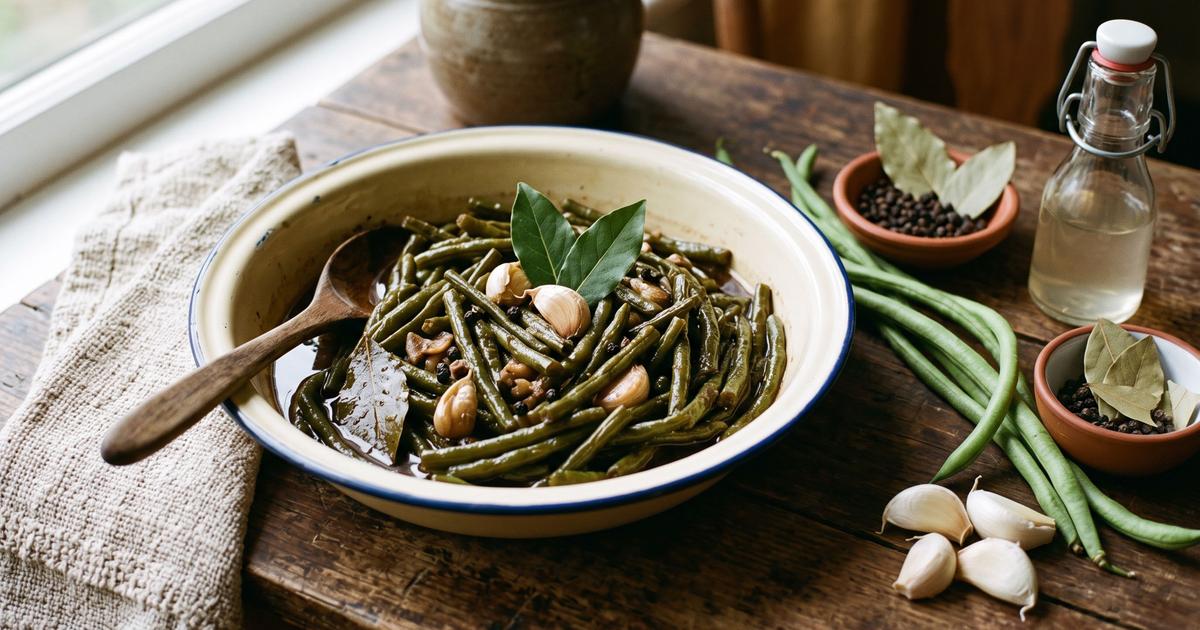
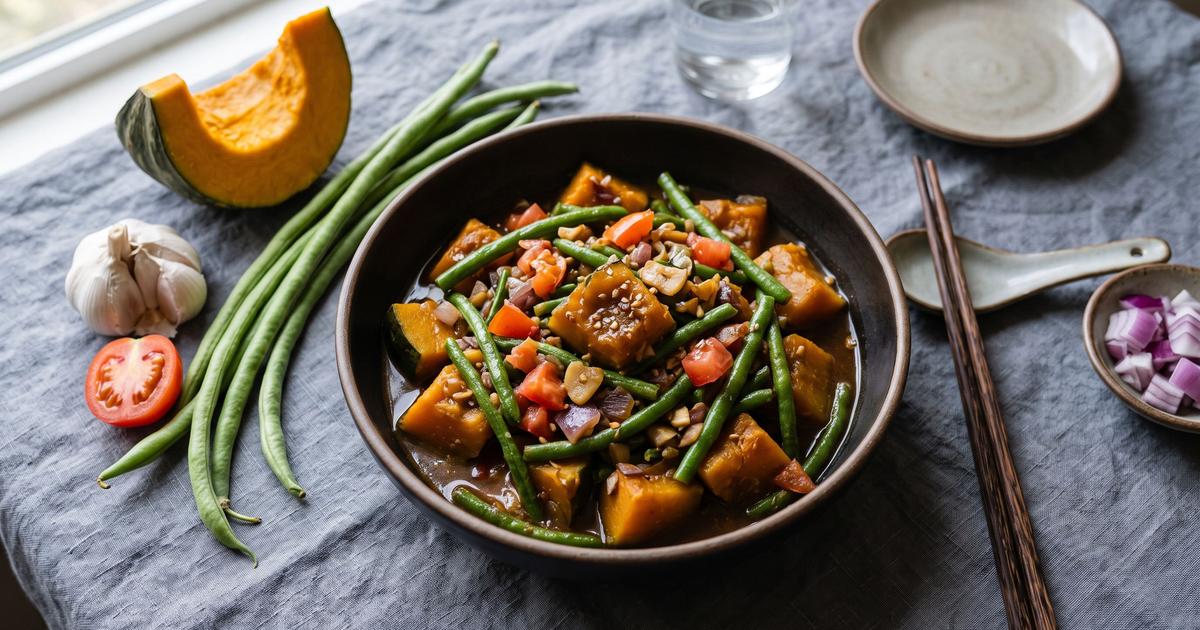
Adobo is less a recipe than a method, anything simmered in vinegar, garlic, soy, bay, and black pepper, and the vegetable versions are as common on Filipino tables as the meat ones. Adobong sitaw uses long beans, which stay springy through the braise and soak up the sour-savory sauce. Seared tofu rounds it into a fuller side dish. The important move is the same as in every adobo: let the vinegar boil off before you stir, so the sauce tastes deep and mellow rather than raw. Tamari carries the salt, so no extra is needed.
Ingredients
- 12 oz Long beans, cut into 2-inch (5 cm) lengths
- 6 oz Firm tofu, pressed and cubed
- 6 cloves Garlic, smashed
- 1 Yellow onion, sliced
- 3 tbsp Apple cider vinegar
- 1 1/2 tbsp Low-sodium tamari
- 2 Bay leaves
- 1/2 tsp Black peppercorns, cracked
Method
- Set a dry nonstick pan over medium-high heat and sear the tofu cubes undisturbed until golden on two sides, about 6 minutes, then set them aside. A dry crust gives the tofu enough structure to hold up in the tangy sauce.
- In the same pan, sweat the onion and garlic in 3 tablespoons (45 ml) water until soft and fragrant, about 4 minutes. Water in place of oil still pulls the sweetness out of the aromatics.
- Pour in the vinegar and let it come to a boil without stirring, then leave it for 1 minute. Not stirring is the one rule of adobo: boiling the raw vinegar off first burns away its harsh smell, and stirring too early traps it in the dish.
- Add the tamari, bay leaves, cracked pepper, and 0.5 cup (120 ml) water. Tamari is the salt of an adobo, standing in for the soy sauce, and the bay and pepper are its backbone. Simmer 2 minutes to pull the flavors together.
- Add the long beans and simmer 6 to 8 minutes, until tender but still green, then return the tofu and reduce the liquid down to a glaze that clings to the beans. Adobo should coat, not swim. Serve over intact brown rice.
Nutrition
Estimated per serving: 110 calories, 7 g protein, 5 g fiber, 240 mg sodium. Computed from USDA FoodData Central reference values for the main ingredients. This is an approximation, not a laboratory measurement. How these are computed.
Cost per serving is estimated from US national-average retail prices for cheap staple forms, using BLS dried-bean prices and USDA produce prices. Prices vary by store and season, so treat it as a guide, not a receipt. How this is computed.