Pinakbet, Filipino Simmered Vegetables
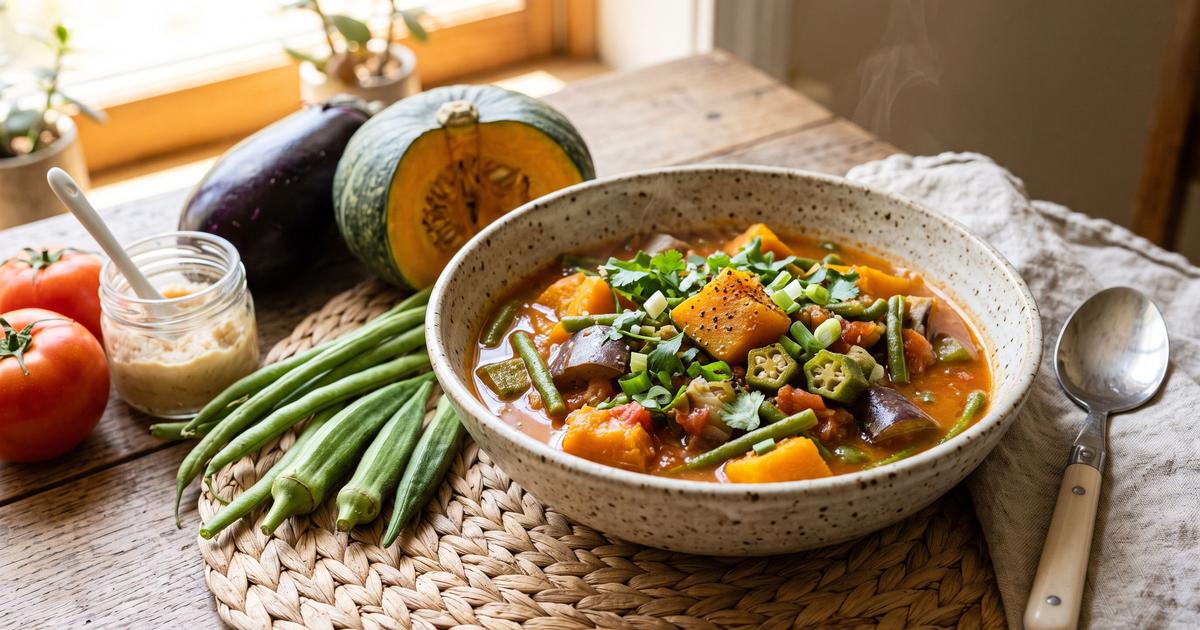
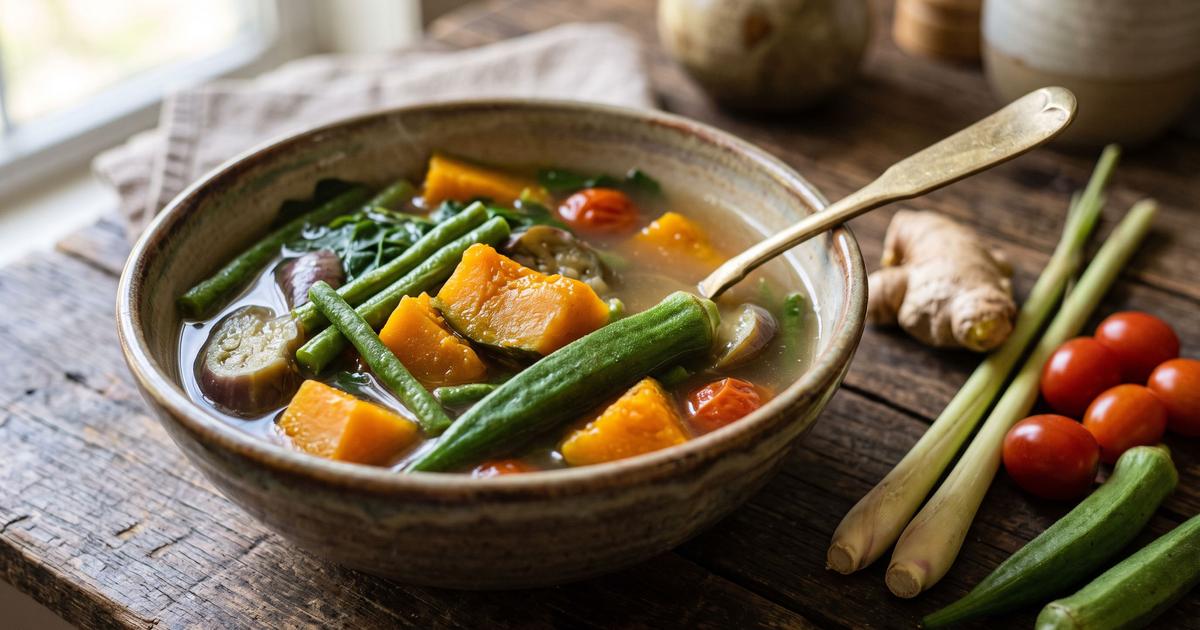
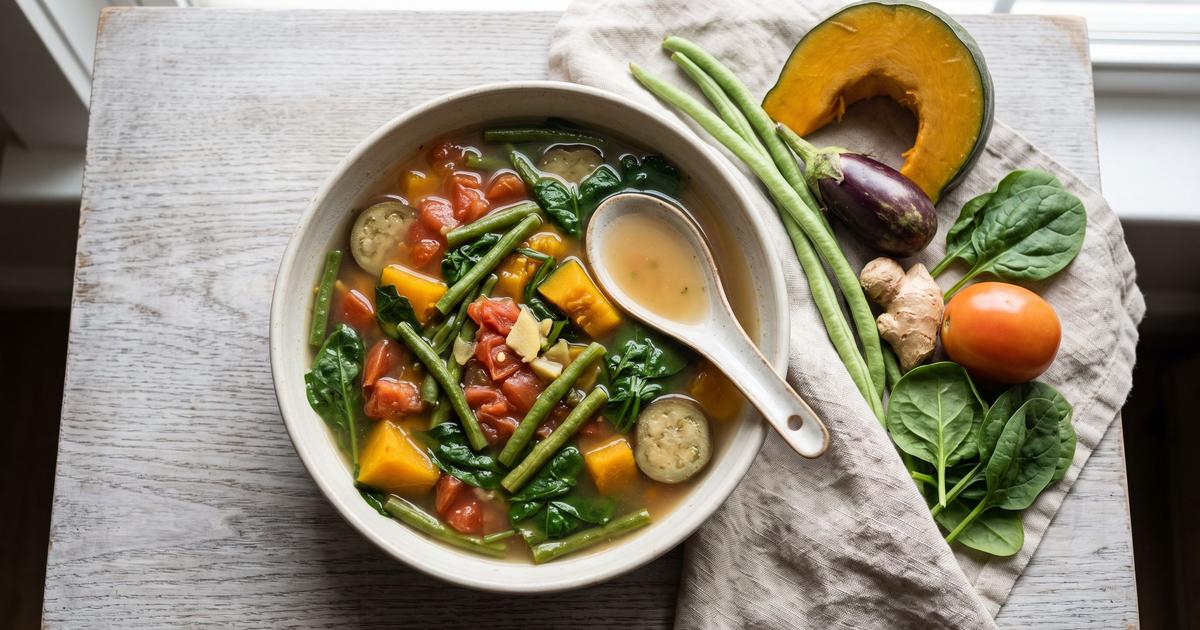
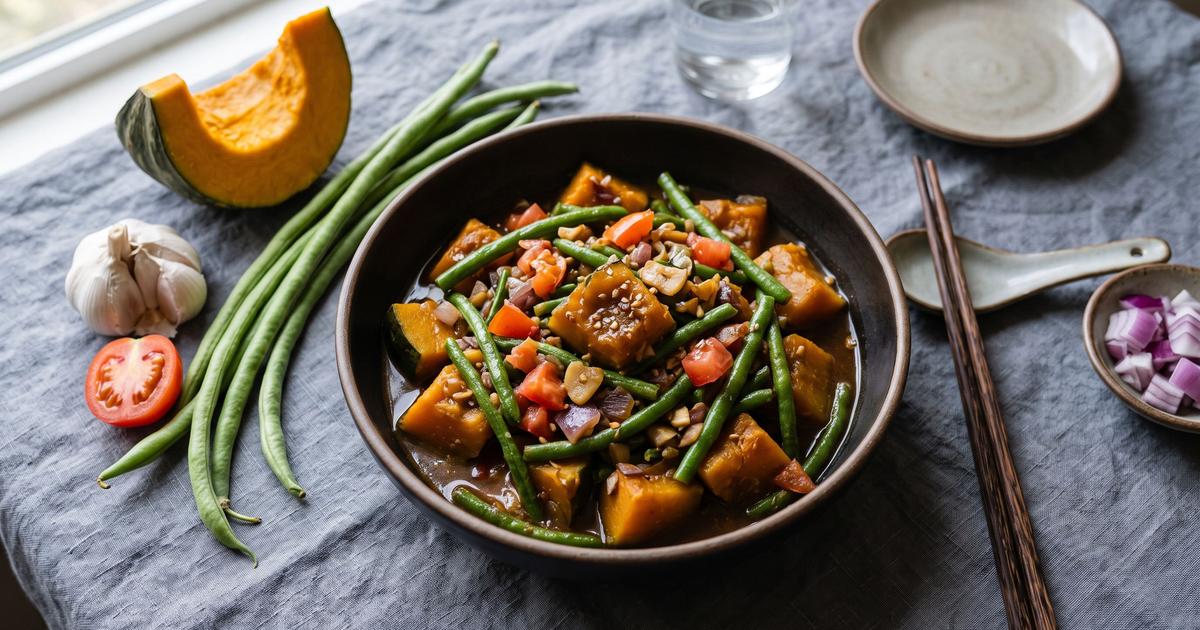
Pinakbet comes from the Ilocos region of the northern Philippines, a pot of native vegetables simmered together and seasoned with bagoong. It is traditionally barely stirred, so each vegetable keeps its shape and its own flavor. This version keeps the layering and the familiar cast of squash, eggplant, long beans, and okra, and uses red miso for the salty, fermented backbone. Bitter melon, ampalaya, is the one classic vegetable left out here for want of a pantry entry; add it if you grow or find it.
Ingredients
- 2 cups Butternut squash, peeled, 1-inch (2.5 cm) cubes
- 1 Yellow onion, sliced
- 4 cloves Garlic, minced
- 1 tbsp Ginger, minced
- 2 Fresh tomatoes, chopped
- 1 tbsp Red miso
- 1 Eggplant, cut into thick half-moons
- 6 oz Long beans, cut into 2-inch (5 cm) lengths
- 8 podses Okra, left whole, tops trimmed
- 1/2 tsp Black peppercorns, freshly ground
Method
- Spread the onion, garlic, ginger, and tomato across the bottom of a wide pot with 0.5 cup (120 ml) water. Set the squash on top. Bring to a simmer, cover, and cook for 8 minutes, until the tomato slumps and gives up its juice. Pinakbet is built in layers and barely stirred, so the vegetables steam in the tomato rather than fry, which is what keeps them distinct.
- Stir the red miso with 0.25 cup (60 ml) warm water until smooth, then pour it over the vegetables. The miso stands in for bagoong, the fermented shrimp paste that seasons every traditional pinakbet; its salt and funk are what season the whole pot, so measure it carefully and let it do that job alone.
- Layer the eggplant, then the long beans, then the whole okra on top of the squash. Cover and simmer for 12 to 15 minutes without stirring, until a knife slides easily into the squash and eggplant. Keeping the okra whole is what stops it from turning slippery.
- Only now, at the end, fold everything together gently with two spoons, lifting from the bottom, so the miso broth coats the vegetables without mashing them. Grind the black pepper over the top.
- Let it rest off the heat for 5 minutes so the flavors settle, then serve over brown rice. Like most vegetable stews it tastes better the next day, once the miso has worked its way through.
Nutrition
Estimated per serving: 130 calories, 5 g protein, 6 g fiber, 200 mg sodium. Computed from USDA FoodData Central reference values for the main ingredients. This is an approximation, not a laboratory measurement. How these are computed.
Cost per serving is estimated from US national-average retail prices for cheap staple forms, using BLS dried-bean prices and USDA produce prices. Prices vary by store and season, so treat it as a guide, not a receipt. How this is computed.