Bulanglang, Tagalog Vegetable and Tomato Soup
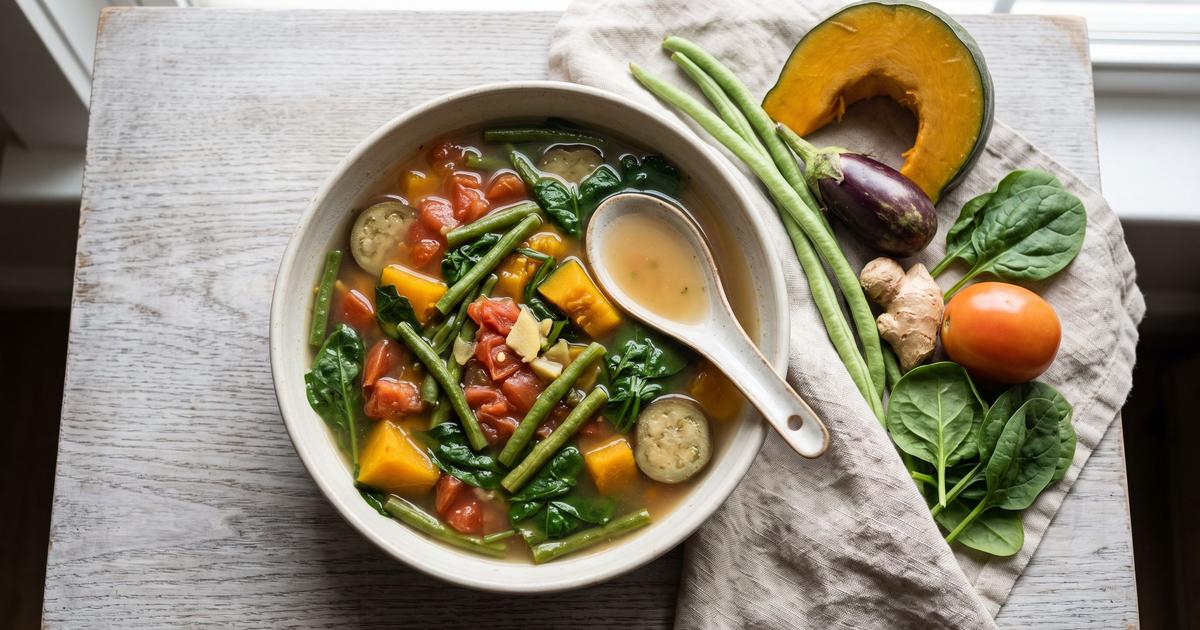
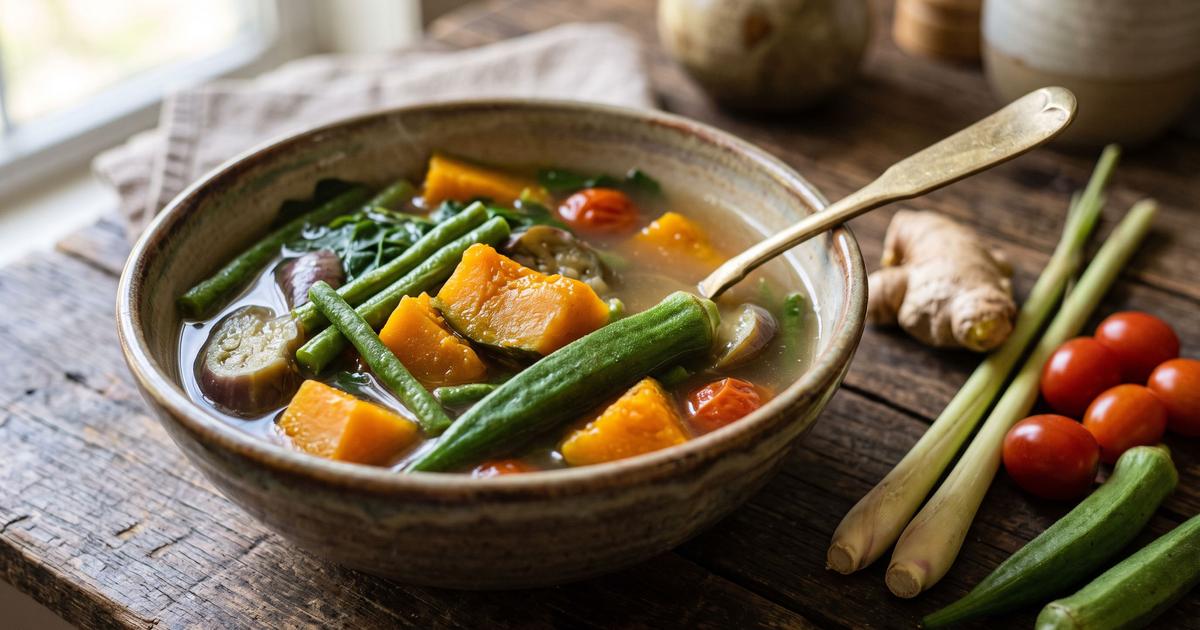
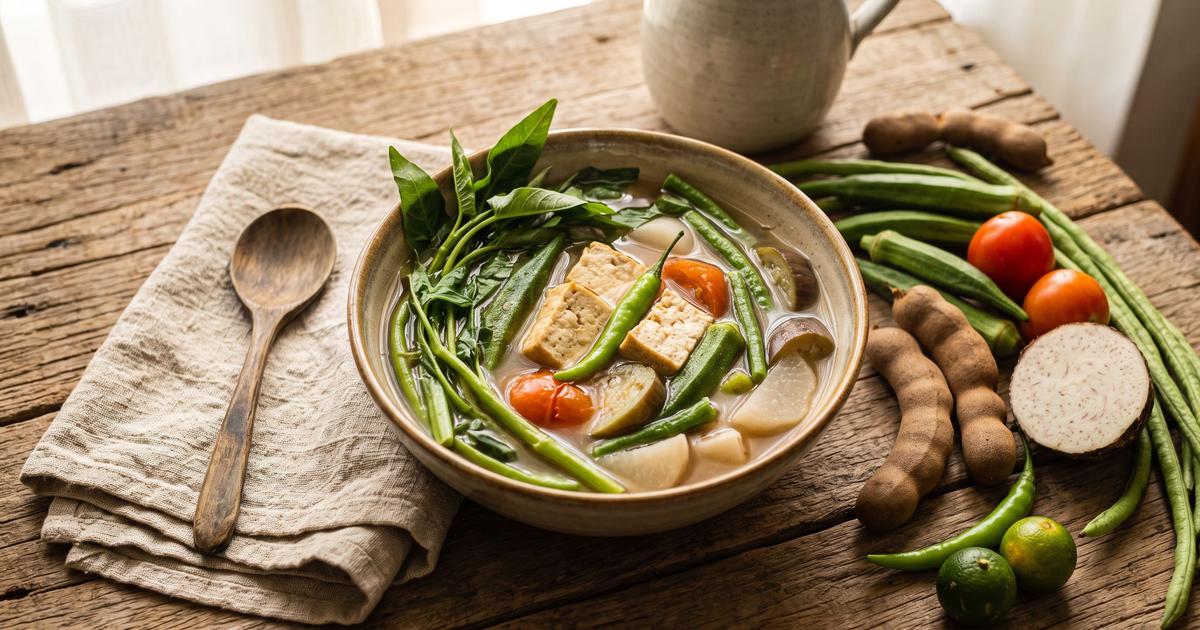
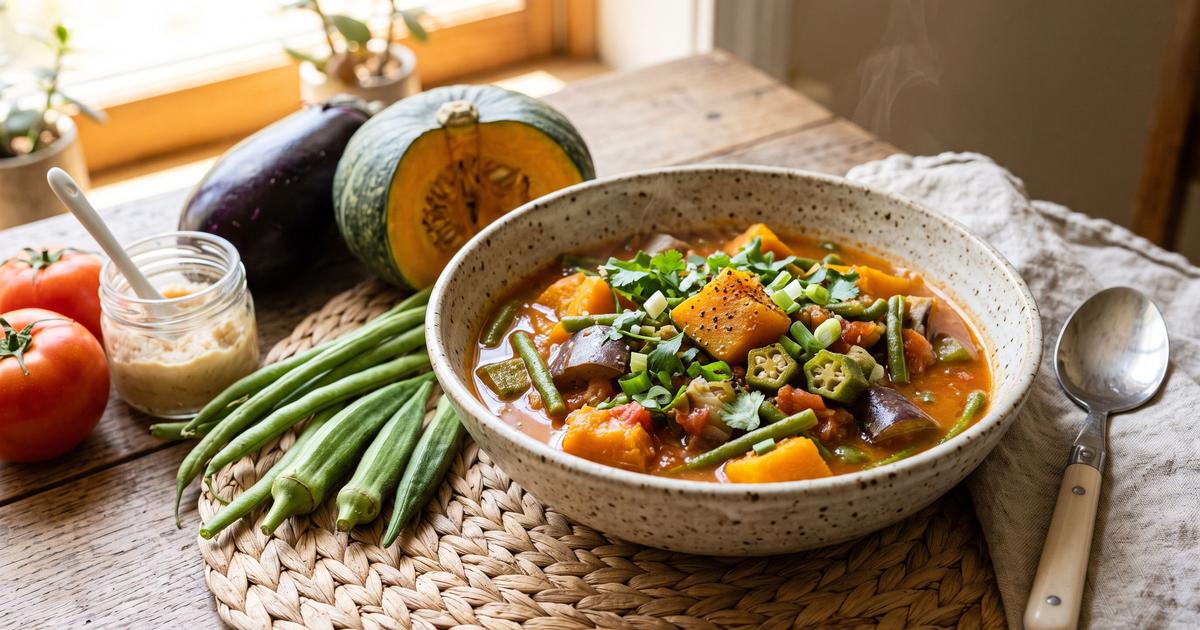
Bulanglang is the everyday Tagalog vegetable soup, a clean and brothy pot built on tomato, onion, and ginger rather than the tamarind sourness of sinigang. It is deliberately humble: whatever vegetables the garden offers, simmered in a light tomato broth until tender, seasoned in the traditional kitchen with a splash of fish sauce. Here a little tamari does that job, keeping it plant-based and the sodium modest. Squash gives body and sweetness, long beans and eggplant the substance, and a handful of greens goes in at the very end. The technique is nothing more than breaking the tomatoes down into a broth and adding the vegetables in order of how long they take, so each keeps its texture. It is coconut-free, oil-free, and meant to be eaten with rice, a quiet everyday soup rather than a showpiece.
Ingredients
- 3 Fresh tomatoes, quartered
- 1 Yellow onion, sliced
- 1 tbsp Ginger, julienned
- 3 cups Butternut squash, peeled and cubed
- 1 1/2 cups Long beans, cut into 2-inch (5 cm) lengths
- 1 Eggplant, sliced into half-moons
- 4 cups Spinach
- 1 tbsp Low-sodium tamari
Method
- Put the tomatoes, onion, and ginger in a pot with 5 cups (1.2 L) water and simmer 8 minutes, pressing the tomatoes with a spoon as they soften. Breaking down the tomatoes this way builds the entire broth, thin and slightly sour, with no oil and no frying step.
- Add the squash and simmer 8 to 10 minutes until it is nearly tender and just beginning to break at the edges, which lightly thickens the broth and sweetens it against the sour tomato.
- Add the long beans and eggplant and cook 5 minutes more, until the eggplant is silky and the beans are tender but still green.
- Stir in the tamari, then drop in the spinach and pull the pot off the heat. The residual heat wilts the greens in under a minute; any longer on the flame and they turn gray and lose their freshness. Taste, and add a splash more tamari if it needs depth.
Nutrition
Estimated per serving: 95 calories, 3 g protein, 5 g fiber, 210 mg sodium. Computed from USDA FoodData Central reference values for the main ingredients. This is an approximation, not a laboratory measurement. How these are computed.
Cost per serving is estimated from US national-average retail prices for cheap staple forms, using BLS dried-bean prices and USDA produce prices. Prices vary by store and season, so treat it as a guide, not a receipt. How this is computed.