Sopas, Filipino Vegetable Macaroni Soup
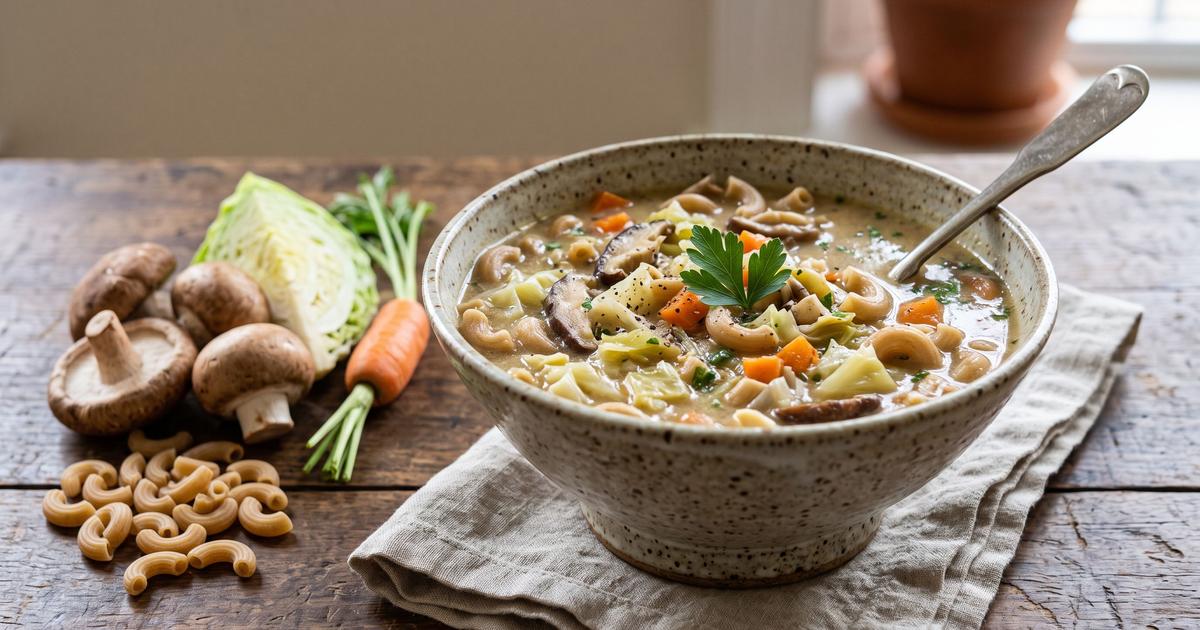
Sopas is the Filipino sick-day soup, a milky, peppery macaroni bowl that shows up whenever someone needs comforting or the weather turns cold. The standard pot leans on chicken, evaporated milk, and often a hot dog; this version keeps the soul of it, the creamy broth and the aggressive black pepper, while trading the meat for mushrooms and the canned milk for soy milk. Whole wheat elbows replace refined macaroni and hold up better in the broth. There is no oil, no added salt beyond a no-salt bouillon, and no coconut. It comes together in one pot in about half an hour, which is part of why it endures.
Ingredients
- 1 cup Whole wheat short pasta, elbows
- 6 oz Cremini mushrooms, sliced
- 1 whole Yellow onions, diced
- 4 cloves Garlic, minced
- 2 wholes Carrots (cooking), diced
- 2 wholes Celery, sliced
- 3 cups green cabbage, chopped
- 1/2 cup Frozen peas
- 1 tbsp no-salt vegetable bouillon
- 3/4 tsp Black peppercorns, freshly ground
- 1 cup Unsweetened soy milk
- 2 wholes Scallions, sliced
Method
- Sweat the onion, garlic, and mushrooms in a pot with a few tablespoons of water until the mushrooms give up their liquid and it cooks away, about 8 minutes. Letting that moisture evaporate concentrates the mushrooms into the savory, almost meaty note that stands in for the chicken sopas is usually built on.
- Add the carrot, celery, bouillon, black pepper, and 4 cups (950 ml) water. Bring to a boil and simmer until the carrot is nearly tender, about 8 minutes. Sopas is generous with black pepper, so grind it fresh and do not be shy; the heat is a defining part of the bowl.
- Stir in the pasta and cook until just short of tender, about 7 minutes, then add the cabbage and peas and cook 3 minutes more. Adding the pasta straight into the broth lets it drink up flavor, and whole wheat elbows hold their bite here where refined pasta would turn to paste.
- Lower the heat and pour in the soy milk, warming it through without letting it boil. Soy milk gives the creamy body that evaporated milk brings to the classic, and it carries real protein; a hard boil can make it look curdled, so keep it gentle. Finish each bowl with scallions.
Nutrition
Estimated per serving: 240 calories, 12 g protein, 7 g fiber, 90 mg sodium. Computed from USDA FoodData Central reference values for the main ingredients. This is an approximation, not a laboratory measurement. How these are computed.
Cost per serving is estimated from US national-average retail prices for cheap staple forms, using BLS dried-bean prices and USDA produce prices. Prices vary by store and season, so treat it as a guide, not a receipt. How this is computed.