Nam Prik Num, Northern Thai Green Chile Dip
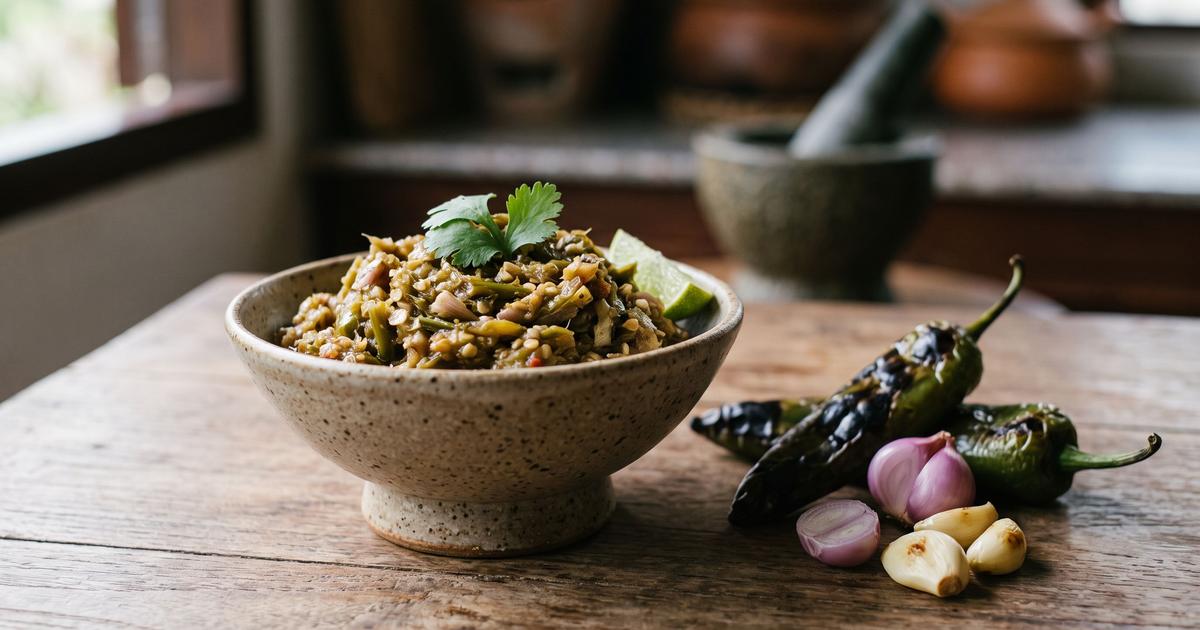
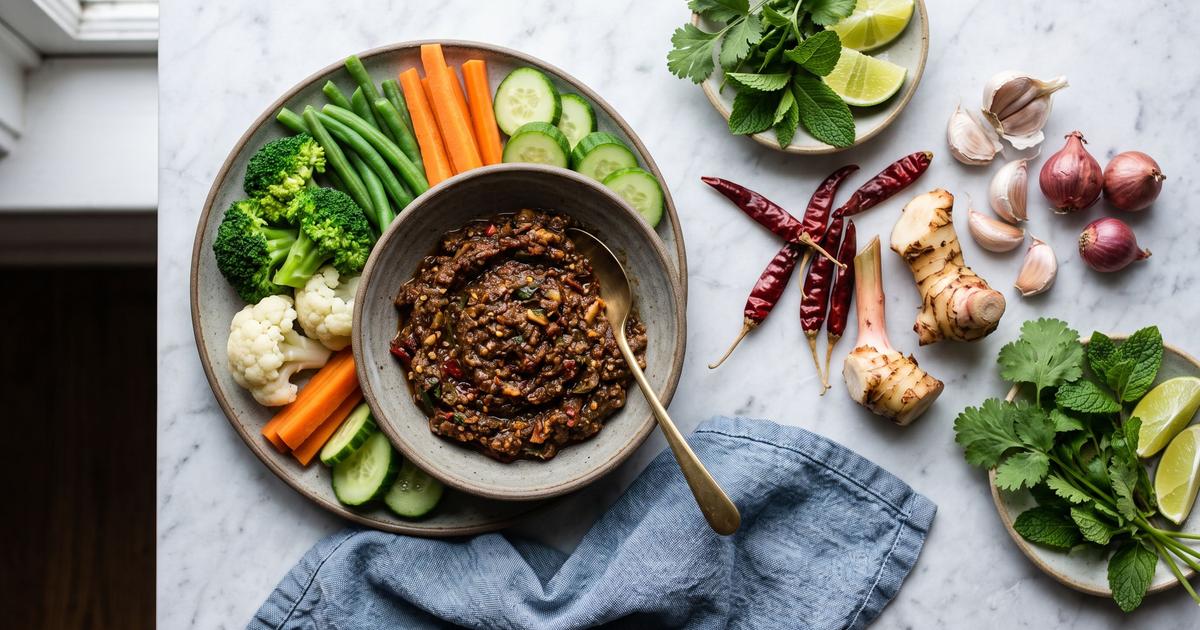
Nam prik num is the roasted green chile dip of northern Thailand, set out with a pile of raw and steamed vegetables and sticky rice to scoop it up. The whole character comes from dry-charring the chiles, shallots, and garlic until their skins blacken, which builds a smoky depth without a drop of oil. Restaurant versions season it with fish sauce or shrimp paste, and this one leans on a little tamari for that salted, savory note and on fresh lime to keep it bright. Keep the texture coarse, taste before adding the last of the tamari, and let it sit a few minutes so the flavors settle.
Ingredients
- 6 wholes Anaheim
- 3 wholes Thai bird chile
- 4 wholes Shallots, unpeeled
- 6 cloves Garlic, unpeeled
- 1/4 cup Cilantro, chopped
- 1 tbsp Lime juice
- 1 1/2 tsp Low-sodium tamari
- 2 wholes Scallions, sliced
Method
- Char the Anaheim chiles, bird chiles, unpeeled shallots, and unpeeled garlic in a dry pan or under a hot broiler, turning, until the skins blacken and blister and the flesh goes soft, about 10 minutes. Dry charring is where the dish gets its smoke: with no oil in the pan, the blistered skin is the only source of that grilled depth.
- Pile the charred vegetables into a bowl and cover for 5 minutes. The trapped steam loosens the skins so they slip off, and it finishes cooking the shallots and garlic through to the center.
- Peel everything, discard the chile stems, and pound in a mortar or chop and mash on a board to a coarse, spoonable relish, not a smooth puree. Nam prik num is meant to stay rough and rustic, and crushing rather than blending keeps the shallot and garlic in distinct pieces.
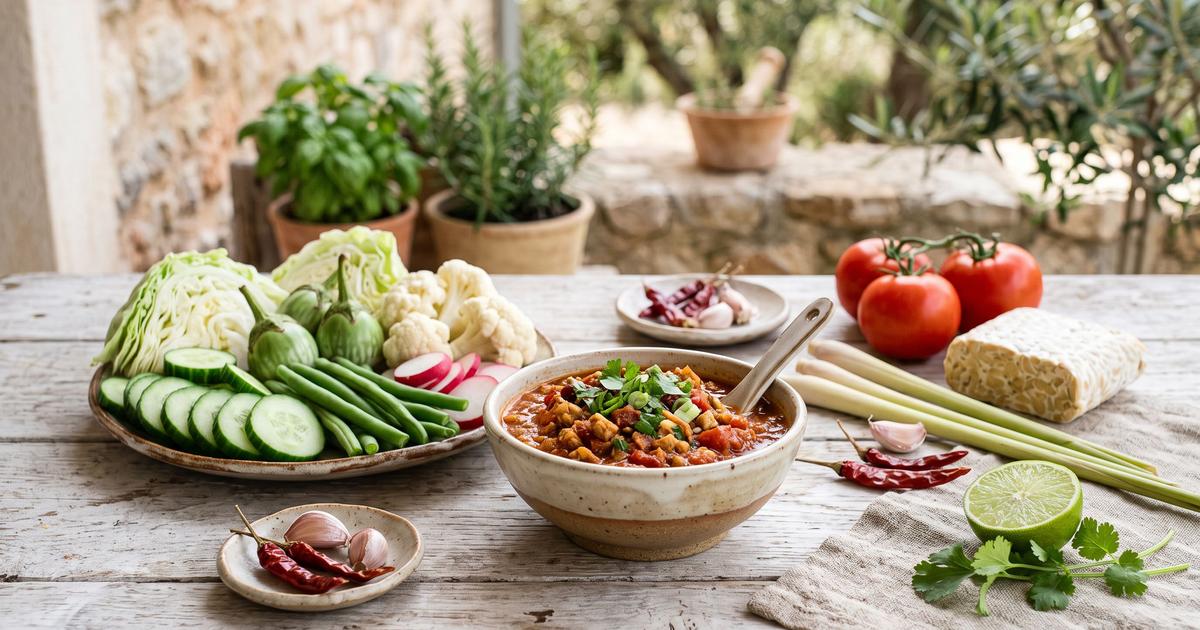
- Work in the lime juice, tamari, cilantro, and scallions. The tamari is the single salted ingredient and it stands in for the fish sauce a northern cook would use, so add it a few drops at a time and stop while the dip still tastes of chile and lime. Serve with raw cabbage, cucumber, and steamed vegetables for scooping.
Nutrition
Estimated per serving: 50 calories, 2 g protein, 2 g fiber, 90 mg sodium. Computed from USDA FoodData Central reference values for the main ingredients. This is an approximation, not a laboratory measurement. How these are computed.
Cost per serving is estimated from US national-average retail prices for cheap staple forms, using BLS dried-bean prices and USDA produce prices. Prices vary by store and season, so treat it as a guide, not a receipt. How this is computed.