Nam Jim Jaew, Isan Roasted Chile Dipping Sauce
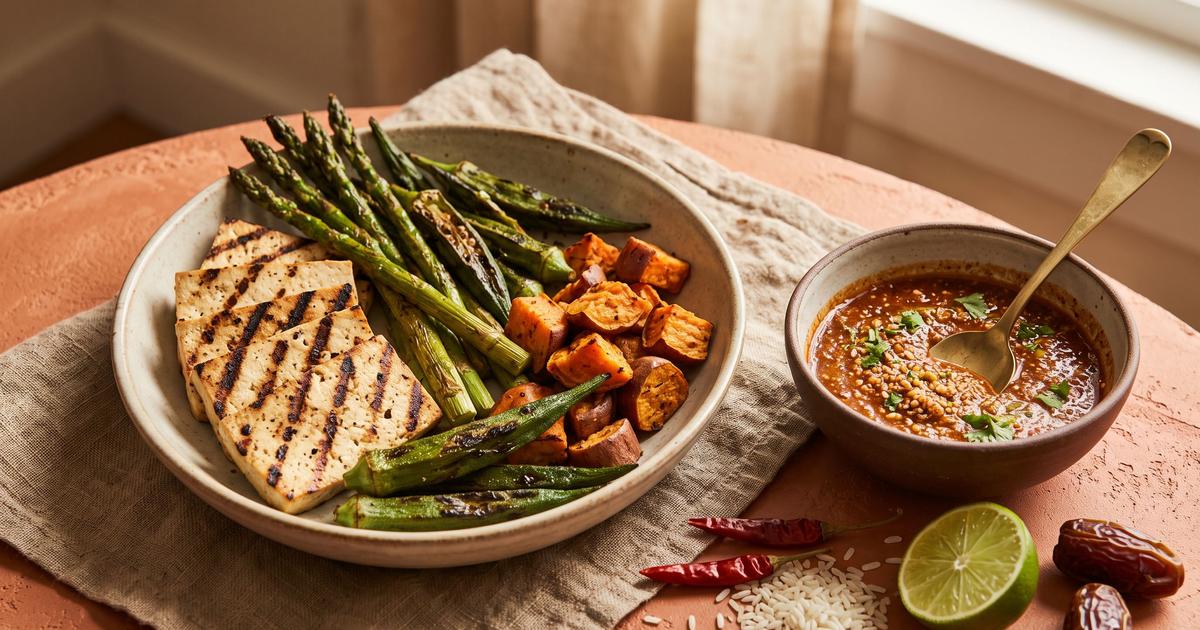
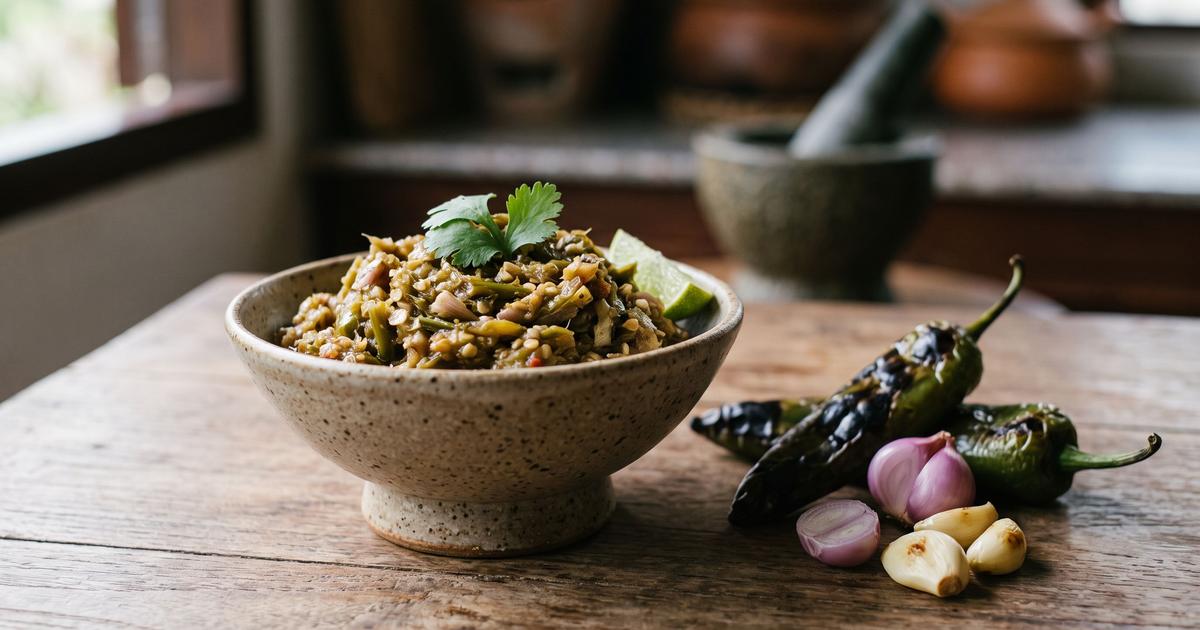
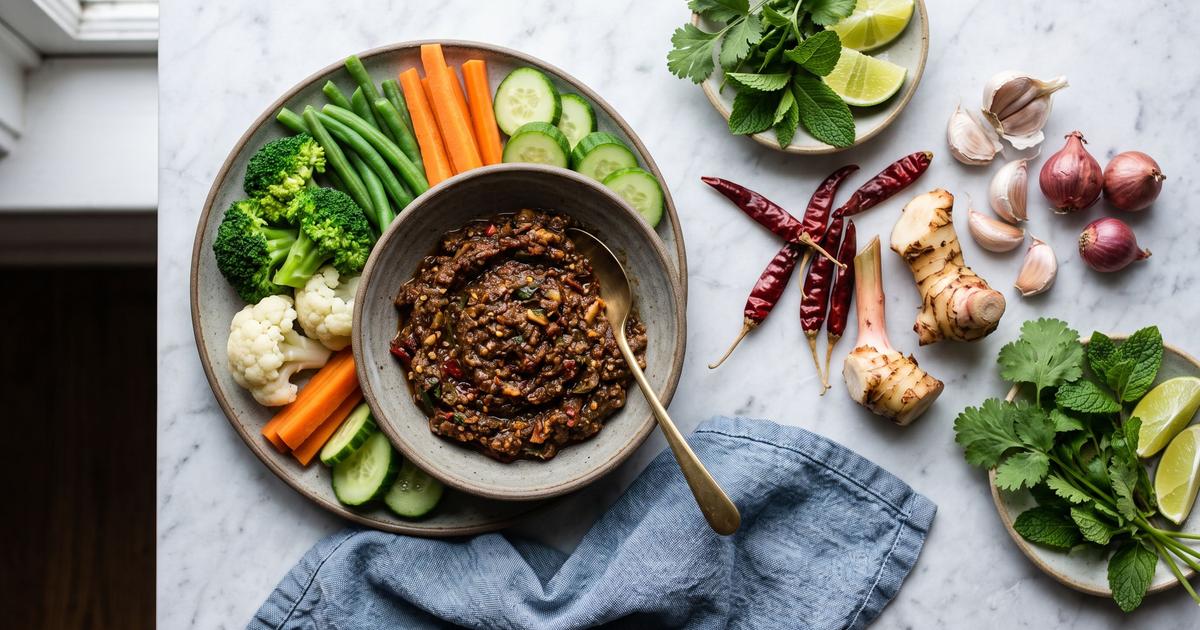
Jaew is the everyday dipping sauce of Isan, the northeast of Thailand, set on the table beside grilled vegetables, sticky rice, and anything charred. Two things make it a jaew rather than a plain chile-lime sauce: toasted dried chile ground coarse, and khao khua, raw rice toasted dark and ground to a nubbly powder that thickens the sauce and carries a roasted smell through the whole bowl. It usually leans on fish sauce and palm sugar, rebuilt here from a little tamari and a minced date, so it stays sharp and savory without either. Make it ahead; the flavors settle and deepen, though you add the rice powder and herbs fresh.
Ingredients
- 1 tbsp long grain brown rice, toasted dark and ground to powder
- 3 Dried Thai chiles, toasted and crushed
- 3 tbsp Lime juice
- 1 tbsp Low-sodium tamari
- 1 Medjool date, pitted and finely minced
- 2 tbsp Shallots, thinly sliced
- 2 tbsp Scallions, thinly sliced
- 2 tbsp Cilantro, chopped
Method
- Toast the raw rice in a dry pan over medium heat, shaking often, until it turns deep golden and smells nutty, about 6 minutes, then grind it to a coarse powder. This khao khua is the signature of Isan food: it thickens the sauce and gives it a roasted aroma nothing else supplies.
- Toast the dried chiles in the same dry pan for under a minute until fragrant, then crush them. Toasting turns their raw heat round and smoky instead of sharp.
- Mash the minced date into the lime juice and tamari until it dissolves. The date stands in for the palm sugar that balances a jaew, so the sauce lands sour, salty, and faintly sweet at once.
- Just before serving, stir in the shallot, scallion, cilantro, chile, and toasted rice powder. The rice powder is added last so it stays gritty and clinging rather than dissolving, and the herbs stay fresh. It should taste bracingly sour first, then hot.
Nutrition
Estimated per serving: 30 calories, 1 g protein, 1 g fiber, 150 mg sodium. Computed from USDA FoodData Central reference values for the main ingredients. This is an approximation, not a laboratory measurement. How these are computed.
Cost per serving is estimated from US national-average retail prices for cheap staple forms, using BLS dried-bean prices and USDA produce prices. Prices vary by store and season, so treat it as a guide, not a receipt. How this is computed.