Telba, Ethiopian Roasted Flaxseed Drink
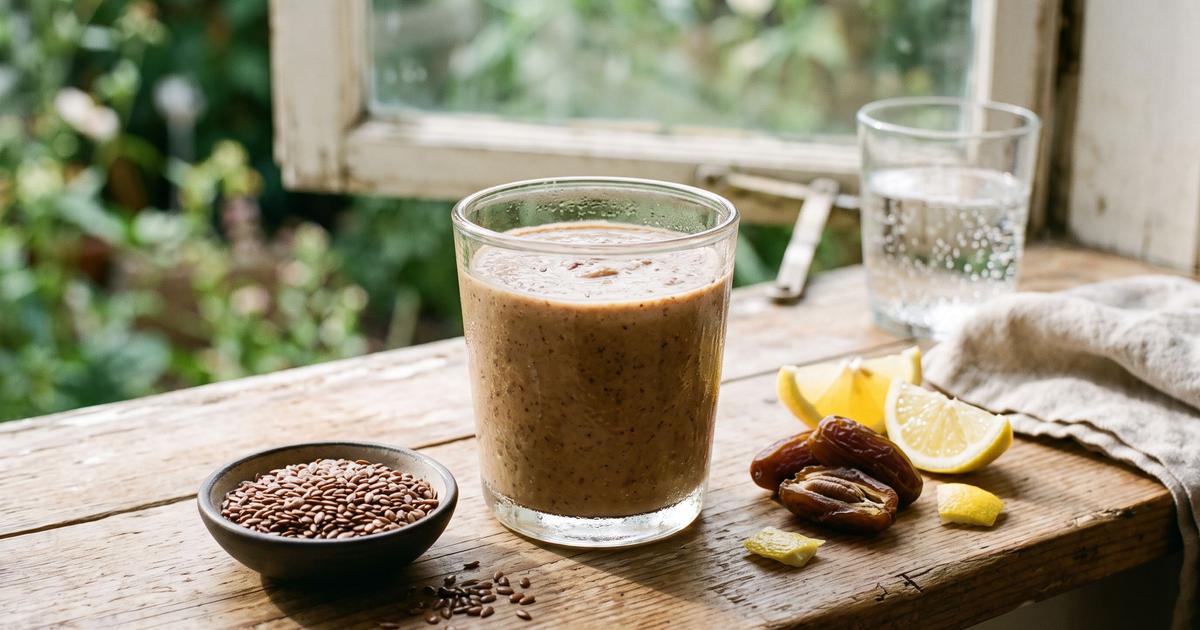
Telba is the Amharic name for flaxseed and for the drink made from it, a roasted, blended refresher poured across Ethiopia and especially welcome during the long fasting seasons when it offers real nourishment without any animal food. Flax is toasted, ground, and whisked or blended with water into a smooth, faintly thick drink, plain or lightly sweetened and soured. Here dates handle the sweetness and a squeeze of lemon the brightness, so it stays free of sugar. The flaxseed is the substance of it, a whole-food source of fiber and omega-3 fats that makes a glass genuinely filling rather than just pleasant. It thickens as it stands, thanks to the soluble fiber that gives flax its body, so it is best made and drunk on the spot.
Ingredients
- 4 tbsp Ground flaxseed
- 2 wholes Medjool dates, pitted
- 1 tbsp Lemon juice
Method
- Toast the ground flaxseed in a dry pan over medium-low heat, stirring, for about 2 minutes, just until it smells warm and nutty. Flax scorches fast once it turns, so keep it moving and pull it early; the gentle toast is what gives telba its roasted depth.
- Blend the flax with the dates and 2 cups (475 ml) warm water until smooth and frothy, about 30 seconds. The dates are the only sweetener, standing in for the sugar or honey a cafe version would stir in, and they blend down completely so nothing needs straining.
- Add the lemon juice and blend once more. The acid lifts the nutty flax and keeps the drink from tasting flat, doing the brightening a pinch of salt might otherwise.
- Pour and drink promptly. Ground flax is full of soluble fiber that swells in water, so telba thickens quickly from a pourable drink to almost a thin pudding; make it fresh, and thin any that sits with a splash more water.
Nutrition
Estimated per serving: 120 calories, 4 g protein, 6 g fiber, 10 mg sodium. Computed from USDA FoodData Central reference values for the main ingredients. This is an approximation, not a laboratory measurement. How these are computed.
Cost per serving is estimated from US national-average retail prices for cheap staple forms, using BLS dried-bean prices and USDA produce prices. Prices vary by store and season, so treat it as a guide, not a receipt. How this is computed.