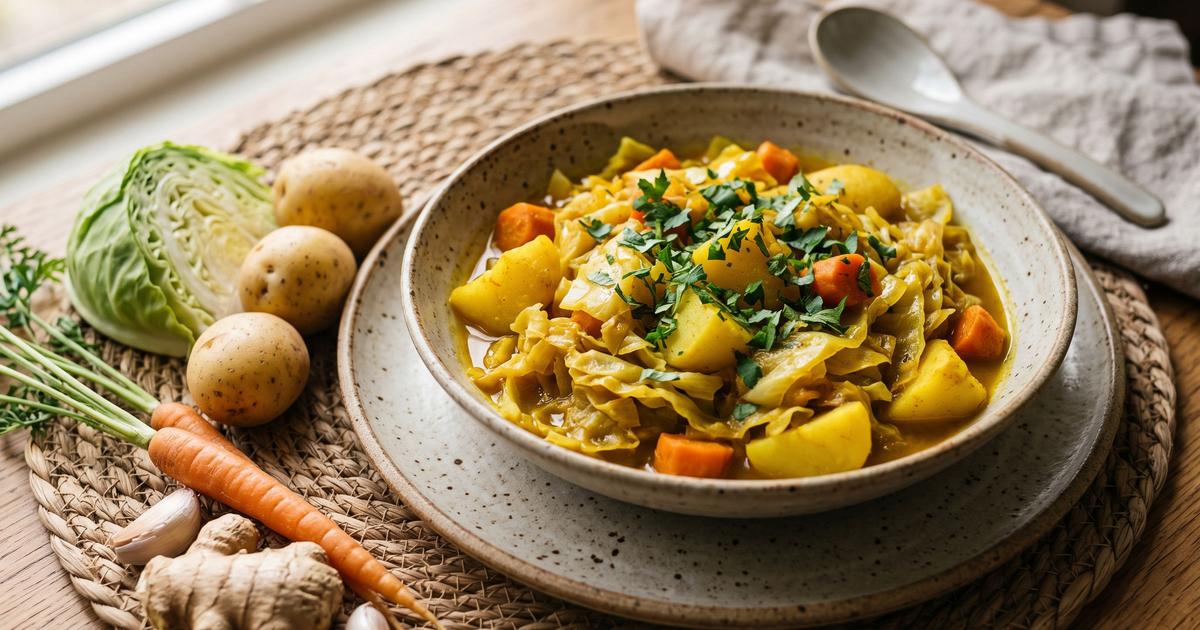
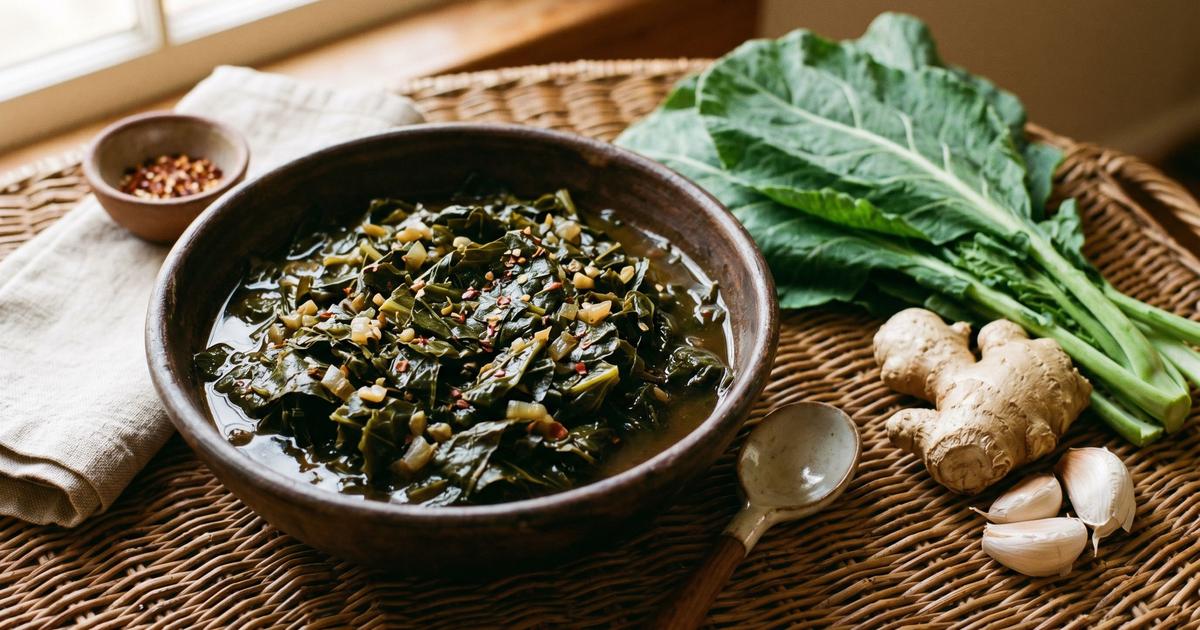
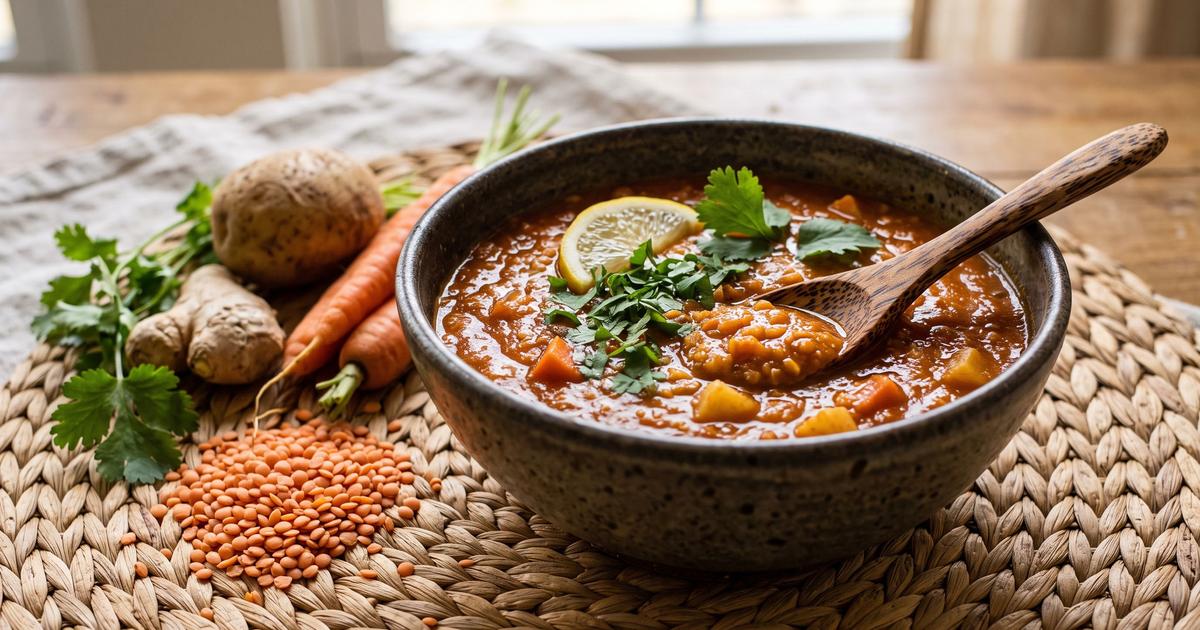
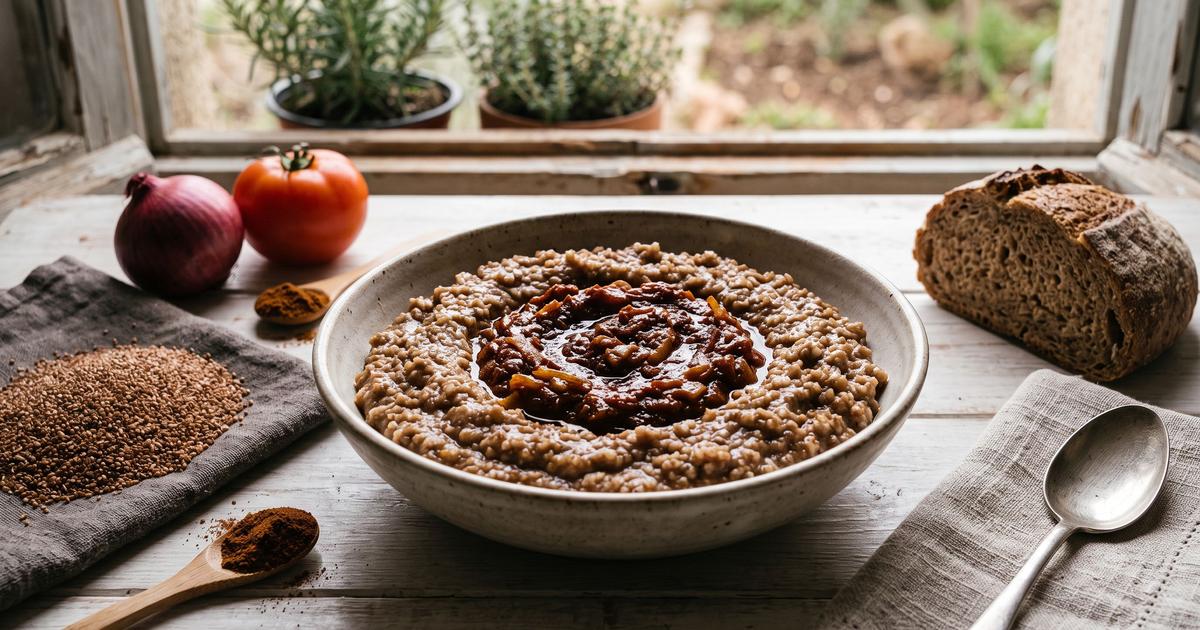
Fosolia, Ethiopian Green Beans and Carrots
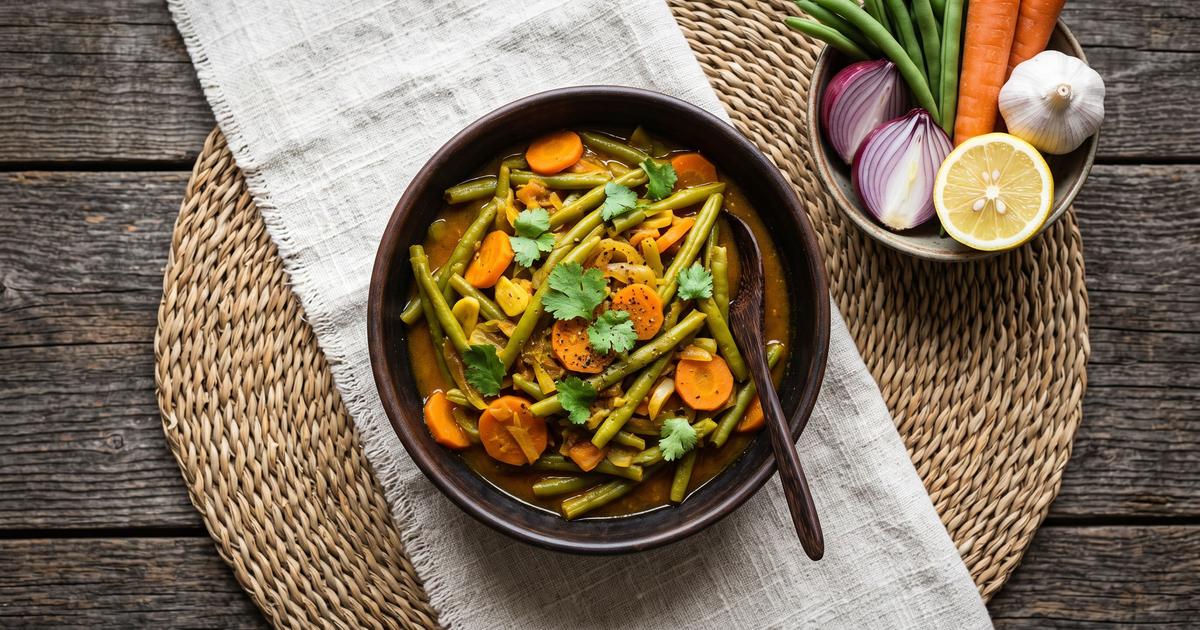
Fosolia is the simple braise of green beans and carrots found on Ethiopian and Eritrean tables, especially during the many fasting days when animal foods are set aside and vegetable dishes carry the meal. It is humble cooking: onions softened long and slow, a little garlic and spice, tomato to make a sauce, and the vegetables cooked down until they are meltingly soft rather than crisp-tender. A restrained pinch of berbere adds warmth without turning it into a fiery wot. Serve it as part of a spread with lentils and injera, or alongside any grain. The trick, as with most Ethiopian dishes, is patience with the onion at the start.
Ingredients
- 1 lb Green beans, trimmed and halved
- 2 wholes Carrots (cooking), cut into batons
- 1 whole Yellow onions, sliced
- 3 cloves Garlic, minced
- 2 wholes Fresh tomatoes, chopped
- 1/2 tsp Turmeric
- 1/2 tsp Berbere
- 1 tbsp Lemon juice
Method
- Sweat the onion in 3 tablespoons (45 ml) water in a wide pan over medium heat for 8 minutes, until soft and beginning to color. Ethiopian cooking builds nearly everything on a long-cooked onion, and taking it slow in water alone gives the sweetness that carries the dish without butter or oil.
- Stir in the garlic, turmeric, and berbere for a minute, until fragrant. Blooming the spices in the hot pan draws out their aroma, and it lets the turmeric shed its raw edge before the vegetables go in.
- Add the tomatoes and cook 5 minutes, mashing them down, until they collapse into a loose sauce. The tomato gives up its liquid here, which becomes the braising medium so nothing sticks and no oil is needed.
- Add the carrots first and cook 5 minutes, then the green beans, cover, and braise 12 to 15 minutes until both are tender. Carrots are denser and need the head start, so staggering them means everything finishes at the same soft-tender point Ethiopians favor for this dish.
- Finish with the lemon juice off the heat. Fosolia is gentle and a little sweet, so the squeeze of acid at the end wakes it up in place of the salt it does without.
Nutrition
Estimated per serving: 90 calories, 4 g protein, 6 g fiber, 45 mg sodium. Computed from USDA FoodData Central reference values for the main ingredients. This is an approximation, not a laboratory measurement. How these are computed.
Cost per serving is estimated from US national-average retail prices for cheap staple forms, using BLS dried-bean prices and USDA produce prices. Prices vary by store and season, so treat it as a guide, not a receipt. How this is computed.