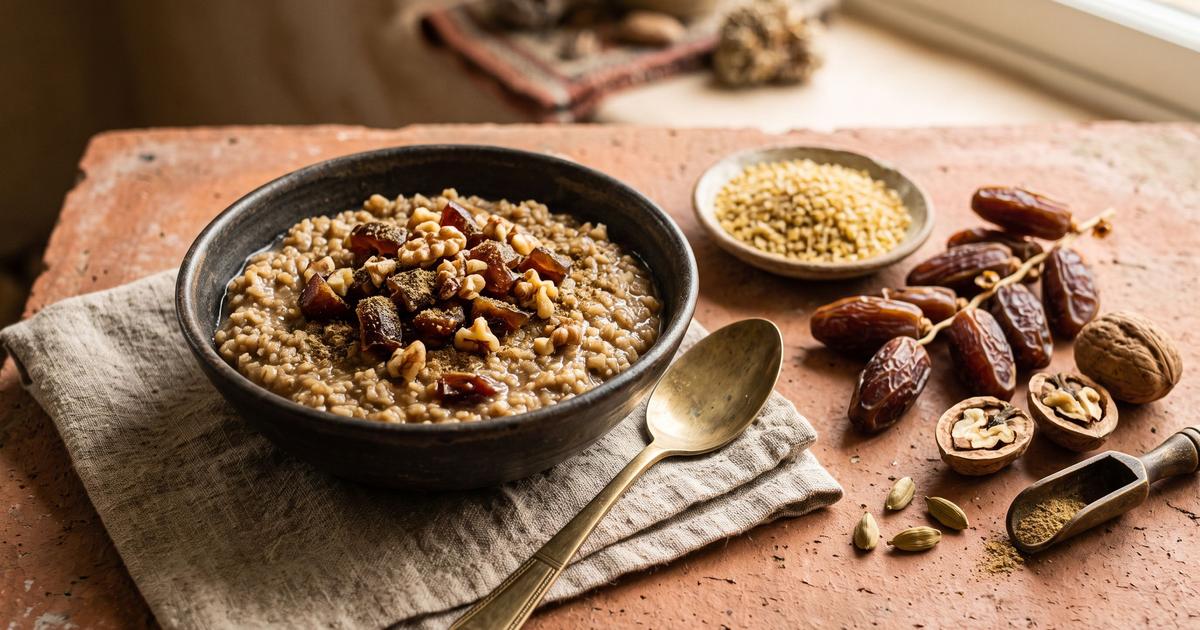
Ethiopian Teff Porridge with a Berbere Well
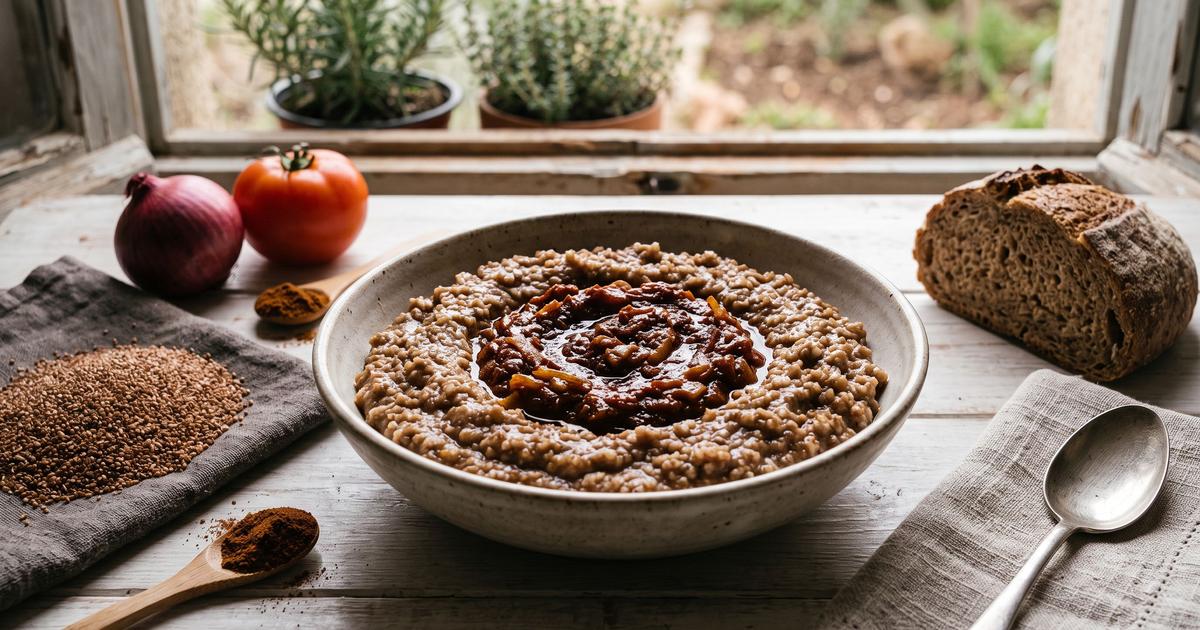
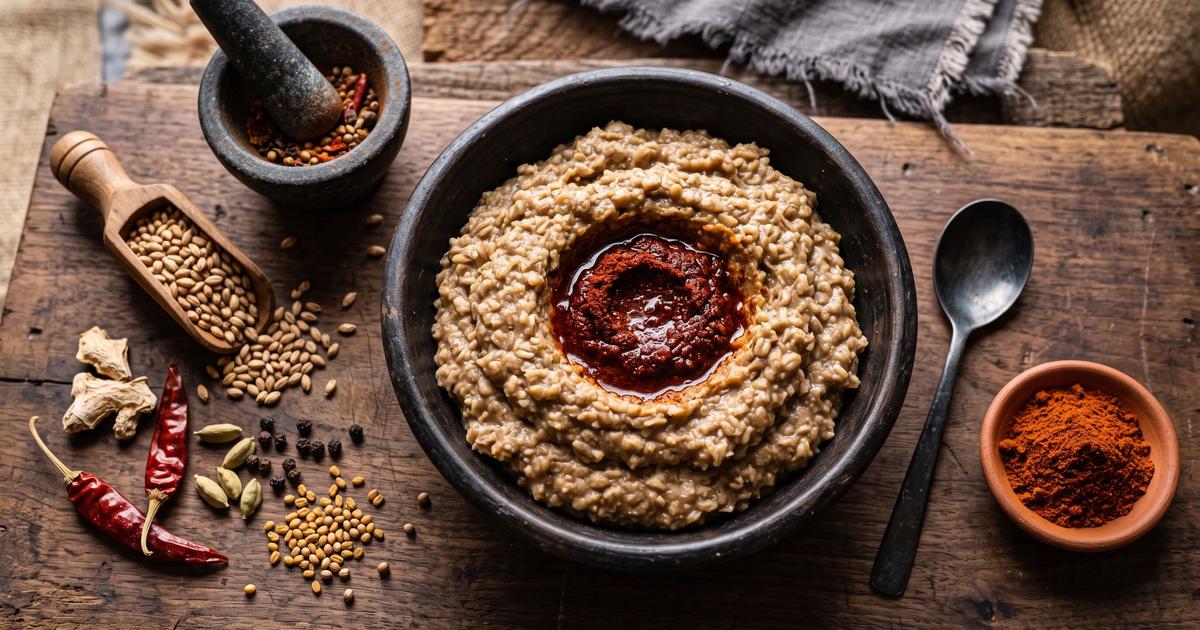
Genfo is a stiff Ethiopian breakfast porridge, usually built from barley or teff flour and served with a crater of spiced butter and berbere in the middle that you pull the porridge through as you eat. This version keeps the shape of that ritual, the well and its dark spiced center, but swaps the butter well for a tomato and onion sauce carried by berbere, and cooks whole teff grain instead of flour so the kernel stays intact. Teff is the smallest grain there is, and simmered whole it turns creamy with a gentle nutty bite. Eat it warm, folding the spiced center outward one spoonful at a time.
Ingredients
- 3/4 cup Teff
- 1/2 whole Yellow onions, finely diced
- 1 clove Garlic, minced
- 1 tbsp Tomato paste
- 2 tsp Berbere
- 1 tbsp Ground flaxseed, optional, stirred into the porridge
- 1 tsp Lemon juice
- 3 tbsp Plain plant yogurt, optional, to serve
Method
- Toast the teff dry in the pot for 2 minutes, until it smells nutty and faintly of cocoa. The grain is tiny, so keep it moving and pull it before it scorches.
- Add 3 cups (720 ml) water, whisk well, and simmer for 15 to 18 minutes, whisking often, until thick and glossy. Whisking keeps the fine grain from clumping, and it sets up like polenta as it cooks.
- While it simmers, make the well: sweat the onion in a little water until soft, toast the tomato paste until brick red, then add the berbere and a splash of water and cook 1 minute into a thick, dark sauce. Berbere needs a moment of heat and a little moisture to bloom rather than taste raw.
- Stir the flaxseed into the porridge if using, then spoon the porridge into bowls and press a well into the center of each with the back of the spoon. Fill the well with the berbere sauce. This is how genfo is served: the spiced center seasons each bite as you fold it in.
- Finish with lemon, and add a spoon of yogurt on the side if you like. The cool tang cuts the chile heat, the way a dollop of ayib traditionally does.
Nutrition
Estimated per serving: 220 calories, 8 g protein, 8 g fiber, 35 mg sodium. Computed from USDA FoodData Central reference values for the main ingredients. This is an approximation, not a laboratory measurement. How these are computed.
Cost per serving is estimated from US national-average retail prices for cheap staple forms, using BLS dried-bean prices and USDA produce prices. Prices vary by store and season, so treat it as a guide, not a receipt. How this is computed.