Atkilt Wot
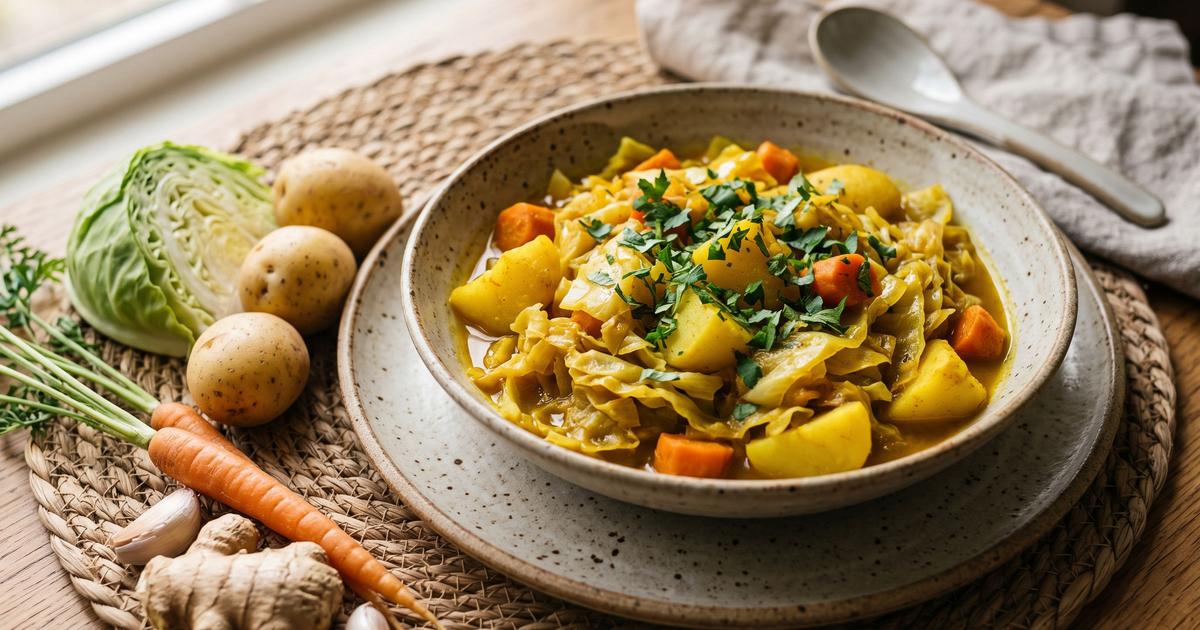
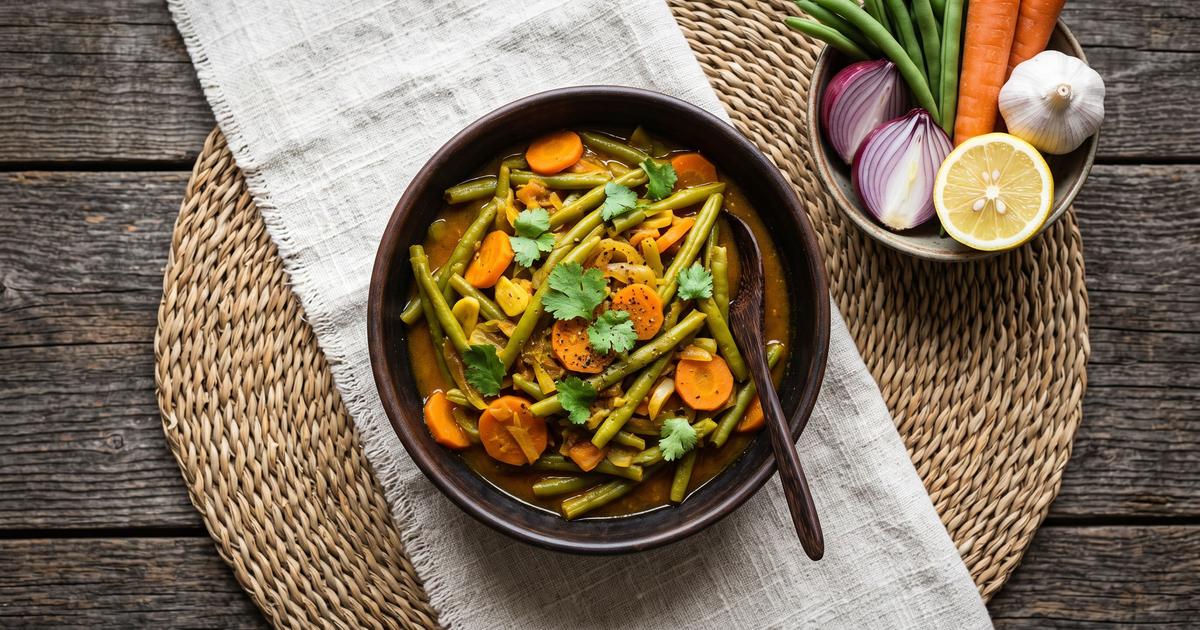
Atkilt wot, also called tikil gomen, is the mild yellow vegetable dish that balances the fiery stews on an Ethiopian platter. It is an alicha, meaning it leans on turmeric, ginger, and garlic rather than berbere, so no heat competes with the sweetness of long-cooked cabbage and carrot. Restaurants build it on niter kibbeh, a spiced butter. Here the vegetables cook down in water and their own moisture, and the slow simmer does the real work: it softens the cabbage all the way through and pulls its sugars forward, so a squeeze of lemon at the end is all the seasoning it needs.
Ingredients
- 1 Yellow onion, thinly sliced
- 4 cloves Garlic, minced
- 1 tbsp Ginger, grated
- 1 tsp Turmeric
- 3 Carrots (cooking)s, cut into thick batons
- 1 lb Potatoes, peeled and cut into 1-inch chunks
- 1 lb green cabbage, cored and sliced into wide ribbons
- 1 Jalapeño, slit lengthwise
- 1/2 Lemons, juiced
Method
- Sweat the onion in 3 tablespoons (45 ml) water in a wide, heavy pot over medium heat until soft and translucent, about 8 minutes. Let the edges catch a little color, which builds the base sweetness that oil usually starts.
- Stir in the garlic, ginger, and turmeric and cook for 1 minute. Turmeric is fat soluble and a little raw, so a minute of direct heat rounds it out and turns the pot a deep yellow before the vegetables go in.
- Add the carrots, potatoes, and slit chile with 1 cup (240 ml) water. Cover and simmer over medium-low heat until the potatoes are nearly tender, about 15 minutes. This is an alicha, a mild dish, so the whole slit chile perfumes the pot without making it hot.
- Pile in the cabbage, cover, and cook until it collapses and everything is fully soft, 12 to 15 minutes more. Stir once or twice and add a splash of water only if the pot runs dry. The cabbage releases its own liquid as it wilts, so the dish nearly steams itself.
- Uncover for the last 5 minutes so the liquid reduces to a light glaze instead of a broth.
- Off the heat, grind over black pepper and stir in the lemon juice. The acid is what makes a salt-free pot of vegetables taste finished. Serve alongside a lentil stew and an intact whole grain.
Nutrition
Estimated per serving: 150 calories, 4 g protein, 6 g fiber, 40 mg sodium. Computed from USDA FoodData Central reference values for the main ingredients. This is an approximation, not a laboratory measurement. How these are computed.
Cost per serving is estimated from US national-average retail prices for cheap staple forms, using BLS dried-bean prices and USDA produce prices. Prices vary by store and season, so treat it as a guide, not a receipt. How this is computed.