Duba Wot, Ethiopian Berbere Squash
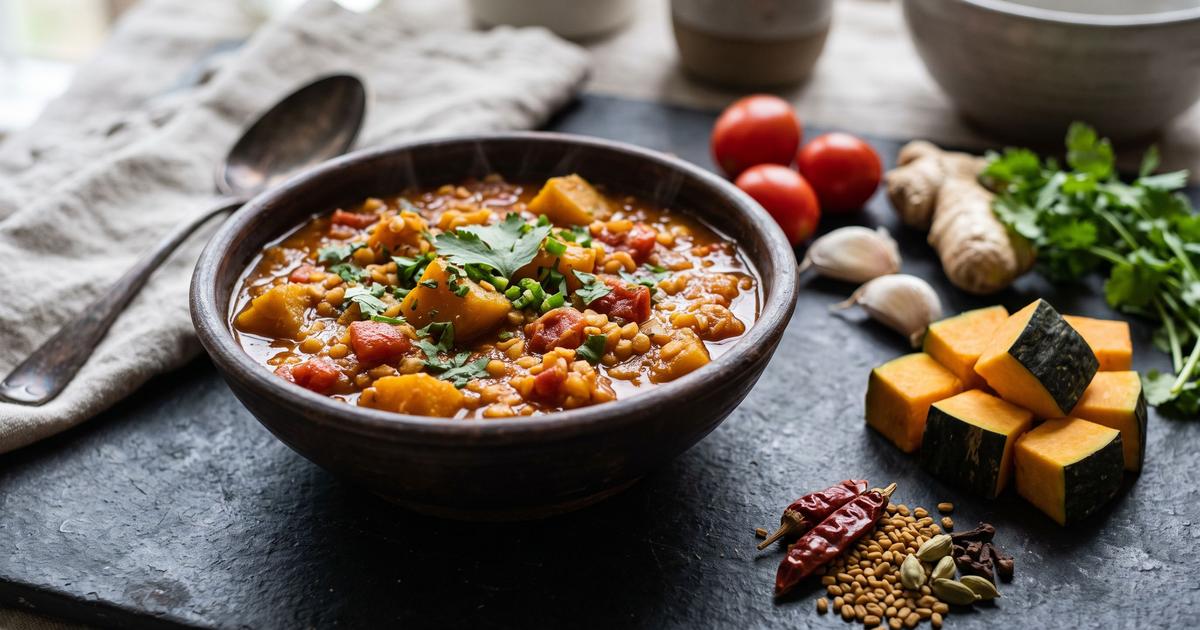
Duba wot is the pumpkin stew of the Ethiopian fasting calendar, a mild-looking dish that hides real heat under its sweetness. Squash is simmered down in the same onion, garlic, ginger, and berbere base that carries the meat and lentil wots, until it is soft enough to spoon and spiced enough to stand alone. Berbere is the whole flavor engine here, a blend of chiles, fenugreek, and warm spices, so a good one makes the salt beside the point. Butternut works year-round, though any dense winter squash will do. Mash part of the pot for body and finish with lemon to keep the sweetness in check.
Ingredients
- 1 1/2 lb Butternut squash, peeled and cubed
- 1 whole Yellow onions, finely diced
- 3 cloves Garlic, minced
- 1 tbsp Ginger, grated
- 1 1/2 tbsp Berbere
- 1 tbsp Tomato paste
- 1/2 whole Lemons, juiced
- 2 tbsp Cilantro, chopped
Method
- Sweat the onion in 3 tablespoons (45 ml) water in a wide pot over medium heat until soft and collapsing, about 8 minutes, adding more water if it sticks. A long, slow sweat is what builds the sweet onion base that every Ethiopian wot stands on, and water does the job that oil or clarified butter would elsewhere.
- Add the garlic and ginger and cook 1 minute, then stir in the berbere and tomato paste and let them sizzle in the moisture for 2 minutes. Blooming the berbere and toasting the paste until it darkens wakes up their chiles and spices, which is where the depth comes from instead of salt.
- Add the squash, stir to coat, and pour in about 1 cup (240 ml) water. Cover and simmer until the squash is fork-tender, 18 to 20 minutes, adding a splash more water if the pan runs dry.
- Mash roughly a third of the squash against the side of the pot and stir it back in. Breaking down part of it thickens the sauce so it clings, while the rest holds its shape for texture.
- Off the heat, stir in the lemon juice and taste. The acid lifts the whole pot and sharpens the berbere, standing in for the salt this dish does without. Finish with cilantro and serve with injera or brown rice.
Nutrition
Estimated per serving: 130 calories, 3 g protein, 6 g fiber, 40 mg sodium. Computed from USDA FoodData Central reference values for the main ingredients. This is an approximation, not a laboratory measurement. How these are computed.
Cost per serving is estimated from US national-average retail prices for cheap staple forms, using BLS dried-bean prices and USDA produce prices. Prices vary by store and season, so treat it as a guide, not a receipt. How this is computed.