Kik Alicha
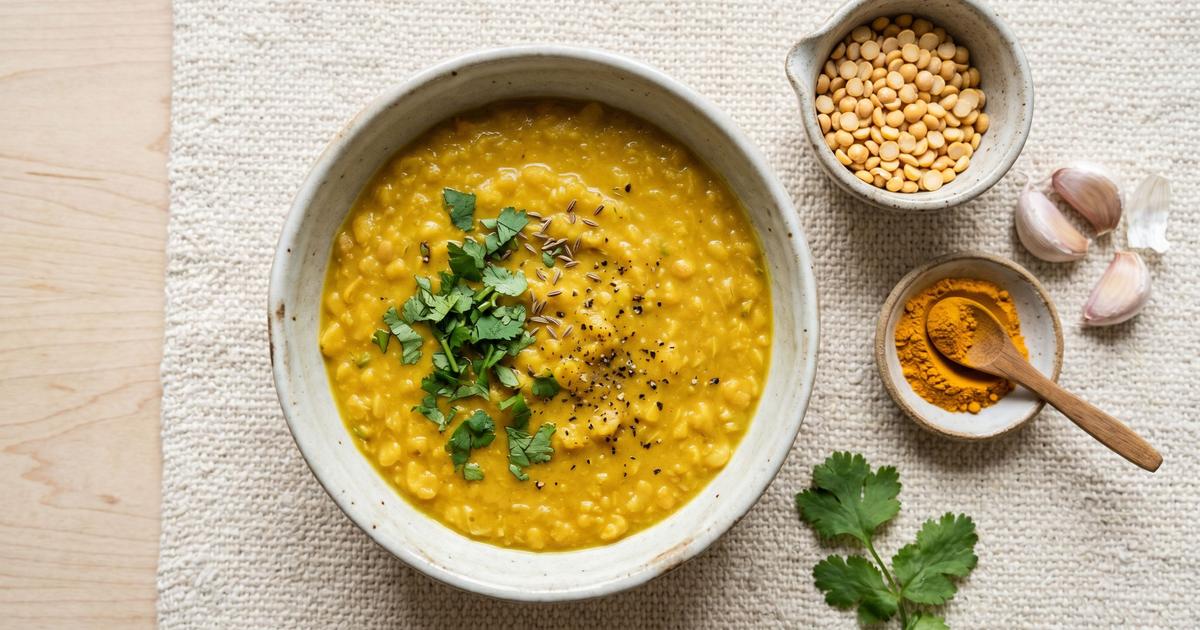
Kik alicha is the calm counterpart to Ethiopia's fiery berbere stews. Alicha means mild, and this one is built on turmeric, garlic, and ginger instead of chile paste. The technique that replaces oil is blooming the turmeric and cracked pepper in the dry pot with a splash of water before the peas go in: turmeric is fat-soluble and needs that brief high heat, plus the black pepper, to unlock its color instead of tasting dusty. A single chile left whole perfumes the pot without much heat; pull it out before serving for the mildest version, or chop it back in for more warmth.
Ingredients
- 1 Yellow onion, diced
- 3 cloves Garlic, minced
- 1 tbsp Ginger, grated
- 1 1/2 tsp Turmeric
- 1/4 tsp Black peppercorns, cracked
- 1 Jalapeño, left whole
- 1 1/2 cups Yellow split peas, rinsed
- 1/2 Lemons, juiced
Method
- Cook the onion in a dry pot over medium heat, stirring often and adding small splashes of water when it sticks, until soft and turning translucent, about 8 minutes.
- Add the garlic and ginger and cook 1 minute, until fragrant.
- Stir in the turmeric and cracked black pepper with a splash of water and cook 30 seconds, just until the turmeric smells toasted rather than raw. This brief high heat, plus the pepper, is what unlocks turmeric's color and flavor instead of leaving it dusty.
- Add the split peas, the whole jalapeno, and 5 cups (1.2 L) water. Bring to a boil, then reduce to a steady simmer, stirring now and then, until the peas fully break down into a thick, golden stew, 30 to 35 minutes. Add more water if it tightens too far.
- Fish out the jalapeno for the mildest version, or chop it back into the pot for more warmth.
- Off the heat, stir in the lemon juice and taste. The stew should be golden, soft, and gently spiced, not hot.
- Serve warm over an intact whole grain or scooped up with a whole grain flatbread.
Nutrition
Estimated per serving: 295 calories, 16 g protein, 10 g fiber, 15 mg sodium. Computed from USDA FoodData Central reference values for the main ingredients. This is an approximation, not a laboratory measurement. How these are computed.
Cost per serving is estimated from US national-average retail prices for cheap staple forms, using BLS dried-bean prices and USDA produce prices. Prices vary by store and season, so treat it as a guide, not a receipt. How this is computed.