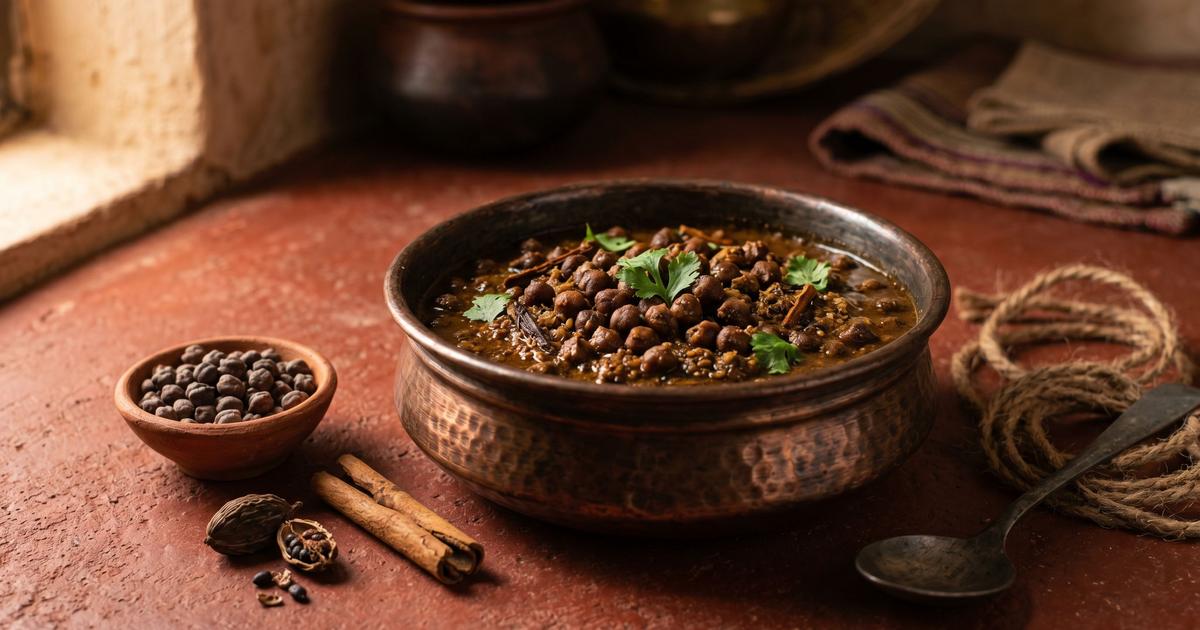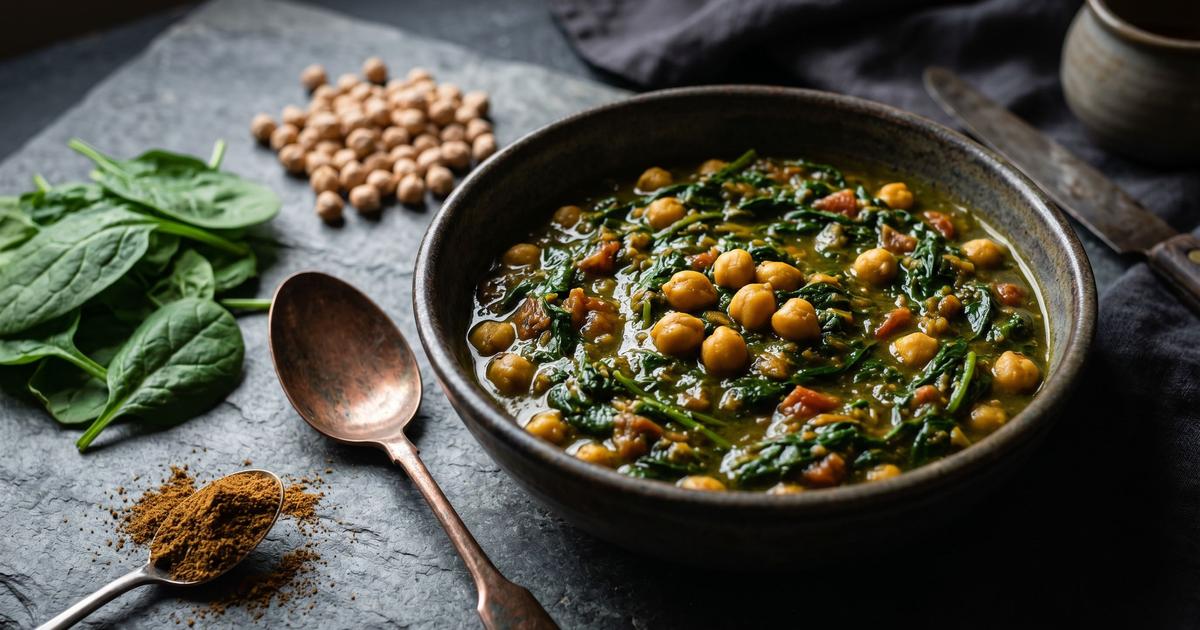
Chana Masala
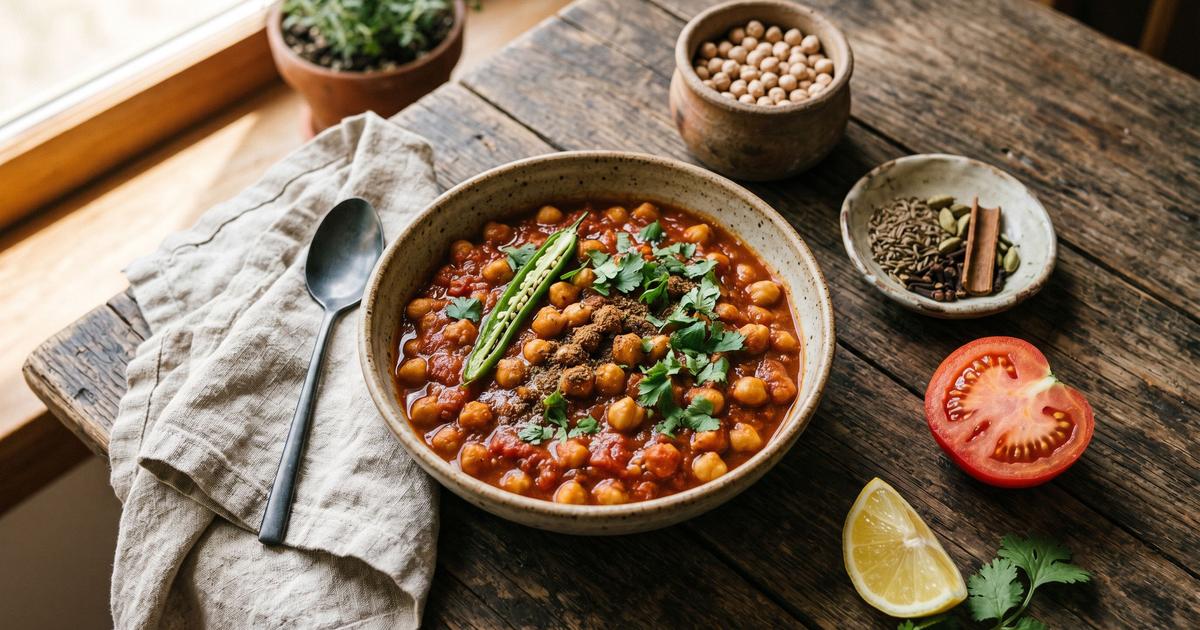
Chana masala almost always begins by frying onions in oil. This version sweats them in water instead, which draws out the same sweetness and lets the toasted spices carry the dish. The sourness that usually arrives as salt comes here from tomato and from amchur, so the flavor stays sharp and the sodium stays low.
Ingredients
- 1 tsp Cumin seed
- 1 Yellow onion, finely chopped
- 4 cloves Garlic, minced
- 1 tbsp Ginger, grated
- 1 Indian green chile, slit lengthwise
- 1 tbsp Tomato paste
- 1/2 tsp Turmeric
- 2 tsp Coriander seed, ground
- 1 tsp Kashmiri chile, ground
- 1/2 tsp Black peppercorns, freshly ground
- 1 1/2 cups Canned crushed tomatoes
- 3 cups Chickpeas, cooked and drained
- 2 Bay leaves
- 1 tsp no-salt vegetable bouillon
- 1 tsp Amchur
- 1 tsp Garam masala
- 3 tbsp Cilantro, chopped
Method
- Warm a wide pot over medium heat. Toast the cumin seed in the dry pot until it darkens a shade and smells nutty, about 90 seconds. Push it to one side.
- Add the onion with 3 tablespoons (45 ml) water. Sweat it, stirring and adding a splash more water whenever the pot looks dry, until soft and translucent, about 8 minutes. This slow start is where the sweetness comes from, so do not rush it.
- Stir in the garlic, ginger, and green chile. Cook for 1 minute, until the raw edge lifts.
- Add the tomato paste and let it darken against the bottom of the pot for a minute, until it turns brick red. Add the turmeric, ground coriander, ground Kashmiri chile, and black pepper, and stir for 30 seconds so the spices bloom in the moisture rather than scorch in a dry pan.
- Pour in the crushed tomatoes. Simmer until the sauce pulls away from the sides of the pot and deepens in color, about 8 minutes.
- Add the chickpeas, bay leaves, no-salt bouillon, and 1 cup (240 ml) water. Simmer uncovered for 15 minutes. Press a ladle of chickpeas against the side of the pot and stir them back in to thicken the sauce.
- Turn off the heat. Discard the bay leaves. Stir in the amchur and garam masala. The amchur, dried green mango, does the job salt usually does, so add it a pinch at a time until the curry tastes bright rather than flat.
- Rest for 5 minutes, then fold in the cilantro. Serve over intact brown rice or with a whole grain flatbread.
Nutrition
Estimated per serving: 265 calories, 14 g protein, 13 g fiber, 130 mg sodium. Computed from USDA FoodData Central reference values for the main ingredients. This is an approximation, not a laboratory measurement. How these are computed.
Cost per serving is estimated from US national-average retail prices for cheap staple forms, using BLS dried-bean prices and USDA produce prices. Prices vary by store and season, so treat it as a guide, not a receipt. How this is computed.