Tahu Bacem, Javanese Sweet Braised Tofu
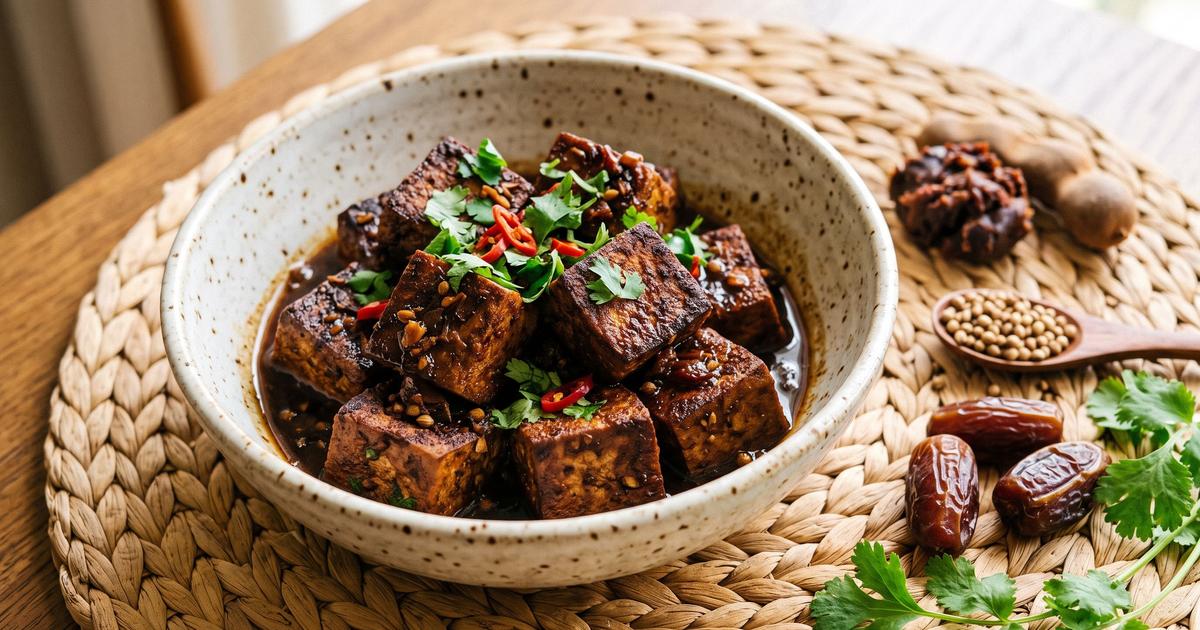
Bacem is a Javanese technique from Yogyakarta and central Java: simmer tofu or tempeh in a sweet, aromatic braise until every drop is absorbed, then cook the outside dry so it firms and browns. The braise is coriander, garlic, shallot, galangal, and the tang of tamarind, sweetened traditionally with palm sugar and here with blended dates. The salam leaf that scents the original is hard to find, so a bay leaf steps in. What sets bacem apart from a quick glaze is patience: the liquid has to reduce almost completely so the flavor moves into the porous tofu rather than staying in the pan. A final dry sear replaces the frying that usually finishes the dish. It keeps for days and is good warm or cold.
Ingredients
- 14 oz Firm tofu, cut into thick triangles
- 4 cloves Garlic
- 3 Shallots
- 5 slices Galangal
- 1 tsp Coriander seed, ground
- 1 tbsp Tamarind paste
- 3 Medjool dates, pitted
- 2 tbsp Low-sodium tamari
- 2 Bay leaves
Method
- Pound or blend the garlic, shallots, galangal, and ground coriander into a rough paste with a splash of water. Grinding the aromatics into a paste releases oils that a whole-spice simmer never would, and this bumbu is the flavor base of bacem.
- Blend the dates with a little water into a smooth paste. They take the place of the palm sugar that makes bacem sweet, without the refined sugar.
- Lay the tofu in a wide pan and add the spice paste, date paste, tamarind, tamari, bay leaves, and 1.5 cups (350 ml) water. Simmer uncovered, turning the pieces once, until the liquid has nearly all gone, about 25 minutes. The porous tofu slowly drinks the braise in as it reduces, so the flavor ends up in the tofu instead of the pot.
- Move the glazed tofu to a hot nonstick pan and dry-sear each side until it browns and firms, 3 to 4 minutes a side. This caramelizes the sugars into a chewy skin, the step that would normally be deep-frying.
Nutrition
Estimated per serving: 150 calories, 12 g protein, 2 g fiber, 260 mg sodium. Computed from USDA FoodData Central reference values for the main ingredients. This is an approximation, not a laboratory measurement. How these are computed.
Cost per serving is estimated from US national-average retail prices for cheap staple forms, using BLS dried-bean prices and USDA produce prices. Prices vary by store and season, so treat it as a guide, not a receipt. How this is computed.