Orak-Arik Sayur, Javanese Cabbage and Carrot Scramble
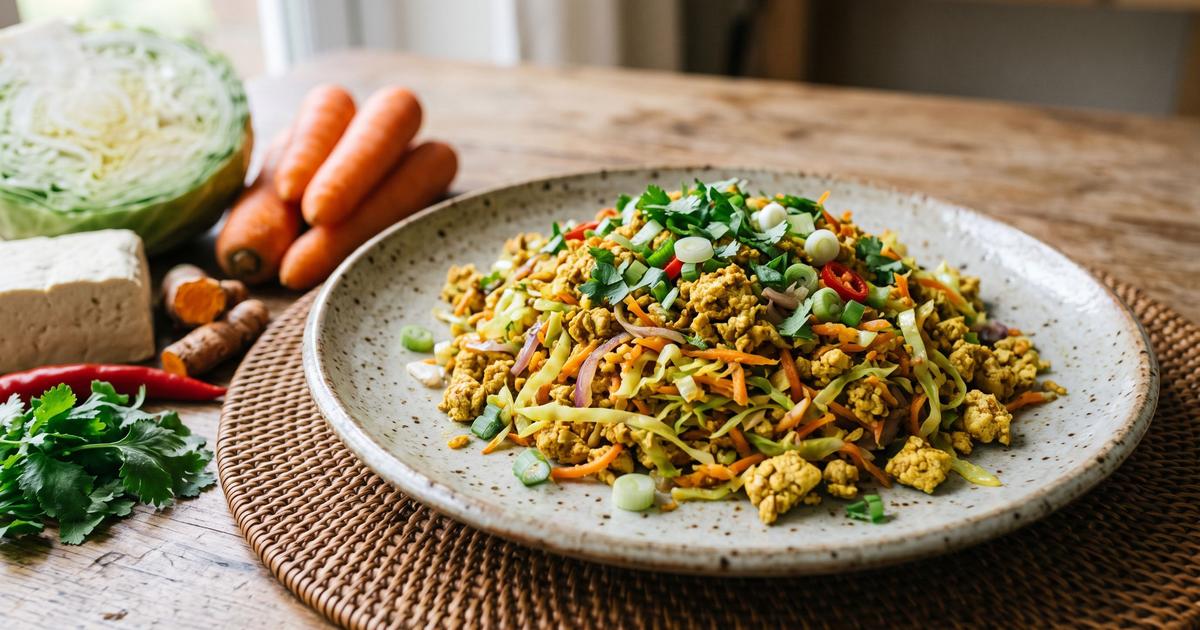
Orak-arik is Javanese home cooking at its plainest and best, a fast scramble of finely cut vegetables that turns up on the family table almost daily. The classic binds shredded cabbage and carrot with egg; crumbling firm tofu and staining it with turmeric reproduces the look and the soft texture while keeping the dish fully plant-based. There is no oil, no salt, and no coconut anywhere in it. The flavor is all in the technique: sweat the aromatics slow, cook the vegetables just until they wilt so they stay sweet and a little crisp, and finish with white pepper and scallion. Serve it as a side with rice and a sambal, or fold it into a bowl.
Ingredients
- 4 cups green cabbage, finely shredded
- 2 wholes Carrots, julienned
- 8 oz Firm tofu, pressed and crumbled
- 2 wholes Shallots, thinly sliced
- 3 cloves Garlic, minced
- 1/2 tsp Turmeric
- 1/4 tsp White pepper
- 2 wholes Scallions, sliced
Method
- Toss the crumbled tofu with the turmeric and set it aside. Orak-arik is traditionally built on beaten egg, and turmeric-stained tofu gives the same golden color and soft, curd-like pieces without it, while adding protein the egg would have.
- Sweat the shallots and garlic in a wide pan with 3 tablespoons water until soft and fragrant, about 3 minutes. Keep the heat moderate so they turn sweet and translucent rather than browning, since browning would push this toward a stir-fry and orak-arik should stay gentle and juicy.
- Add the carrot first and cook 2 minutes, then the cabbage, and toss over higher heat until both wilt but keep a little crunch, about 4 minutes. The vegetables give off their own water as they cook, which is all the liquid the pan needs. The natural sugars in cabbage and carrot are the sweetness the dish is known for.
- Push the vegetables aside, add the turmeric tofu to the clear part of the pan, and let it sit undisturbed for a minute to firm up before folding everything together. Season with the white pepper and fold through the scallions off the heat. White pepper is the Indonesian default and gives a rounder, earthier warmth than black.
Nutrition
Estimated per serving: 100 calories, 7 g protein, 3 g fiber, 25 mg sodium. Computed from USDA FoodData Central reference values for the main ingredients. This is an approximation, not a laboratory measurement. How these are computed.
Cost per serving is estimated from US national-average retail prices for cheap staple forms, using BLS dried-bean prices and USDA produce prices. Prices vary by store and season, so treat it as a guide, not a receipt. How this is computed.