Acar Kuning, Indonesian Turmeric Pickle
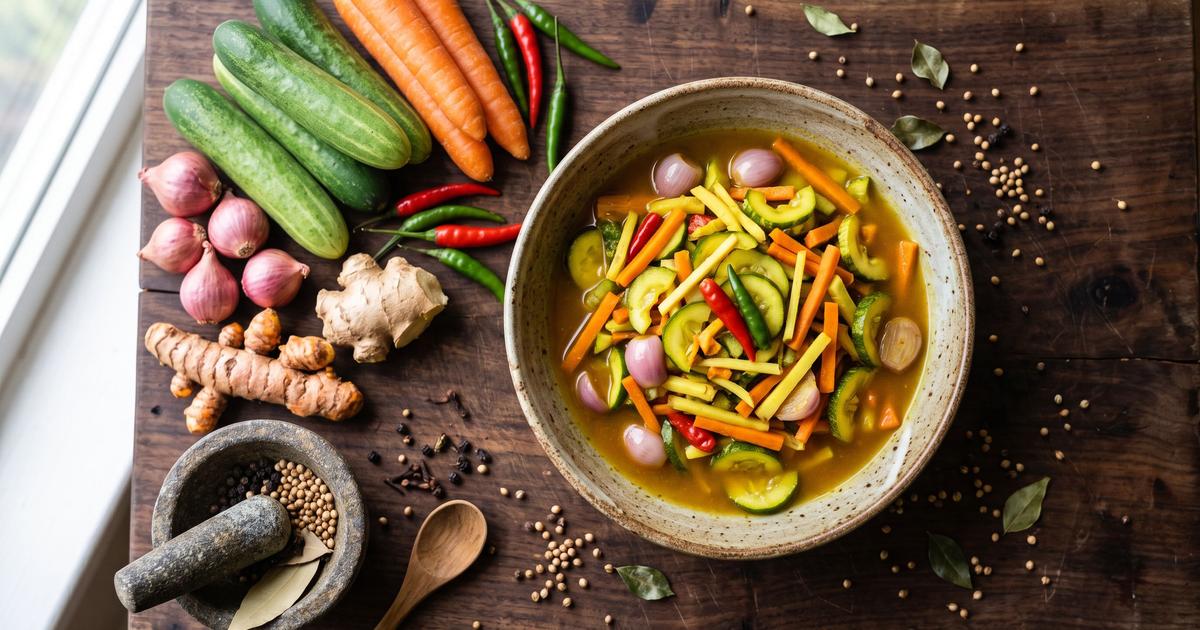
Acar kuning is the yellow pickle of the Indonesian table, the sharp, crunchy counterpoint set beside rich rice plates to cut through them. Kuning means yellow, and the color is fresh turmeric bloomed in warm vinegar along with ginger, garlic, shallot, and whole bird chiles. Cucumber and carrot are the usual vegetables, cut into batons so they stay crisp. The method matters more than the list: the pickling liquid is warmed just enough to soften the aromatics and bloom the spice, then the tender vegetables go in off the heat so they keep their snap. A little minced date balances the vinegar where sugar normally would, with no refined sweetener and no oil. Make it ahead; acar is better on day two, and it holds in the fridge for a week.
Ingredients
- 2 Cucumbers, seeded and cut into batons
- 2 Carrots (cooking)s, cut into batons
- 4 Shallots, quartered
- 3 cloves Garlic, sliced
- 1 tbsp Ginger, julienned
- 1 tsp Turmeric
- 3 Thai bird chiles, left whole and slit
- 1/2 cup Apple cider vinegar
- 2 Deglet noor dates, pitted and minced
Method
- Warm the vinegar with 1/2 cup (120 ml) water, the turmeric, minced dates, ginger, garlic, and slit chiles in a small pot until it just steams, then take it off the heat. Warming, not boiling, blooms the turmeric and softens the aromatics while keeping the vinegar sharp, since a hard boil would cook off the acid that preserves the pickle.
- Drop in the shallots and let them sit in the hot liquid for 2 minutes, which knocks back their raw harshness without cooking them limp.
- Add the cucumber and carrot batons and toss, then pull the pot from any residual heat immediately. Adding the watery vegetables off the heat is what keeps them crisp; leave them over the flame and they go soft and dull.
- Cool to room temperature, then chill at least 20 minutes before serving. The rest lets the turmeric stain everything gold and the flavors marry, and the pickle only improves over the next few days in the fridge.
Nutrition
Estimated per serving: 35 calories, 1 g protein, 2 g fiber, 15 mg sodium. Computed from USDA FoodData Central reference values for the main ingredients. This is an approximation, not a laboratory measurement. How these are computed.
Cost per serving is estimated from US national-average retail prices for cheap staple forms, using BLS dried-bean prices and USDA produce prices. Prices vary by store and season, so treat it as a guide, not a receipt. How this is computed.