Terong Balado, Indonesian Eggplant in Chile Sambal
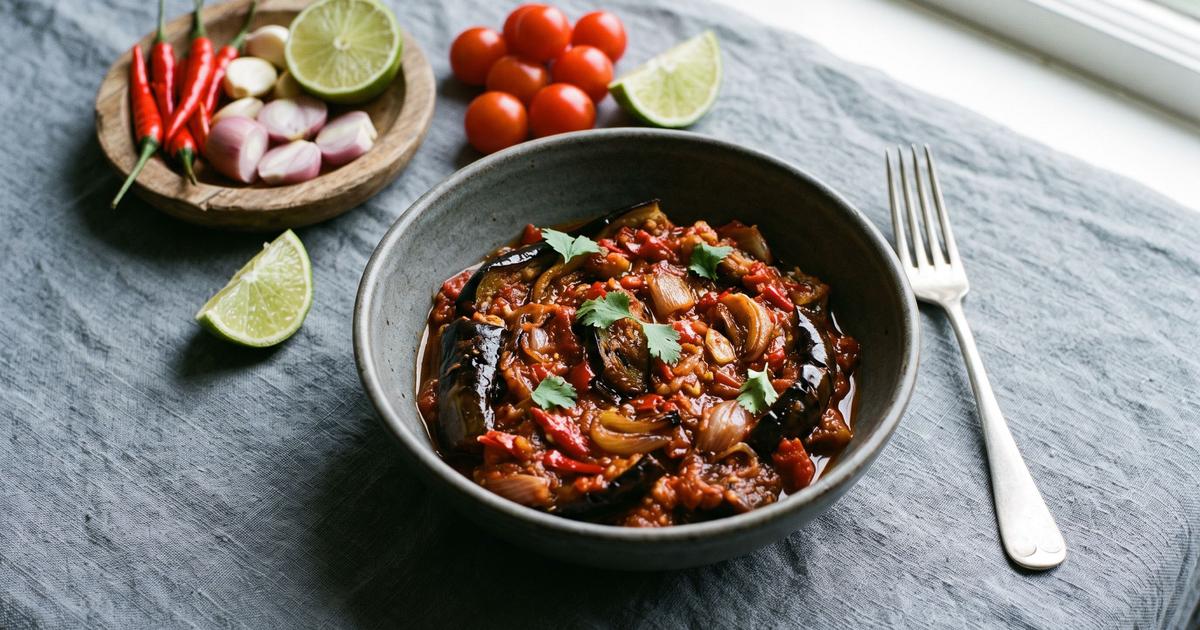
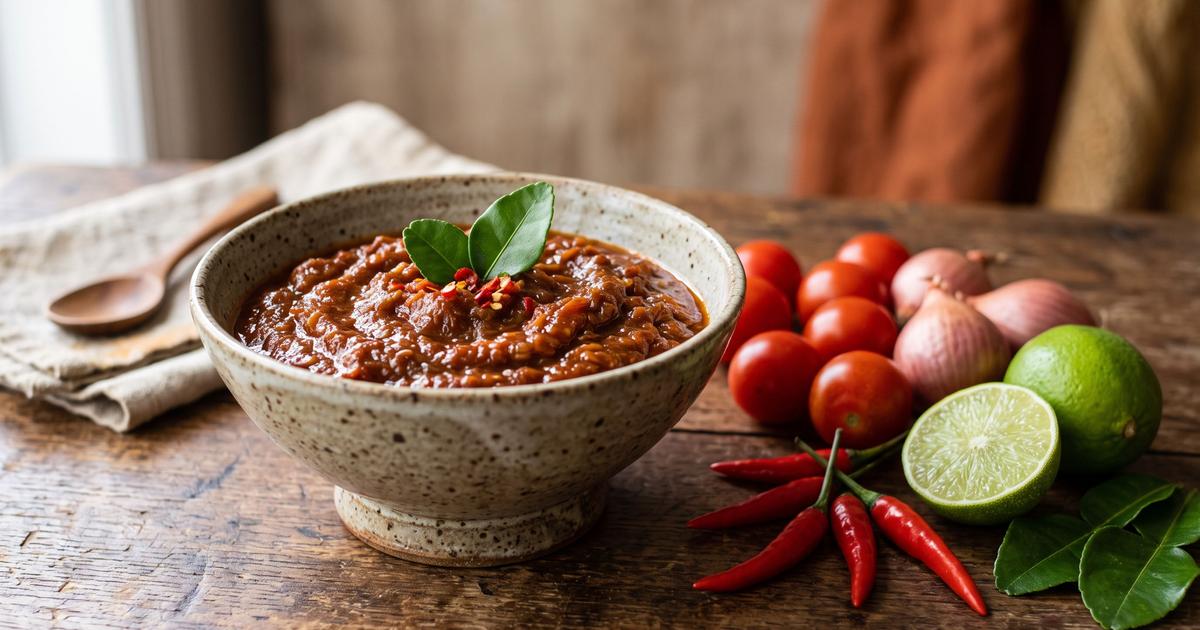
Balado is a Minangkabau sambal from West Sumatra, a fierce red-chile paste that gets fried down and then wrapped around almost anything: eggs, potatoes, fish, or, in this case, eggplant. The technique that makes it work without oil is the dry char on the eggplant, which drives off water and builds smoke while the sambal cooks separately in its own moisture. Fresno chiles give the deep red color with moderate heat; use fewer, or seed them, if you want it milder. Serve it alongside brown rice and a simple green.
Ingredients
- 1 1/2 lb Eggplant, cut into thick wedges
- 3 Fresnos, stemmed and roughly chopped
- 4 Shallots, roughly chopped
- 3 cloves Garlic, chopped
- 2 Fresh tomatoes, chopped
- 1 Medjool date, pitted
- 1 tbsp Lime juice
Method
- Char the eggplant wedges dry under a broiler or in a dry cast iron pan, turning, until the skins blister and the flesh collapses, about 12 minutes. Eggplant is a sponge that will drink any oil it meets, so charring it dry is how you cook it soft and smoky without it going greasy.
- While it chars, pound or pulse the fresno, shallots, garlic, tomato, and date into a coarse paste. This rough paste is the balado, and leaving it a little chunky gives the finished dish more texture than a smooth blend would.
- Cook the paste in a dry pan over medium heat, adding a splash of water whenever it sticks, for about 10 minutes, until it darkens and turns jammy and no longer smells raw. Cooking the sambal down is what tames the raw allium bite and concentrates the chile and tomato.
- Fold in the charred eggplant and simmer 2 minutes so it soaks up the sambal. Finish with the lime off the heat. A pinch of terasi shrimp paste usually salts a balado, and here the cooked-down tomato and shallot carry that savory weight while the lime keeps it lifted.
Nutrition
Estimated per serving: 90 calories, 3 g protein, 6 g fiber, 20 mg sodium. Computed from USDA FoodData Central reference values for the main ingredients. This is an approximation, not a laboratory measurement. How these are computed.
Cost per serving is estimated from US national-average retail prices for cheap staple forms, using BLS dried-bean prices and USDA produce prices. Prices vary by store and season, so treat it as a guide, not a receipt. How this is computed.