Ndengu
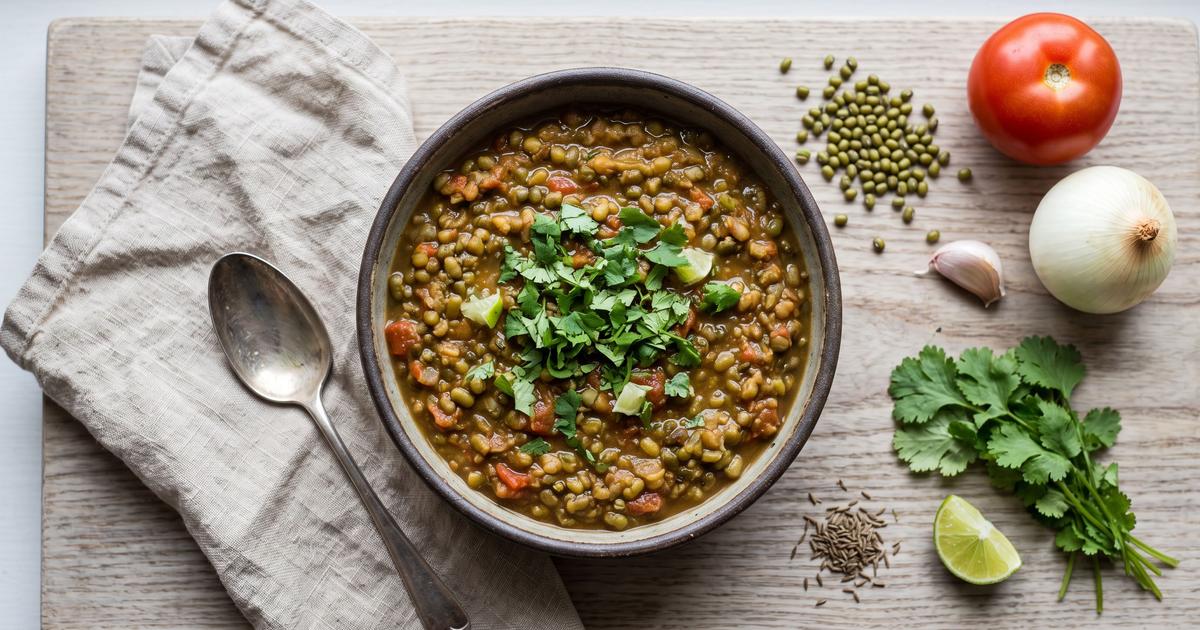
Ndengu is the Kenyan name for a stew of green grams, the small green mung beans that cook fast and cost almost nothing, making this one of the most common everyday dinners in the country. Coastal versions finish with coconut milk. This inland style keeps it lean and lets the beans themselves do the thickening: mash a share of them into the pot and the stew turns creamy on its own. Cumin, coriander, and turmeric bloom in the tomato base, and a good squeeze of lime at the end lifts the whole thing.
Ingredients
- 1 1/2 cups Mung beans, dried
- 1 Yellow onion, diced
- 3 cloves Garlic, minced
- 1 tbsp Ginger, grated
- 1 tsp Cumin seed, ground
- 1 tsp Coriander seed, ground
- 1/2 tsp Turmeric
- 3 Fresh tomatoes, diced
- 1/4 cup Cilantro, chopped
- 1 Lime, juiced
Method
- Rinse the mung beans and put them in a pot with 4 cups (960 ml) water. Bring to a boil, then simmer until completely soft, 25 to 30 minutes. Green grams need no soaking, which is half of why they are a weeknight staple in Kenya. Do not drain them; the starchy liquid becomes the body of the stew.
- While the beans cook, sweat the onion in another wide pot in 3 tablespoons (45 ml) water until soft, about 7 minutes. Add the garlic and ginger and cook 1 minute more.
- Add the ground cumin, coriander, and turmeric and stir for 30 seconds to bloom them, then add the tomatoes and cook until they collapse into a thick base, about 8 minutes.
- Tip the cooked mung beans and their liquid into the tomato base. Simmer together for 10 minutes so the flavors marry, mashing about a quarter of the beans against the side of the pot. Crushing some of them thickens the stew and makes it creamy with no coconut milk, which the coastal version leans on.
- Off the heat, stir in the cilantro and lime juice. Serve with chapati, brown rice, or ugali.
Nutrition
Estimated per serving: 230 calories, 13 g protein, 11 g fiber, 40 mg sodium. Computed from USDA FoodData Central reference values for the main ingredients. This is an approximation, not a laboratory measurement. How these are computed.
Cost per serving is estimated from US national-average retail prices for cheap staple forms, using BLS dried-bean prices and USDA produce prices. Prices vary by store and season, so treat it as a guide, not a receipt. How this is computed.