East African Pumpkin Soup
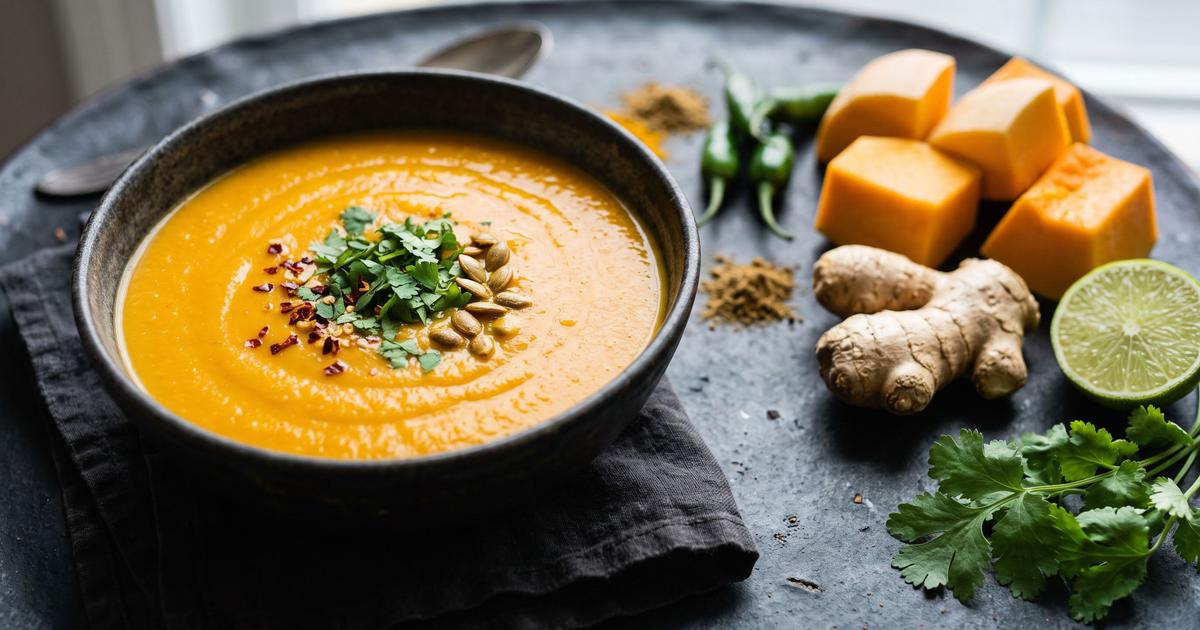
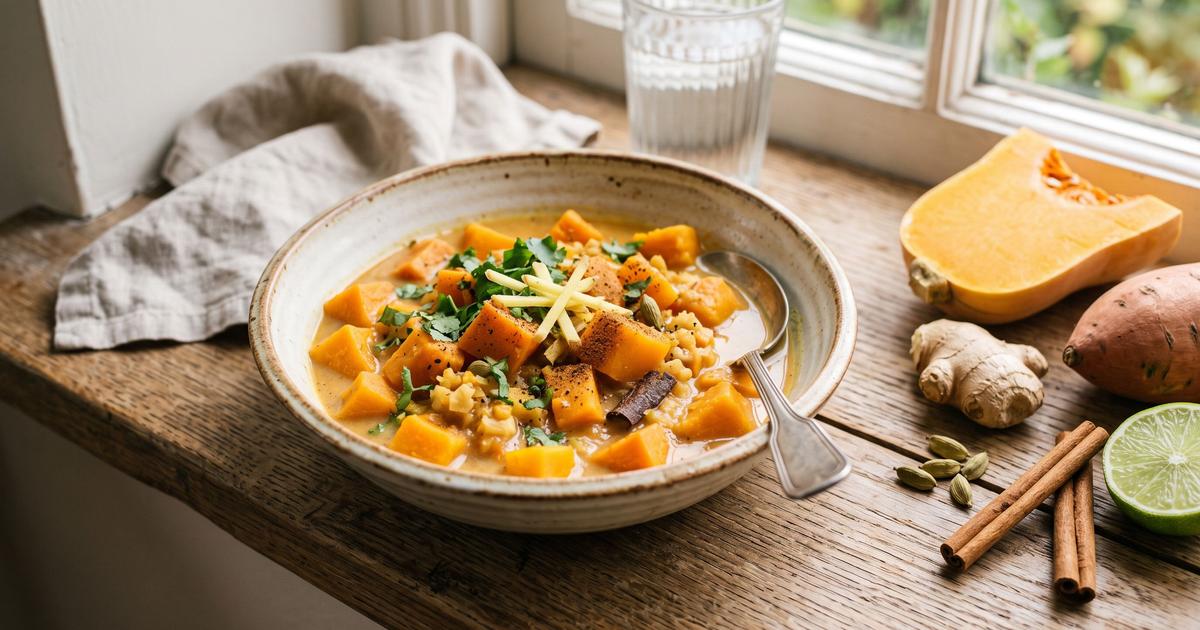
Pumpkin and winter squash, malenge in Swahili, turn up all along the East African coast, often stewed down with coconut milk and warm spice. This soup keeps the ginger, green chile, and fragrant spice blend but leaves out the coconut, leaning instead on the squash itself: cooked soft and blended, it thickens into something creamy on its own. A splash of soy milk rounds it out, and lime and cilantro at the end keep it from going flat, which is the risk with any sweet vegetable soup that carries no salt. Butternut is the easiest squash to peel and cube, but any dense orange squash works.
Ingredients
- 2 lb Butternut squash, peeled, seeded, cubed
- 1 whole Yellow onions, diced
- 3 cloves Garlic, sliced
- 1 tbsp Ginger, grated
- 1 whole Indian green chile, slit lengthwise
- 1 tsp Cumin seed, toasted and ground
- 1 tsp Coriander seed, toasted and ground
- 2 pods Green cardamom, seeds crushed
- 1/4 tsp cassia cinnamon, ground
- 1/2 cup Unsweetened soy milk
- 1 tbsp Lime juice
- 3 tbsp Cilantro, chopped
Method
- Sweat the onion in a few tablespoons of water until soft, then add the garlic, ginger, and slit chile and cook 1 minute more. Slitting the chile rather than chopping it lets it perfume the pot without turning the soup fierce.
- Add the cumin, coriander, cardamom, and cinnamon and let them bloom for 30 seconds until fragrant. Toasting the seeds whole and warming the ground spices in the pot brings out a warm blend close to the Swahili-coast mixes like xawaash.
- Add the squash and 3 cups (720 ml) water and simmer about 20 minutes, until the squash is very soft. Soft squash is what blends to silk, so do not rush this.
- Blend the soup smooth, return it to the pot, and stir in the soy milk. The puree itself is the body, and the soy milk adds a little protein and a dairy-free creaminess in place of coconut.
- Off the heat, add the lime and cilantro. The acid lifts the sweet squash so the bowl tastes complete without any salt.
Nutrition
Estimated per serving: 140 calories, 5 g protein, 6 g fiber, 45 mg sodium. Computed from USDA FoodData Central reference values for the main ingredients. This is an approximation, not a laboratory measurement. How these are computed.
Cost per serving is estimated from US national-average retail prices for cheap staple forms, using BLS dried-bean prices and USDA produce prices. Prices vary by store and season, so treat it as a guide, not a receipt. How this is computed.