Futari, Swahili Spiced Pumpkin and Sweet Potato

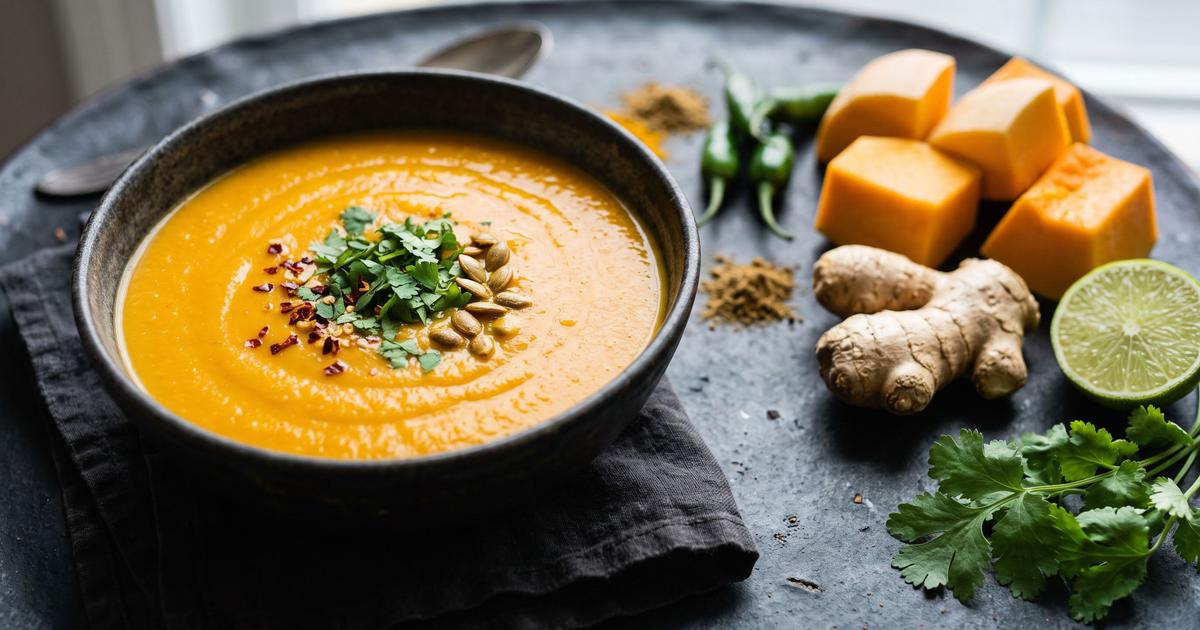
Futari is a Swahili-coast braise of pumpkin or squash, often with sweet potato, simmered soft with the warm spices that define coastal Tanzanian and Kenyan cooking: cardamom, cinnamon, clove. It is usually enriched with coconut milk, which makes it lush but leans it sweet. Here soy milk stands in, and mashing part of the squash gives the same creamy body while keeping the protein coconut cannot offer. The result sits between a mash and a stew, gently spiced and just sweet enough, with lime at the end to sharpen it. Serve it alongside beans and greens, or with any grain, where its softness and warmth round out a plate.
Ingredients
- 3 cups Butternut squash, peeled and cubed
- 1 whole Sweet potatoes, peeled and cubed
- 1 whole Yellow onions, chopped
- 1 tbsp Ginger, grated
- 1/2 tsp Green cardamom, seeds ground
- 1/2 tsp cassia cinnamon, ground
- 2 wholes Cloves
- 1/2 cup Unsweetened soy milk
- 1 tbsp Lime juice
Method
- Sweat the onion and ginger in 3 tablespoons (45 ml) water in a pot over medium heat for 6 minutes, until soft. This aromatic base is what keeps futari savory underneath the sweet spices, so give it time to soften before anything else goes in.
- Add the squash, sweet potato, cardamom, cinnamon, cloves, and 0.75 cup (180 ml) water, cover, and simmer 20 minutes, until a fork goes through easily. The vegetables cook mostly in their own steam, concentrating their sweetness rather than leaching it into a lot of water.
- Pour in the soy milk and cook uncovered another 5 minutes, mashing a third of the squash against the side of the pot. Crushing part of it thickens the liquid into a silky sauce, the job coconut milk would usually do, while the rest stays in tender pieces.
- Fish out the whole cloves. They perfume the pot in a few minutes but turn sharp if bitten, so they come out before serving.
- Finish with lime juice off the heat. The squash and sweet potato are frankly sweet, so the acid pulls the dish back toward savory and keeps it working as a side rather than a dessert.
Nutrition
Estimated per serving: 150 calories, 3 g protein, 5 g fiber, 50 mg sodium. Computed from USDA FoodData Central reference values for the main ingredients. This is an approximation, not a laboratory measurement. How these are computed.
Cost per serving is estimated from US national-average retail prices for cheap staple forms, using BLS dried-bean prices and USDA produce prices. Prices vary by store and season, so treat it as a guide, not a receipt. How this is computed.