Kabichi, Kenyan Braised Cabbage and Carrot
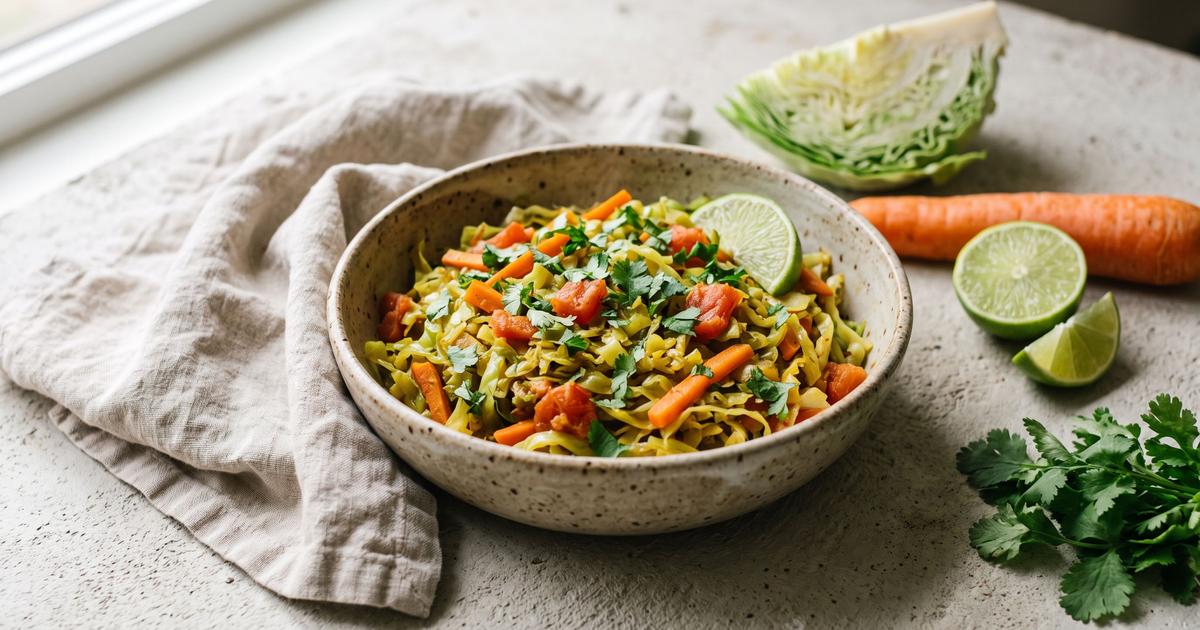
Kabichi, from the English cabbage, is the plain green vegetable that turns up beside beans, ugali, or rice at Kenyan tables every day of the week. It is humble on purpose: cabbage is one of the cheapest vegetables in any market and keeps for weeks, so a head of it braised down with an onion and a carrot feeds a family for almost nothing. The Kenyan character comes from a spoon of curry powder, a habit picked up from the Indian traders who shaped coastal cooking, and from cooking it soft in its own steam rather than frying it. Keep it just short of fully tender so it stays sweet and bright, and finish with lime and cilantro so it never misses the salt.
Ingredients
- 1 lb green cabbage, cored and shredded
- 2 wholes Carrots, julienned
- 1 whole Yellow onions, sliced
- 2 wholes Fresh tomatoes, chopped
- 2 cloves Garlic, minced
- 1 tsp Curry powder
- 1/2 tsp Cumin seed
- 1/4 cup Cilantro, chopped
- 1 tbsp Lime juice
Method
- Sweat the onion in a wide pan with 3 tablespoons (45 ml) water until soft, about 5 minutes, then add the garlic, curry powder, and cumin and stir for 30 seconds. Blooming the spices in the hot pan rounds them out; curry powder is a fixture of Kenyan home cooking, a legacy of the Indian communities on the coast.
- Add the chopped tomatoes and cook until they slump into a loose sauce, about 4 minutes. This gives the cabbage something savory to braise in rather than plain water.
- Pile in the cabbage and carrot, add a splash of water, and cover. The cabbage looks like too much at first but collapses fast; the lid traps steam so it cooks in its own moisture with no oil.
- Braise, stirring once or twice, for 8 to 10 minutes, until the cabbage is tender but still has a little bite and the carrots are just soft. Cook it past bright green and it turns sulfurous and sad, so pull it while it still has life.
- Off the heat, stir in the cilantro and lime juice. The acid wakes the whole pan and stands in for salt. Serve alongside githeri, beans, or a scoop of ugali. It is about as cheap as a cooked vegetable gets, which is the point.
Nutrition
Estimated per serving: 80 calories, 3 g protein, 5 g fiber, 40 mg sodium. Computed from USDA FoodData Central reference values for the main ingredients. This is an approximation, not a laboratory measurement. How these are computed.
Cost per serving is estimated from US national-average retail prices for cheap staple forms, using BLS dried-bean prices and USDA produce prices. Prices vary by store and season, so treat it as a guide, not a receipt. How this is computed.