Bamia, Swahili Okra in Tomato
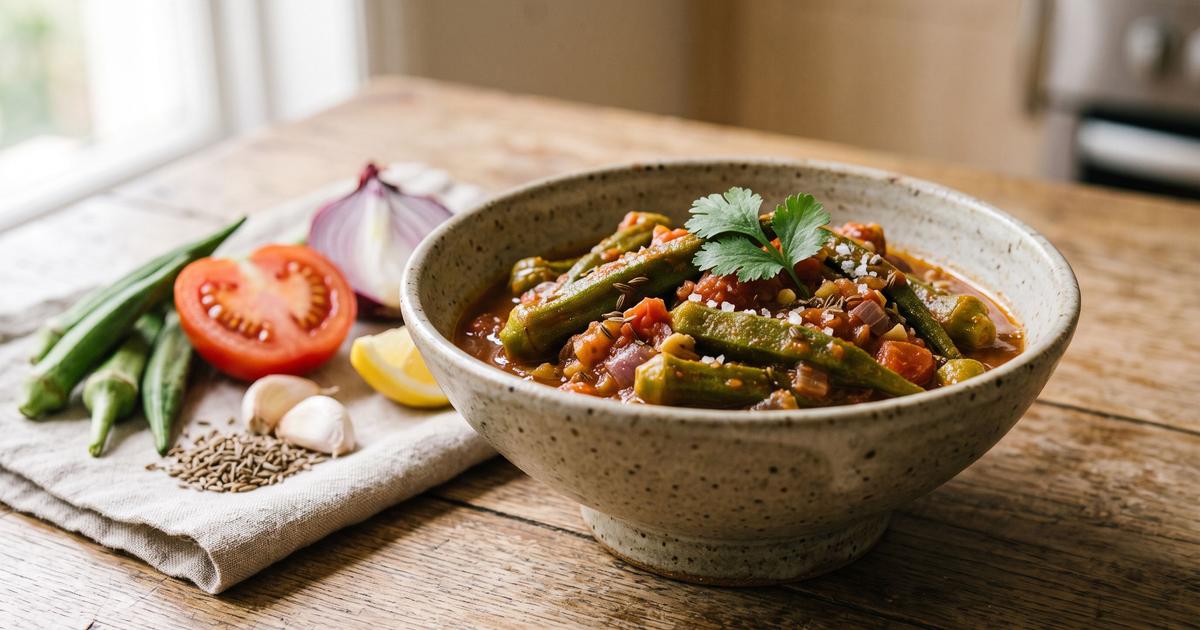
Bamia is the okra stew of the Swahili coast and much of the wider Horn and Middle East, a braise of pods in a spiced tomato sauce that turns up as a side to rice and grain porridges from Zanzibar to Sudan. The whole game with okra is managing its famous slipperiness, and this dish solves it two ways at once: the pods are left whole so they stay sealed, and lemon goes in early so the acid firms them and cuts the rope. Cumin and coriander give it a warm East African backbone, and the tomato and lemon do the seasoning in place of salt. Keep the heat gentle and the spoon still, and the okra stays glossy and distinct.
Ingredients
- 1 lb Okra, whole, stems trimmed
- 3 wholes Fresh tomatoes, chopped
- 1 whole Yellow onions, diced
- 3 cloves Garlic, minced
- 1 tsp Cumin seed, ground
- 1 tsp Coriander seed, ground
- 1/2 whole Lemons, juiced
- 2 tbsp Cilantro, chopped
- 1/4 tsp Cayenne
Method
- Trim only the tops of the okra and leave the pods whole. Left uncut, the pods release far less of the sticky liquid that puts people off okra, so whole is the single best defense against slime.
- Sweat the onion in 3 tablespoons (45 ml) water in a wide pan until soft, about 6 minutes, then add the garlic, cumin, coriander, and cayenne and cook 1 minute until fragrant.
- Add the tomatoes and cook down for 5 minutes, then add the whole okra and half the lemon juice. Getting acid into the pot early is the second defense against slime, since it firms the pods and cuts the ropiness as they cook.
- Cover and simmer gently, stirring as little as possible, until the okra is tender but still holds its shape, 12 to 15 minutes. Constant stirring is what breaks the pods and turns the pan gluey, so leave it mostly alone.
- Finish with the rest of the lemon juice and the cilantro. The tomato and cumin season it and the lemon keeps it lively, no salt required. Serve with brown rice or a flatbread.
Nutrition
Estimated per serving: 90 calories, 4 g protein, 6 g fiber, 40 mg sodium. Computed from USDA FoodData Central reference values for the main ingredients. This is an approximation, not a laboratory measurement. How these are computed.
Cost per serving is estimated from US national-average retail prices for cheap staple forms, using BLS dried-bean prices and USDA produce prices. Prices vary by store and season, so treat it as a guide, not a receipt. How this is computed.