Kunde, Swahili Black-Eyed Peas and Greens
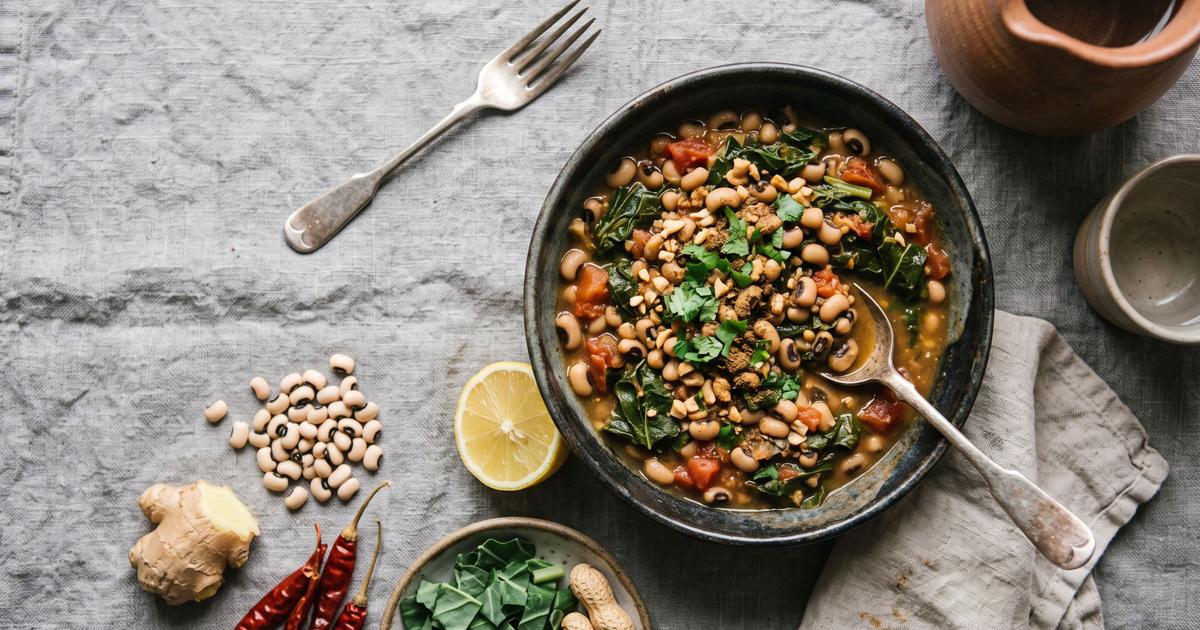
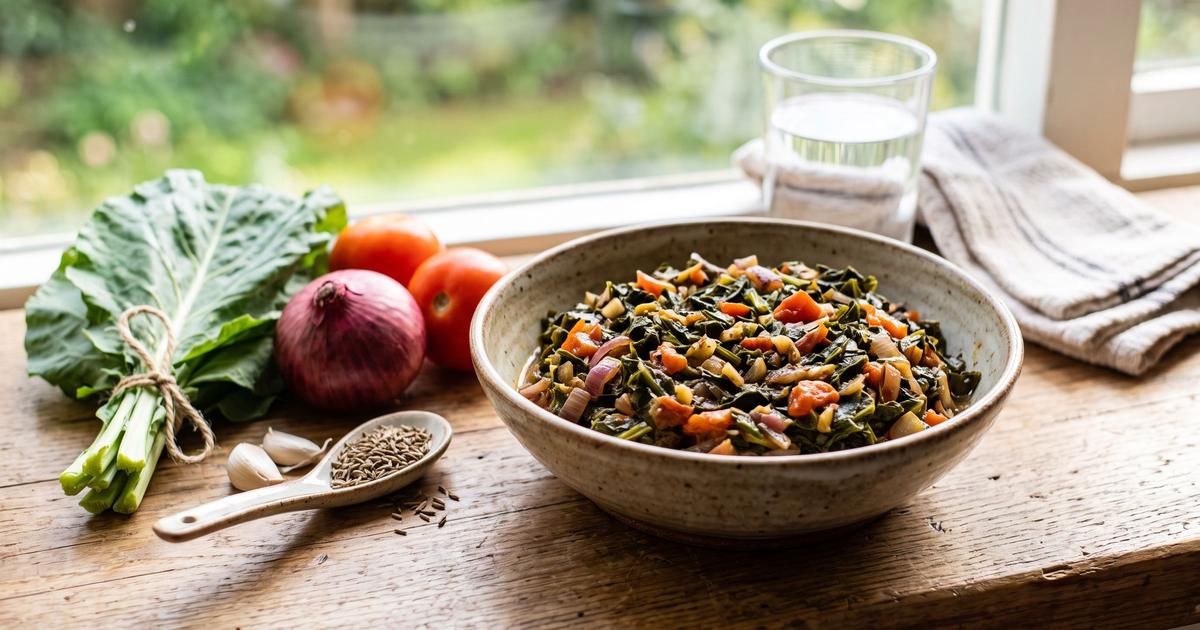
Kunde is the Swahili coast's everyday plate of black-eyed peas and greens, the beans and their leaves cooked down together with tomato and onion. Coastal cooks often finish it with coconut, but a spoonful of groundnut paste gives the same rounded, savory body while keeping it coconut-free. Slake the peanut butter with a little pan liquid before it goes in so it melts smoothly instead of clumping. Serve it with a starchy staple to soak up the sauce, and add the lemon only at the very end so it stays sharp.
Ingredients
- 1 1/2 cups Black-eyed peas, cooked and drained
- 4 cups Collard greens, stemmed and chopped
- 2 Fresh tomatoes, chopped
- 1 Yellow onion, diced
- 3 cloves Garlic, minced
- 1 tsp Cumin seed, ground
- 2 tbsp unsweetened peanut butter
- 1/2 Lemons, juiced
Method
- Sweat the onion in three tablespoons (45 ml) of water in a wide pan until soft and translucent, about 8 minutes, adding more water if it sticks. Cooking the onion down in water builds the sweet base that would otherwise come from oil.
- Add the garlic and ground cumin and stir for a minute until fragrant, then add the chopped tomato and cook until it slumps into a rough sauce, about 5 minutes. Letting the tomato break down first gives the greens something to braise in.
- Stir in the collards and a splash of water, cover, and steam until they wilt and soften, about 8 minutes. Collards are sturdy, so they need this covered time to turn tender rather than leathery.
- Loosen the peanut butter with a few spoonfuls of the pan liquid, then fold it in along with the black-eyed peas. Slaking the peanut butter first stops it from seizing, and it melts into a light, savory thickness that carries the dish without coconut.
- Warm through for a couple of minutes, then finish with the lemon juice off the heat. The acid lifts the earthy beans and greens and stands in for the salt, so add it right at the end where it stays bright.
Nutrition
Estimated per serving: 200 calories, 11 g protein, 9 g fiber, 45 mg sodium. Computed from USDA FoodData Central reference values for the main ingredients. This is an approximation, not a laboratory measurement. How these are computed.
Cost per serving is estimated from US national-average retail prices for cheap staple forms, using BLS dried-bean prices and USDA produce prices. Prices vary by store and season, so treat it as a guide, not a receipt. How this is computed.