Maraq, Somali Vegetable and Bean Soup
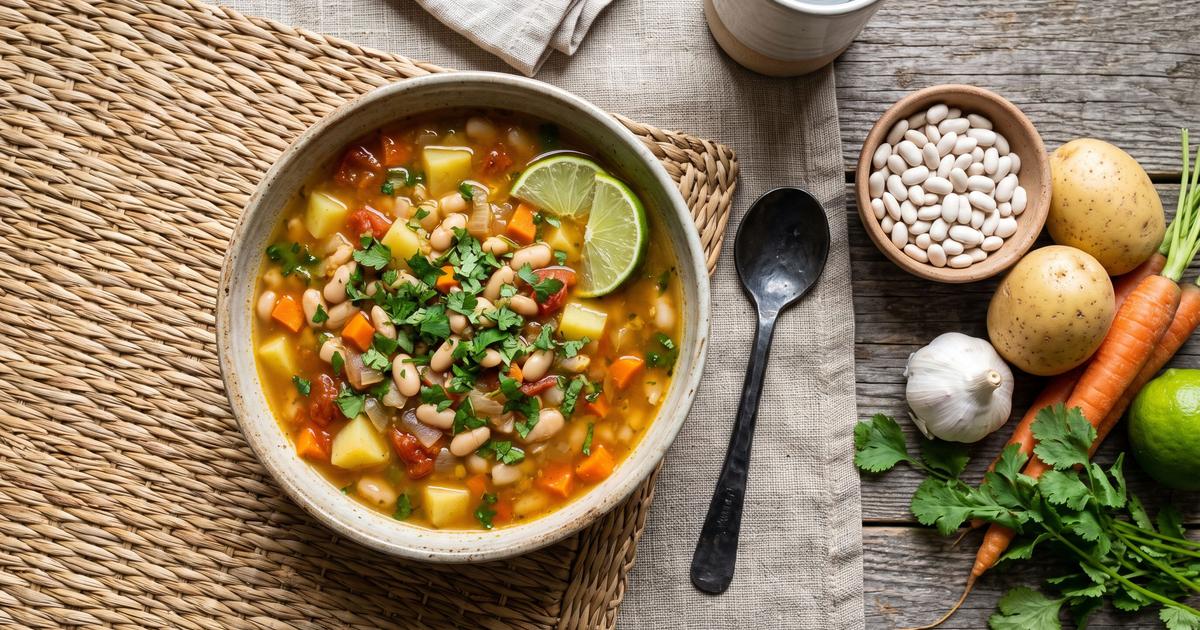
Maraq is the brothy spiced soup that anchors a Somali meal, a pot of beans and vegetables carried by xawaash, the house blend of cumin, coriander, cinnamon, and cardamom. Bloom the ground spices in the hot pot before any liquid goes in, since that step is where the depth is built. Potato and mashed beans thicken the broth without cream or oil, and a hard squeeze of lime at the table lifts everything in place of salt. Serve it with rice or flatbread for a full, cheap meal.
Ingredients
- 1 1/2 cups Cannellini beans, cooked and drained
- 2 cups Potatoes, peeled and diced
- 2 Carrots (cooking)s, diced
- 1 Yellow onion, diced
- 3 cloves Garlic, minced
- 1 cup Canned crushed tomatoes
- 1 tsp Cumin seed, ground
- 1 tsp Coriander seed, ground
- 1/4 tsp cassia cinnamon, ground
- 1/2 tsp Turmeric
- 3 tbsp Cilantro, chopped
- 1 Lime, cut into wedges
Method
- Sweat the onion in a few tablespoons of water in a soup pot until soft, about 6 minutes. Then add the garlic, cumin, coriander, cinnamon, and turmeric and stir for a minute. Blooming this xawaash blend in the hot pan wakes the spices up and is what makes the broth taste Somali rather than plain.
- Stir in the crushed tomato and cook it down for 3 or 4 minutes until it darkens slightly. Cooking the tomato before adding liquid concentrates it and takes off the raw, tinny edge.
- Add the potato, carrot, and four cups (950 ml) of water. Bring to a boil, then simmer until the vegetables are tender, about 20 minutes. The potato sheds a little starch as it cooks, which lightly thickens the broth on its own.
- Add the beans and warm them through for 5 minutes, mashing a few against the side of the pot to give the soup a bit more body. This is the salt-free way to make a broth feel substantial.
- Stir in the cilantro off the heat and serve each bowl with a lime wedge. The squeeze of lime at the table is doing the work of salt, brightening the whole spiced pot, so it is not just a garnish.
Nutrition
Estimated per serving: 210 calories, 10 g protein, 9 g fiber, 55 mg sodium. Computed from USDA FoodData Central reference values for the main ingredients. This is an approximation, not a laboratory measurement. How these are computed.
Cost per serving is estimated from US national-average retail prices for cheap staple forms, using BLS dried-bean prices and USDA produce prices. Prices vary by store and season, so treat it as a guide, not a receipt. How this is computed.