Sharba Libiya, Libyan Soup
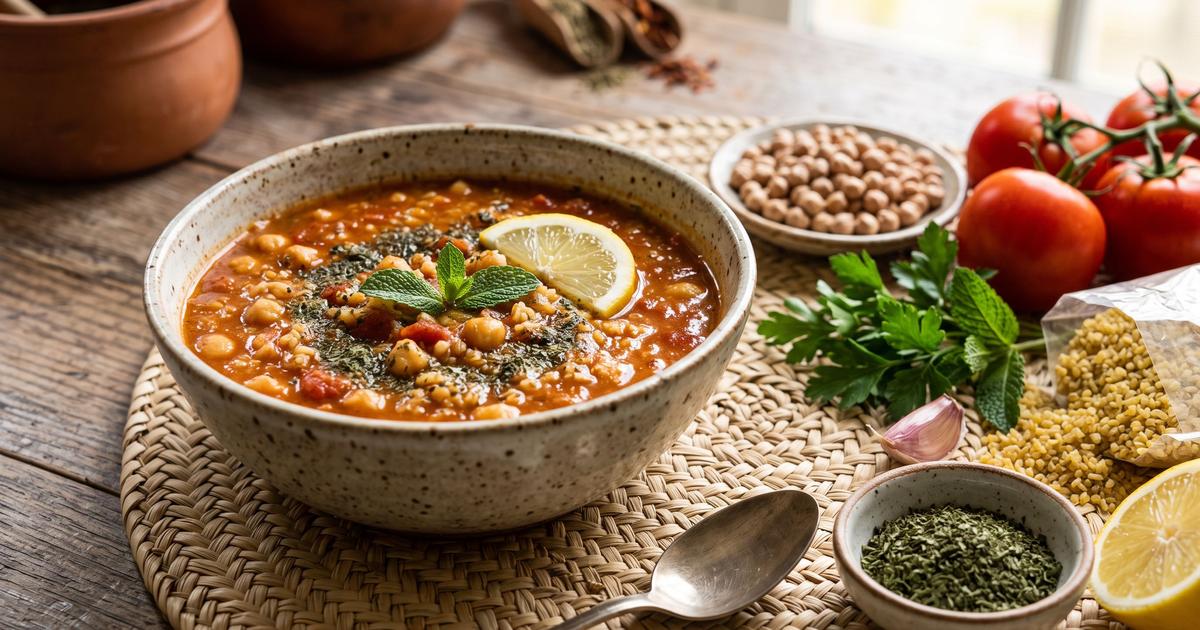
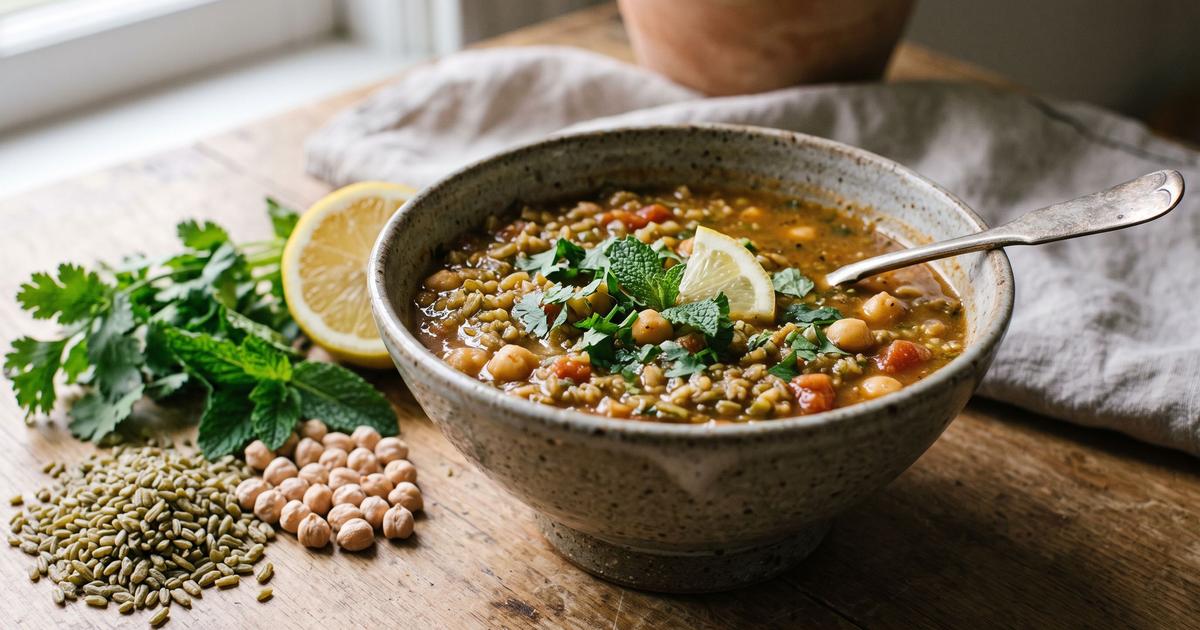
Sharba is the soup of Libya, a tomato-red pot heavy with warm spice and finished with a heavy hand of dried mint, eaten most in Ramadan but welcome any cold evening. The usual version is built on lamb and a fistful of orzo. This one keeps the character, the toasted tomato paste, the bloomed spices, the late mint, and lets chickpeas and a spoon of bulgur carry the body instead. Dried mint is not optional here, since it is the flavor people mean when they say sharba. Add it off the heat so it stays bright, and finish with lemon rather than salt.
Ingredients
- 1 Yellow onion, finely diced
- 2 tbsp Tomato paste
- 1 cup Canned crushed tomatoes
- 1 1/2 cups Chickpeas, cooked
- 1/2 tsp Turmeric
- 1 tsp Cumin seed, ground
- 1 tsp Coriander seed, ground
- 1/4 tsp cassia cinnamon, ground
- 3 tbsp Bulgur
- 1 tbsp Dried mint
- 3 tbsp Flat-leaf parsley, chopped
- 1/2 Lemons, juiced
Method
- Sweat the onion in 3 tablespoons (45 ml) water in a pot over medium heat until soft, about 6 minutes. Push it to one side, add the tomato paste to the bare pan, and toast it, stirring, until it darkens to brick red, about 2 minutes. Toasting the paste is what gives a meatless pot its deep, savory backbone.
- Stir in the turmeric, cumin, coriander, and cinnamon and cook for 30 seconds until fragrant. Blooming the ground spices in the hot pan wakes them up the way toasting whole spices would.
- Add the crushed tomatoes, chickpeas, and 3 cups (710 ml) water. Bring to a simmer and cook for 10 minutes to let the flavors marry.
- Stir in the bulgur and simmer 10 minutes more, until it swells and thickens the broth. The little bit of whole grain does the job the traditional orzo would, giving body without a separate starch.
- Off the heat, crumble in the dried mint and stir in the parsley and lemon juice. Dried mint is the signature note of sharba, and adding it at the end keeps it fragrant instead of stewed flat. The lemon lifts the whole bowl in place of salt.
Nutrition
Estimated per serving: 185 calories, 8 g protein, 7 g fiber, 95 mg sodium. Computed from USDA FoodData Central reference values for the main ingredients. This is an approximation, not a laboratory measurement. How these are computed.
Cost per serving is estimated from US national-average retail prices for cheap staple forms, using BLS dried-bean prices and USDA produce prices. Prices vary by store and season, so treat it as a guide, not a receipt. How this is computed.