Doubara, Algerian Chickpea and Fava Soup
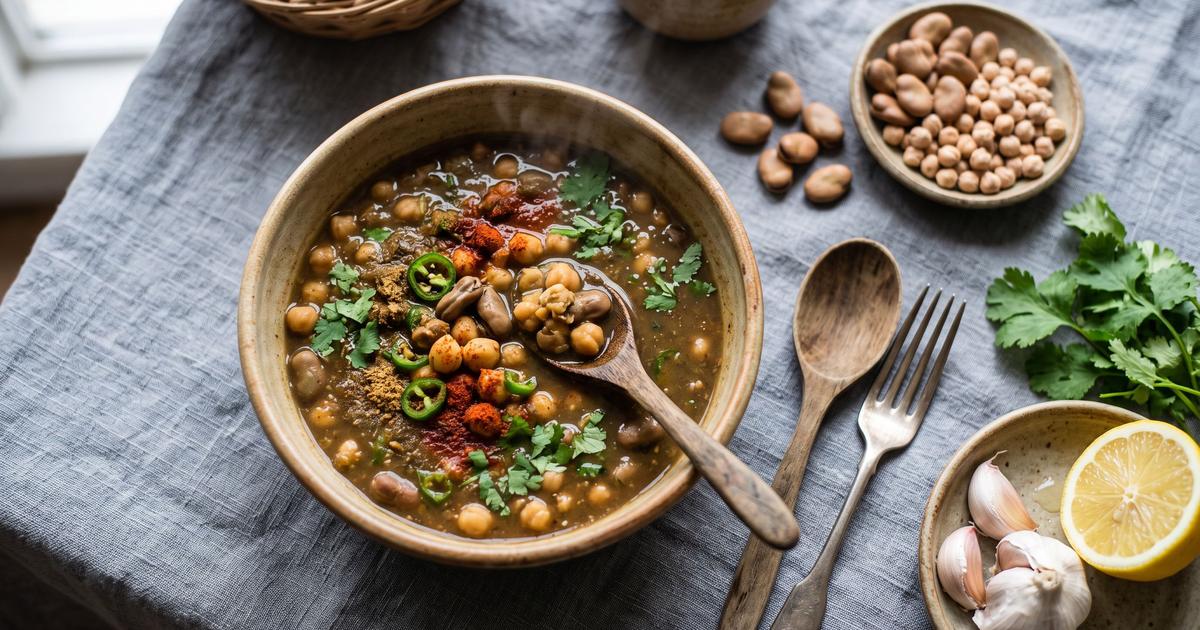
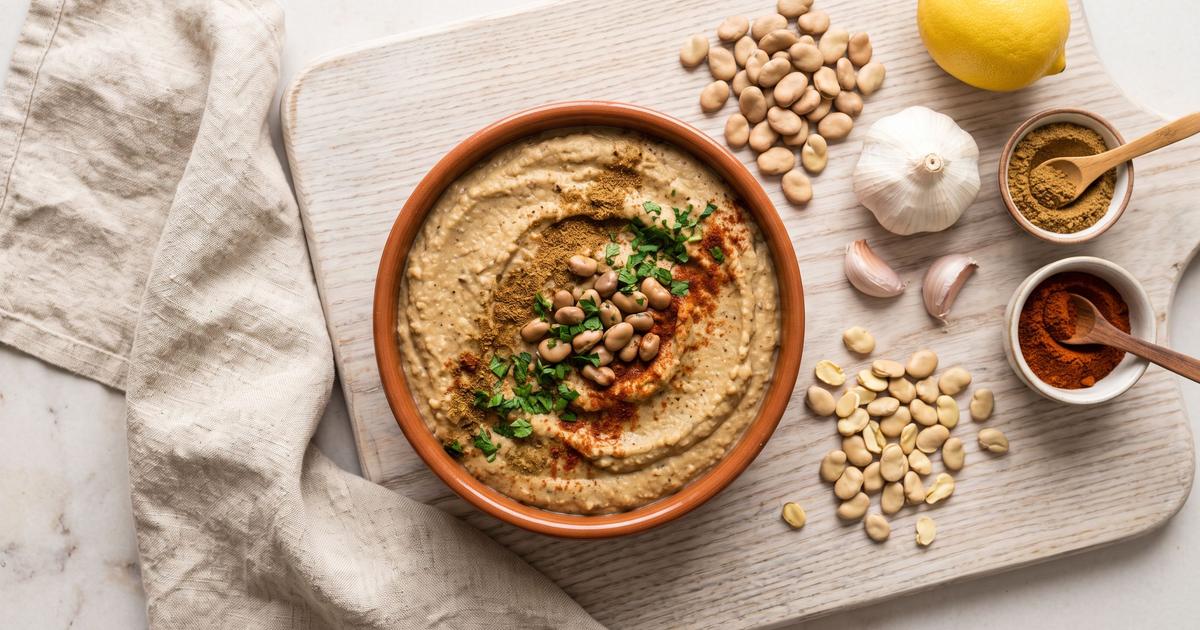
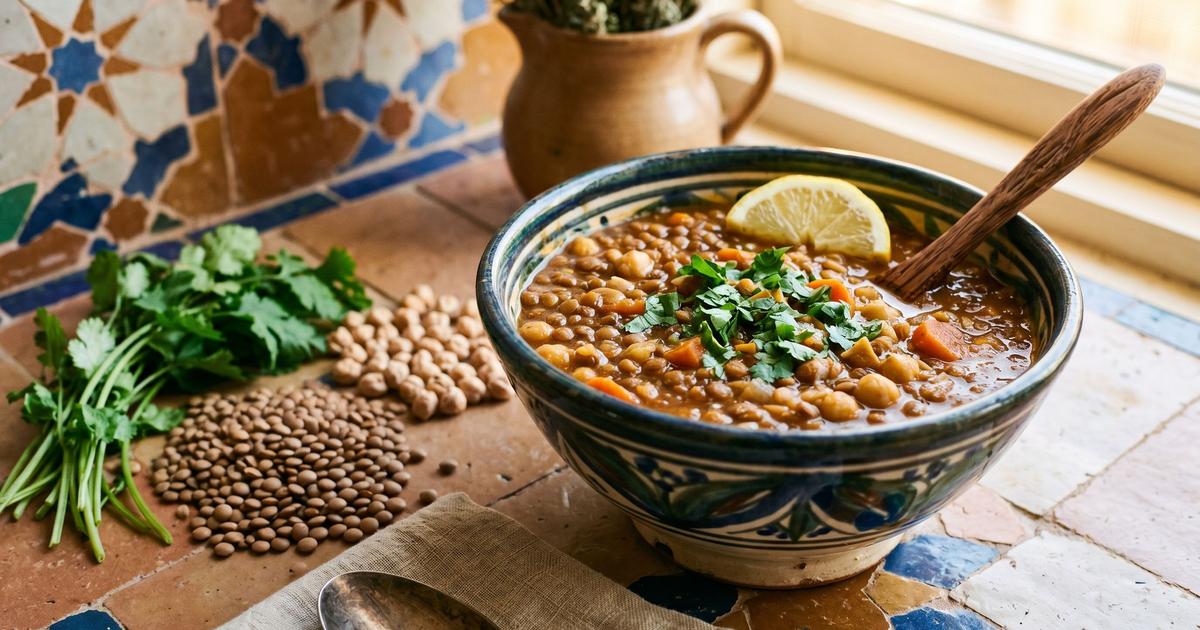
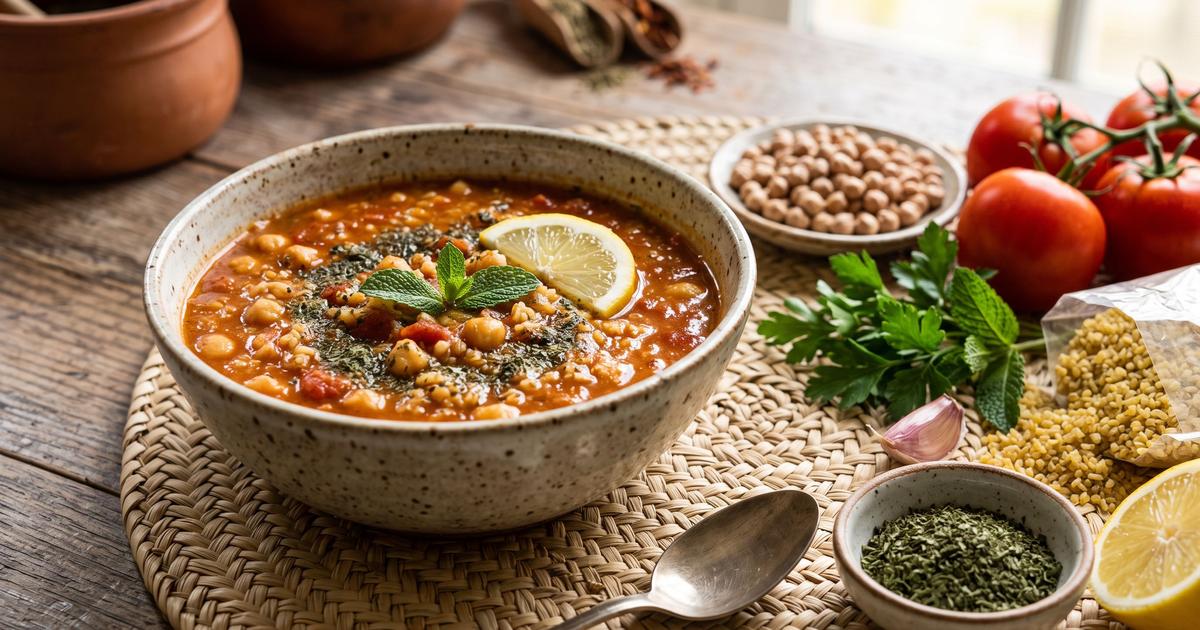
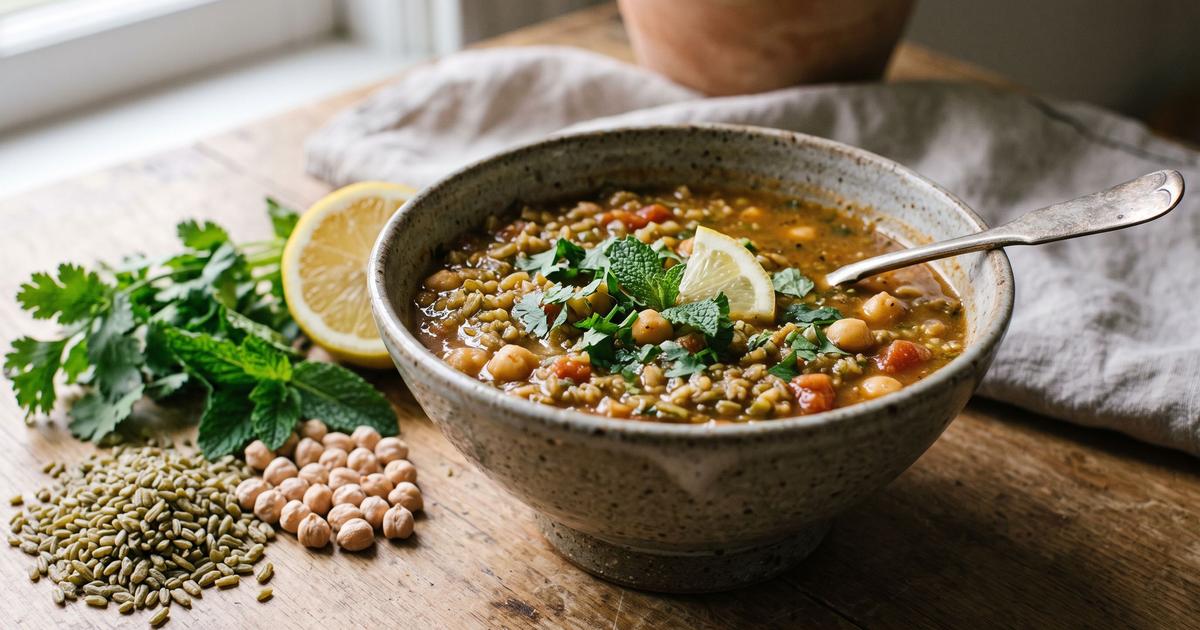
Doubara is the workaday soup of Biskra in eastern Algeria, chickpeas and dried favas cooked soft and served hot from a street cauldron in the cool morning. It is a bowl built on spice and acid rather than fat, dressed with cumin, garlic, and chile and finished with a hard squeeze of lemon. Peel the favas after soaking so the soup stays silky, and mash a few beans into the broth to thicken it the honest way. Cheap, filling, and warming, it is breakfast and lunch for a few coins.
Ingredients
- 1 cup Chickpeas, dried, soaked overnight
- 1/2 cup Fava beans, dried, soaked overnight and peeled
- 4 cloves Garlic, minced
- 1 1/2 tsp Cumin seed, toasted and ground
- 1 tsp Sweet paprika
- 1/2 tsp Cayenne
- 1/2 tsp Caraway, ground
- 2 tbsp Flat-leaf parsley, chopped
- 1 Lemon, cut into wedges
Method
- Drain the soaked chickpeas and favas and slip the skins off the favas, which loosen easily after soaking. The skins stay tough and bitter no matter how long you cook them, so this small step is what makes the soup smooth.
- Simmer the chickpeas and favas in plenty of unsalted water until both are completely soft, about 70 minutes. Cooking them in plain water lets them stay creamy; salt at this stage would keep the chickpeas firm.
- Toast the cumin seed in a dry pan until it smells nutty, then grind it. Toasting drives off the raw, dusty edge and is the difference between background cumin and cumin you can actually taste.
- Stir the garlic, ground cumin, paprika, cayenne, and caraway into the pot and simmer 10 more minutes, mashing some of the beans against the side to thicken the broth. The mashed beans give body without any starch or oil.
- Ladle into bowls, scatter with parsley, and serve each with a lemon wedge to squeeze in at the table. The acid is what pulls the whole spiced bowl into focus, so do not skip it.
Nutrition
Estimated per serving: 230 calories, 12 g protein, 11 g fiber, 30 mg sodium. Computed from USDA FoodData Central reference values for the main ingredients. This is an approximation, not a laboratory measurement. How these are computed.
Cost per serving is estimated from US national-average retail prices for cheap staple forms, using BLS dried-bean prices and USDA produce prices. Prices vary by store and season, so treat it as a guide, not a receipt. How this is computed.