Bissara
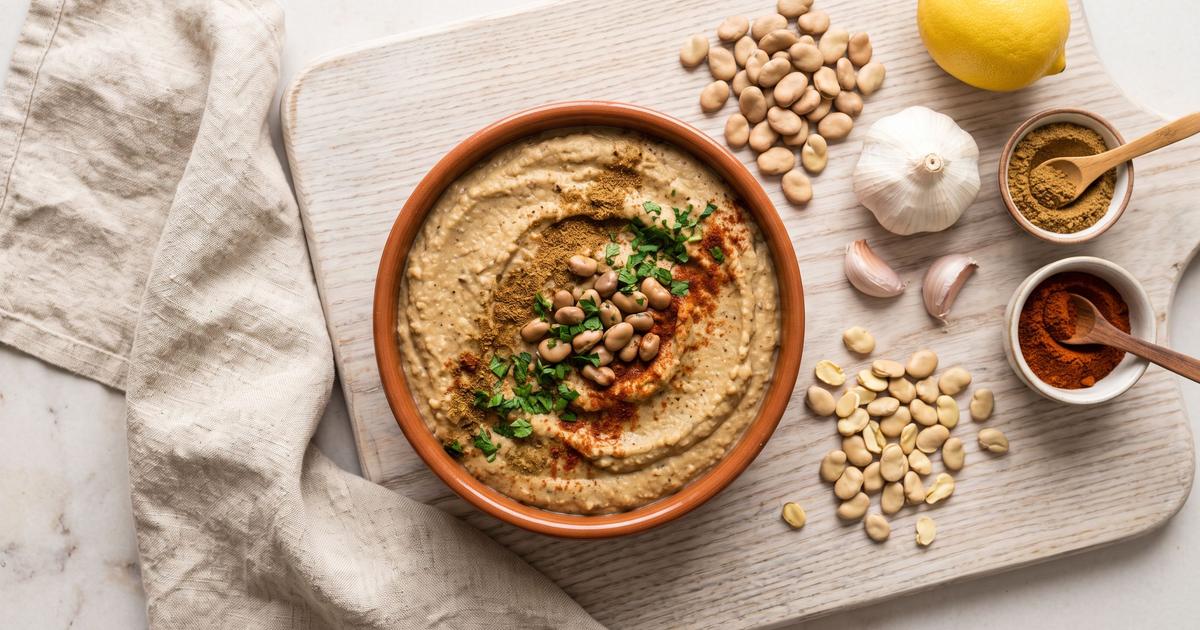
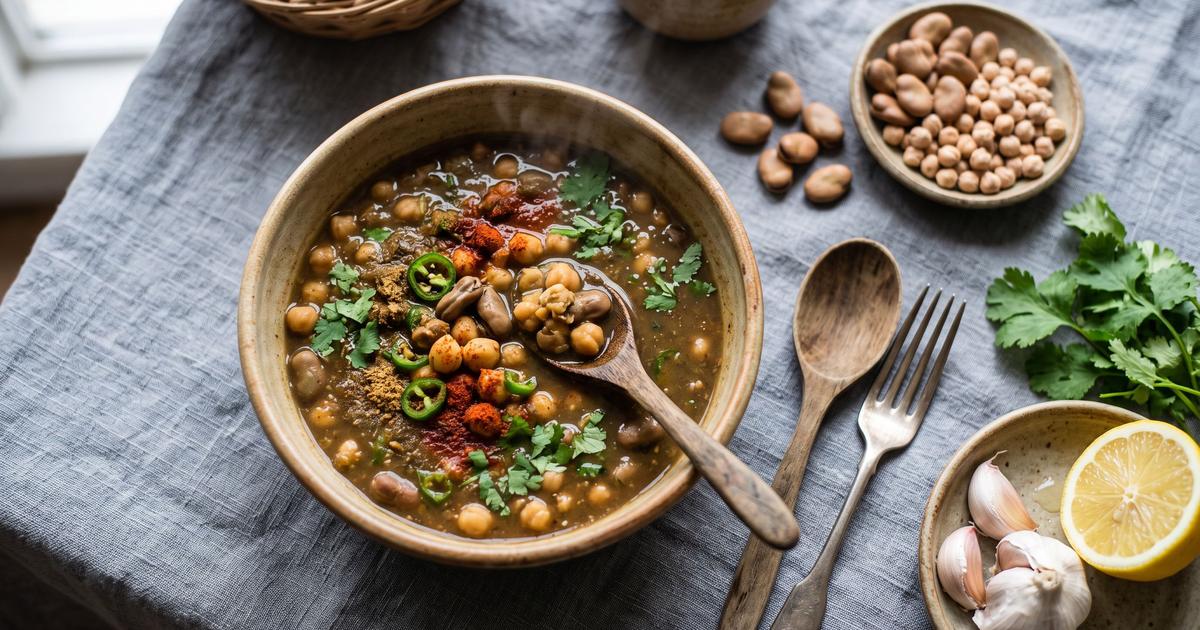
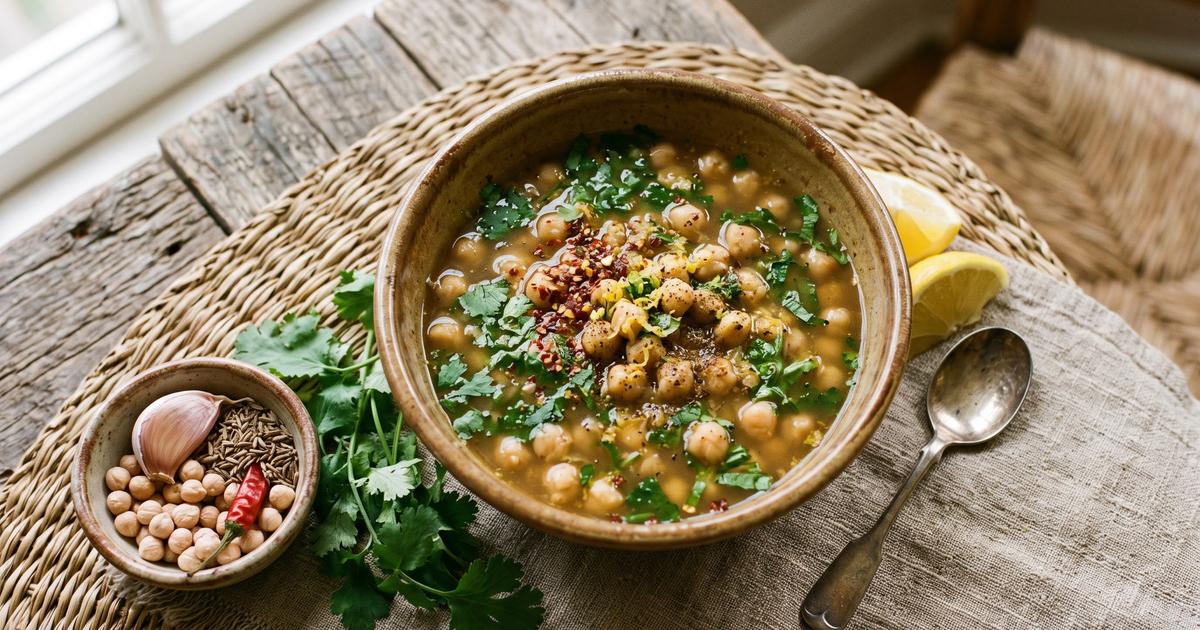
Bissara is a cold-weather Moroccan soup, a thick puree of dried favas or split peas sold from stalls at breakfast and eaten with bread, usually finished with a generous pour of olive oil and a heavy hand of salt. Neither is necessary. Peeled split fava beans collapse into a naturally silky puree as they cook, cumin and paprika give it warmth and color, and a good squeeze of lemon at the end does the seasoning. Buy the favas labeled split and peeled so they cook down fast and blend without any skins to strain out.
Ingredients
- 1 1/2 cups Fava beans, dried, split and peeled
- 4 cloves Garlic, smashed
- 1 tsp Cumin seed, ground, plus more to finish
- 1 tsp Sweet paprika, plus more to finish
- 1 pinch Cayenne
- 1 Lemon, juiced
Method
- Rinse the split favas and put them in a pot with the smashed garlic and 5 cups (1.2 liters) water. Bring to a boil, skim off the foam that rises, then simmer, partly covered, until the beans are falling-apart soft, 40 to 45 minutes. Peeled split favas break down completely, which is what lets bissara turn silky with no cream or oil.
- Add the ground cumin, paprika, and cayenne and simmer 2 minutes more so the spices open up in the heat.
- Blend the soup smooth, right in the pot with a hand blender or in a standing blender in batches. Add reserved cooking water a little at a time until it pours thick and heavy, like a loose puree.
- Return it to a gentle simmer and stir in the lemon juice. Taste and add more lemon: the acid replaces the salt a Moroccan cook would add and cuts the earthiness of the beans.
- Ladle into bowls and finish each with a dusting of paprika and cumin. The traditional pool of olive oil is gone, so the dry spice on top and a wedge of lemon on the side carry the flavor. Eat it hot, the thicker the better.
Nutrition
Estimated per serving: 240 calories, 14 g protein, 10 g fiber, 30 mg sodium. Computed from USDA FoodData Central reference values for the main ingredients. This is an approximation, not a laboratory measurement. How these are computed.
Cost per serving is estimated from US national-average retail prices for cheap staple forms, using BLS dried-bean prices and USDA produce prices. Prices vary by store and season, so treat it as a guide, not a receipt. How this is computed.