Escalivada, Catalan Roasted Vegetables
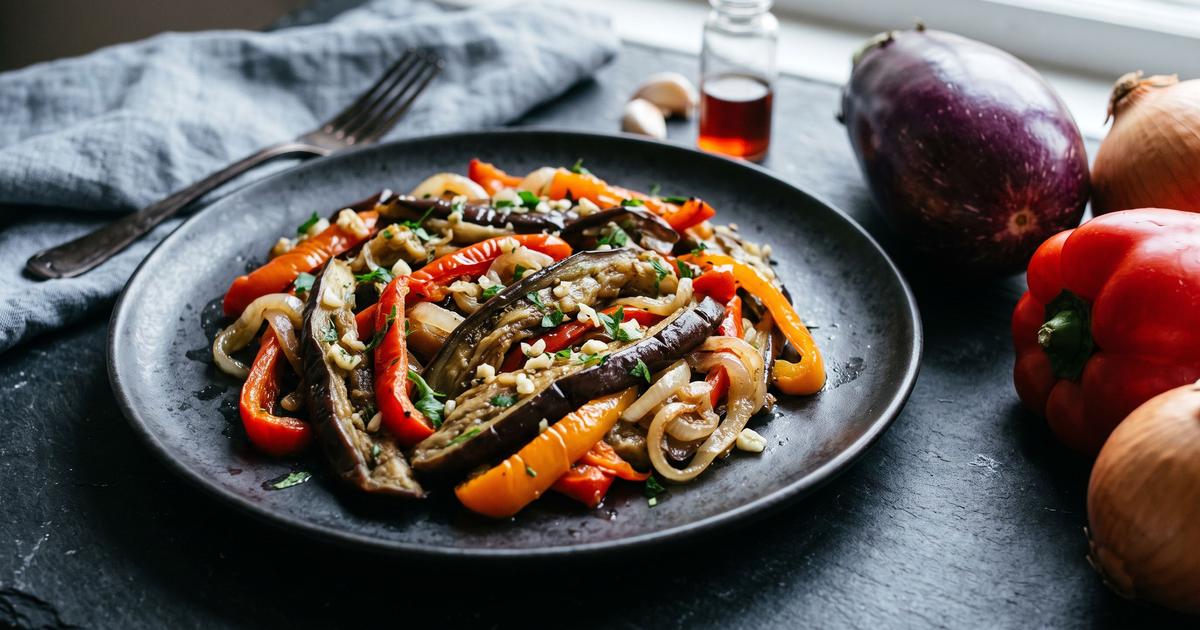
Escalivada is Catalan campfire cooking that moved indoors: vegetables buried in wood embers until they slump, then peeled and dressed simply. Roasting them whole in a hot oven gets close, and cooking them in their own skins means no oil is needed to keep them from drying out. The smoke and the slow concentration of the vegetables' own sugars do the work, so all the dressing has to add is the acid and a little raw garlic. It sits happily for a day in the fridge and is a standard part of a Catalan spread, alongside beans or piled onto whole-grain bread.
Ingredients
- 1 Eggplant, large
- 2 Bell peppers, red
- 1 Red onion, unpeeled
- 2 Fresh tomatoes
- 2 cloves Garlic, minced
- 1 1/2 tbsp Sherry vinegar
- 2 tbsp Flat-leaf parsley, chopped
- 1/4 tsp Black peppercorns, freshly ground
Method
- Heat the oven to 425 F (220 C). Prick the eggplant a few times with a fork so it does not burst. Set the whole eggplant, peppers, unpeeled onion, and tomatoes on a baking sheet.
- Roast until each is collapsed and the skins are blistered and loose, pulling them as they finish: tomatoes around 25 minutes, peppers and onion around 35, the eggplant around 45. The name comes from escalivar, to cook in embers, so you want them soft and a little charred, not just tender.
- Let everything cool enough to handle, then slip off the skins and pull out the pepper seeds. Tear the flesh into long strips with your fingers rather than cutting it, which is the traditional look and keeps the pieces loose.
- Arrange the strips on a plate and scatter the raw minced garlic over them. Spoon any juices caught on the cutting board back over the top, since that liquid is concentrated flavor.
- Dress with the sherry vinegar and black pepper and let it sit 15 minutes. The vinegar seeps in as it stands, which is what makes it taste seasoned without salt. Scatter the parsley and serve at room temperature.
Nutrition
Estimated per serving: 90 calories, 3 g protein, 7 g fiber, 20 mg sodium. Computed from USDA FoodData Central reference values for the main ingredients. This is an approximation, not a laboratory measurement. How these are computed.
Cost per serving is estimated from US national-average retail prices for cheap staple forms, using BLS dried-bean prices and USDA produce prices. Prices vary by store and season, so treat it as a guide, not a receipt. How this is computed.