Romesco, Oil-Free
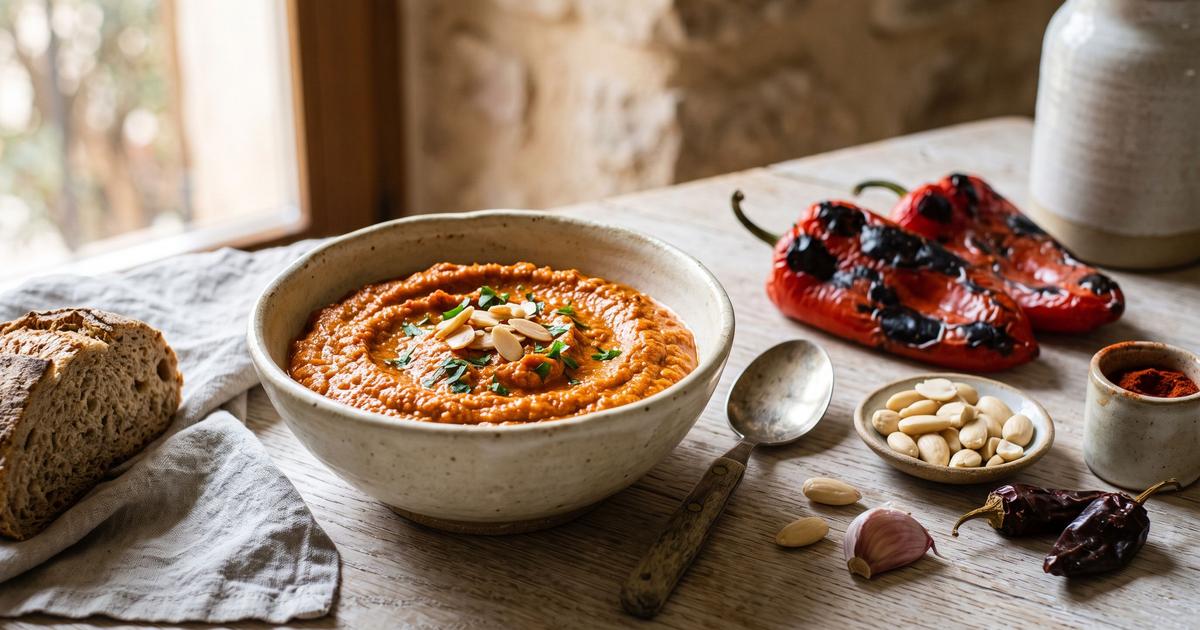
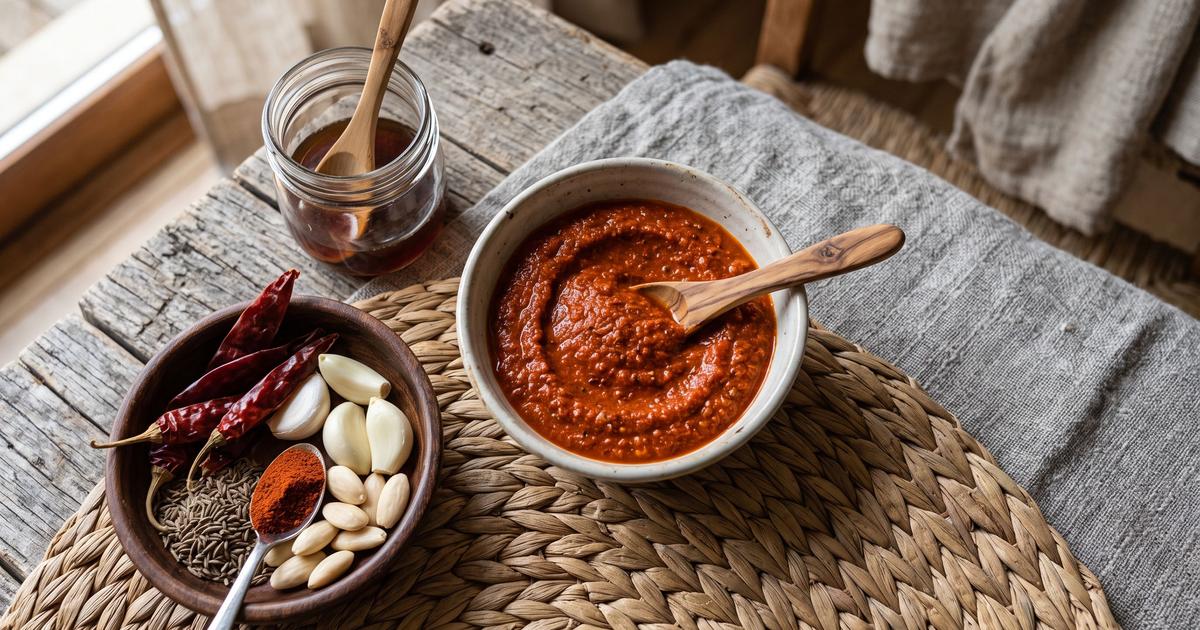
Romesco comes from Tarragona, on the Catalan coast, where it started as a fishermen's sauce built on dried peppers, nuts, and stale bread bound with oil. Strip out the bread and oil and the almonds carry the whole thing on their own, thickening the roasted peppers into something rich enough that nothing is missing. Toast the nuts properly and char the peppers hard: those two steps are the flavor. The sherry vinegar at the end is what keeps it from tasting flat without salt.
Ingredients
- 3 Bell peppers, red, roasted and peeled
- 2 Fresh tomatoes, halved and roasted
- 1/2 cup Almonds, toasted
- 3 cloves Garlic, roasted
- 2 tbsp Sherry vinegar
- 1 tsp Smoked paprika
- 1/4 tsp Red pepper flakes
- 1/4 tsp Black peppercorns, freshly ground
Method
- Char the whole peppers under the broiler, turning, until the skins blacken all over, about 12 minutes. Seal them in a bowl for 10 minutes, then rub off the skins. The char is where the smoke and sweetness come from, so let them go dark.
- Roast the tomato halves and unpeeled garlic cloves in the same oven at 425 F (220 C) until the tomatoes slump and the garlic is soft, about 20 minutes. Squeeze the garlic out of its skin once cool.
- Toast the almonds in a dry pan over medium heat until fragrant and golden inside, about 5 minutes. The nuts are the body of this sauce. They do the work the bread and olive oil do in a taverna version, so do not skip the toasting that wakes them up.
- Blend the peppers, tomatoes, garlic, almonds, sherry vinegar, smoked paprika, red pepper flakes, and black pepper until thick and slightly grainy. Add water a tablespoon at a time only if it will not move, keeping it spoonable, not pourable.
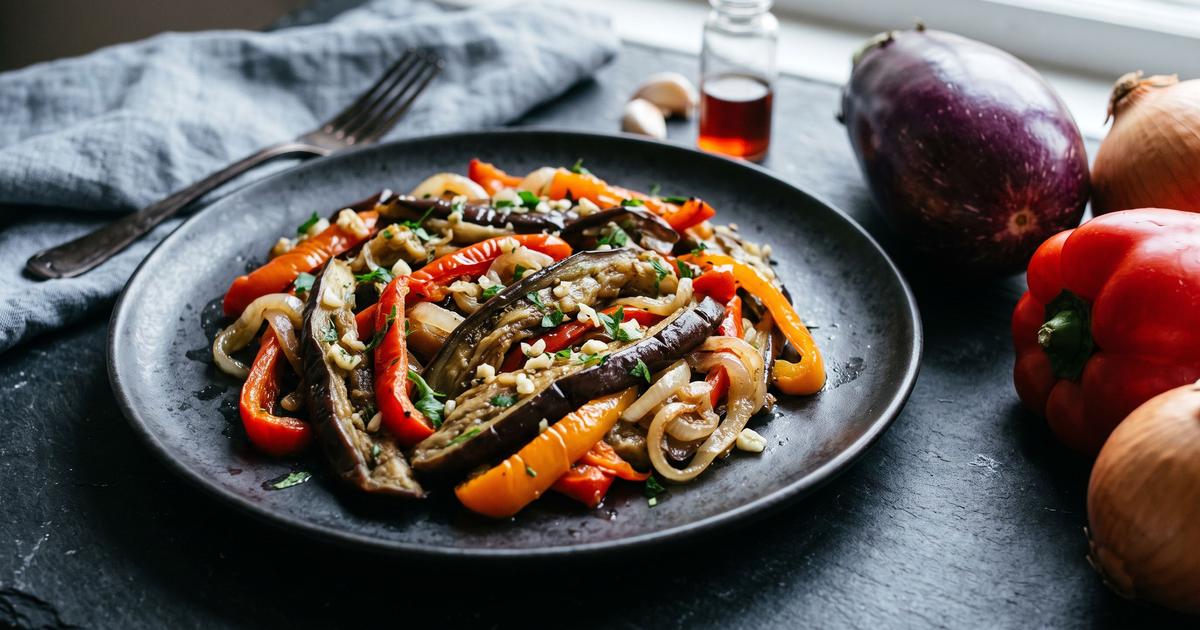
- Let it sit at least 20 minutes before serving so the raw vinegar edge softens into the nuts. It keeps five days in the fridge and is better on day two. Spoon it over roasted vegetables, grilled leeks, or whole-grain toast, or thin it with more water into a dressing.
Nutrition
Estimated per serving: 110 calories, 4 g protein, 3 g fiber, 25 mg sodium. Computed from USDA FoodData Central reference values for the main ingredients. This is an approximation, not a laboratory measurement. How these are computed.
Cost per serving is estimated from US national-average retail prices for cheap staple forms, using BLS dried-bean prices and USDA produce prices. Prices vary by store and season, so treat it as a guide, not a receipt. How this is computed.