Pipirrana, Andalusian Chopped Salad
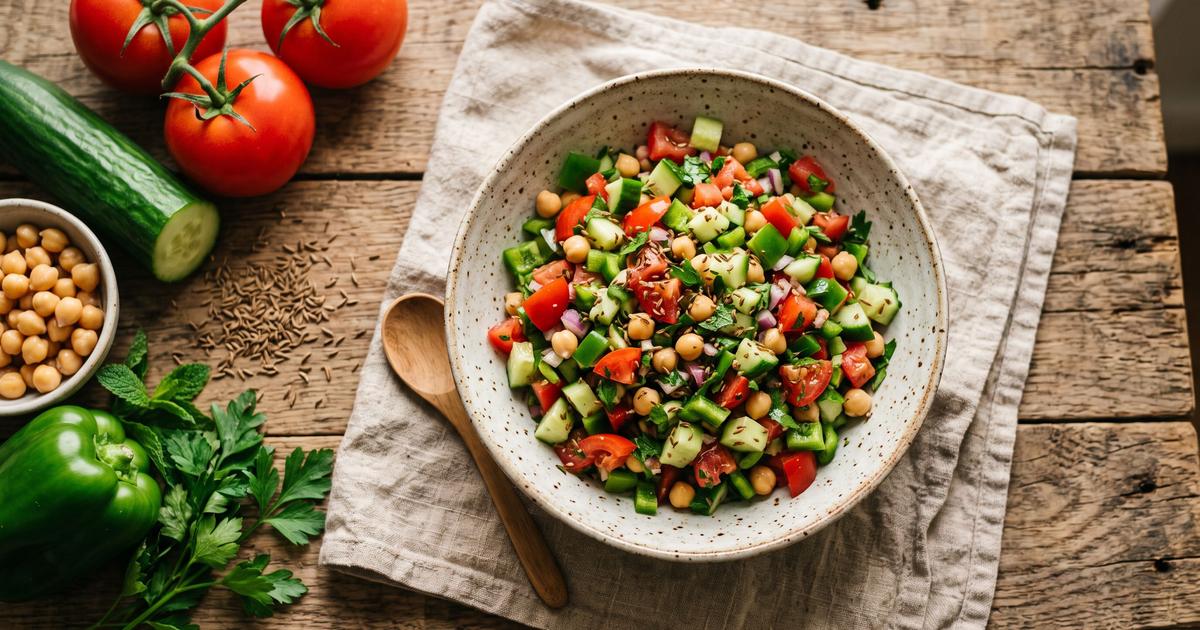
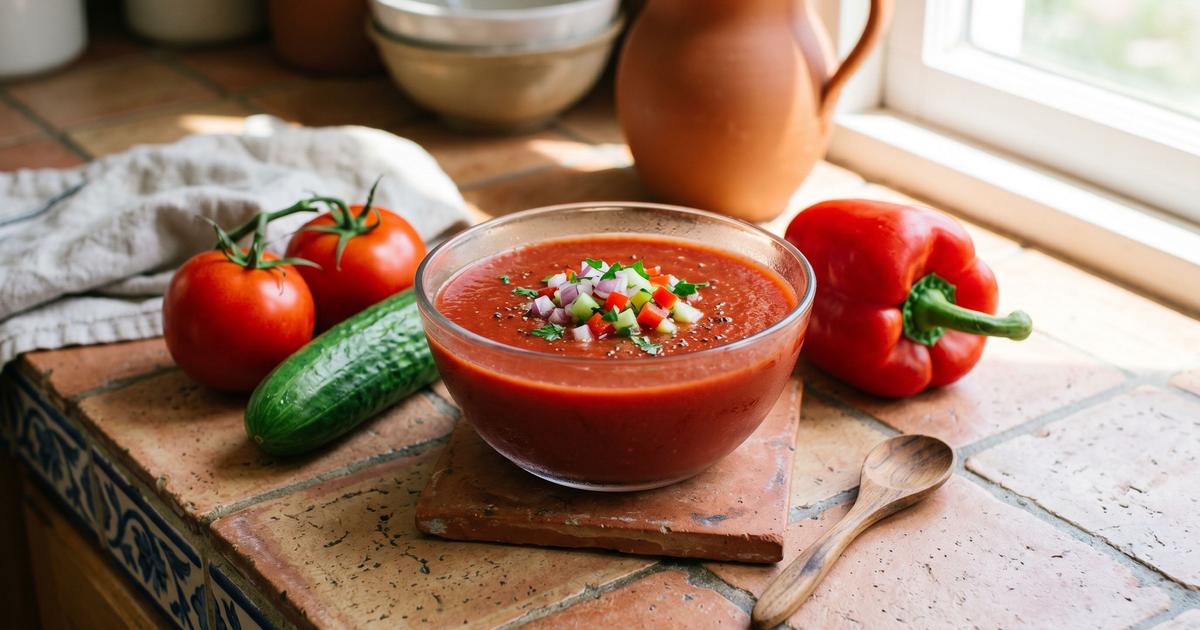
Pipirrana is what Andalusian cooks do with a glut of summer tomatoes: chop everything small, dress it sharp, and let it sit until the vegetables make their own sauce. The traditional version leans on good olive oil, but the salad barely needs it once the sherry vinegar and toasted cumin are carrying the flavor. Chickpeas turn a side dish into lunch and add the fiber and protein that keep you full past mid-afternoon. Use the ripest tomatoes you can find, because in a raw salad there is nowhere for a pale winter tomato to hide. Serve it cold, on its own or alongside anything from the grill.
Ingredients
- 1 lb Fresh tomatoes, cored and finely diced
- 1 Cucumber, peeled, seeded, finely diced
- 1 Bell pepper, green, finely diced
- 1/2 Red onions, finely diced
- 1 clove Garlic, grated
- 1 1/2 cups Chickpeas, cooked, drained and rinsed
- 1 tsp Cumin seed, toasted and ground
- 2 tbsp Sherry vinegar
- 3 tbsp Flat-leaf parsley, chopped
- 1/4 tsp Black peppercorns, ground
Method
- Toast the cumin seed in a dry pan over medium heat until it smells nutty and darkens a shade, about 90 seconds, then grind it. Toasting wakes up the oils in the seed, and ground cumin from a jar cannot match it in a dish this plain.
- Dice the tomato, cucumber, and pepper small and even, roughly a quarter inch (6 mm). Pipirrana is meant to be eaten with a spoon, so the pieces should be close to the same size rather than cut into wedges.
- Grate the garlic and whisk it with the sherry vinegar and ground cumin. Grating rather than mincing lets the raw garlic melt into the dressing, and the acid tames its bite so it does not dominate the salad.
- Fold in the chickpeas and the dressing, then let the bowl sit 10 minutes. The salt would normally pull water from the vegetables; here the vinegar and time do it instead, and that released juice becomes the dressing at the bottom of the bowl.
- Stir through the parsley and black pepper just before serving. It keeps two days covered in the fridge and the flavor deepens overnight, though the cucumber softens, so add it fresh if you make the rest ahead.
Nutrition
Estimated per serving: 160 calories, 8 g protein, 8 g fiber, 90 mg sodium. Computed from USDA FoodData Central reference values for the main ingredients. This is an approximation, not a laboratory measurement. How these are computed.
Cost per serving is estimated from US national-average retail prices for cheap staple forms, using BLS dried-bean prices and USDA produce prices. Prices vary by store and season, so treat it as a guide, not a receipt. How this is computed.