Ensaladilla Rusa, Spanish Potato Salad
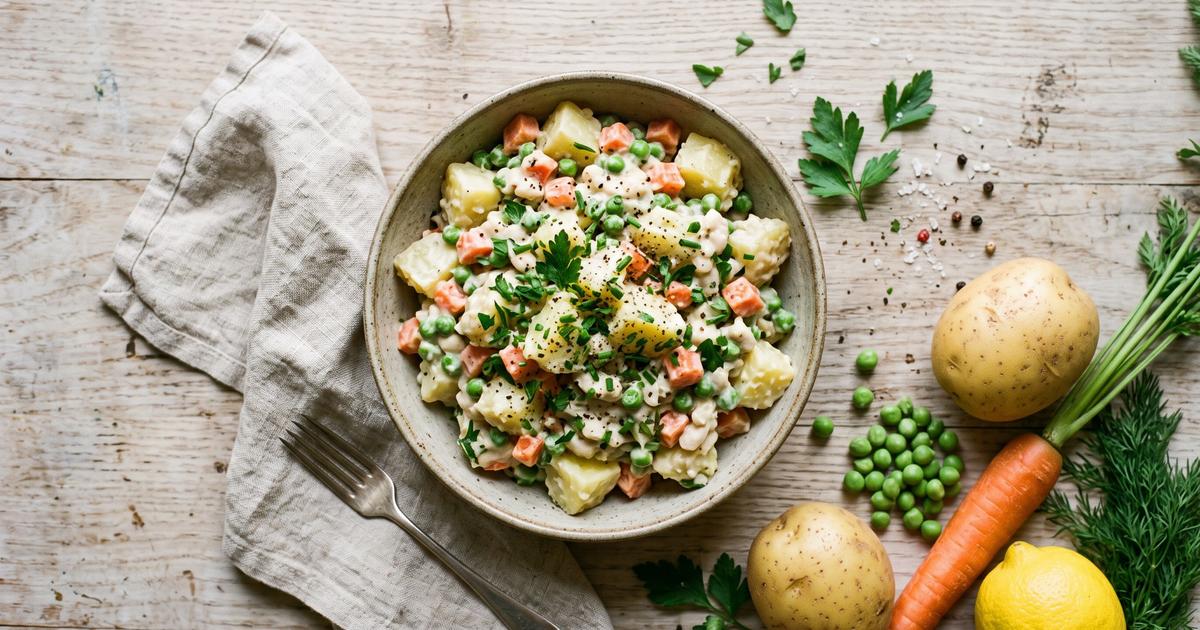
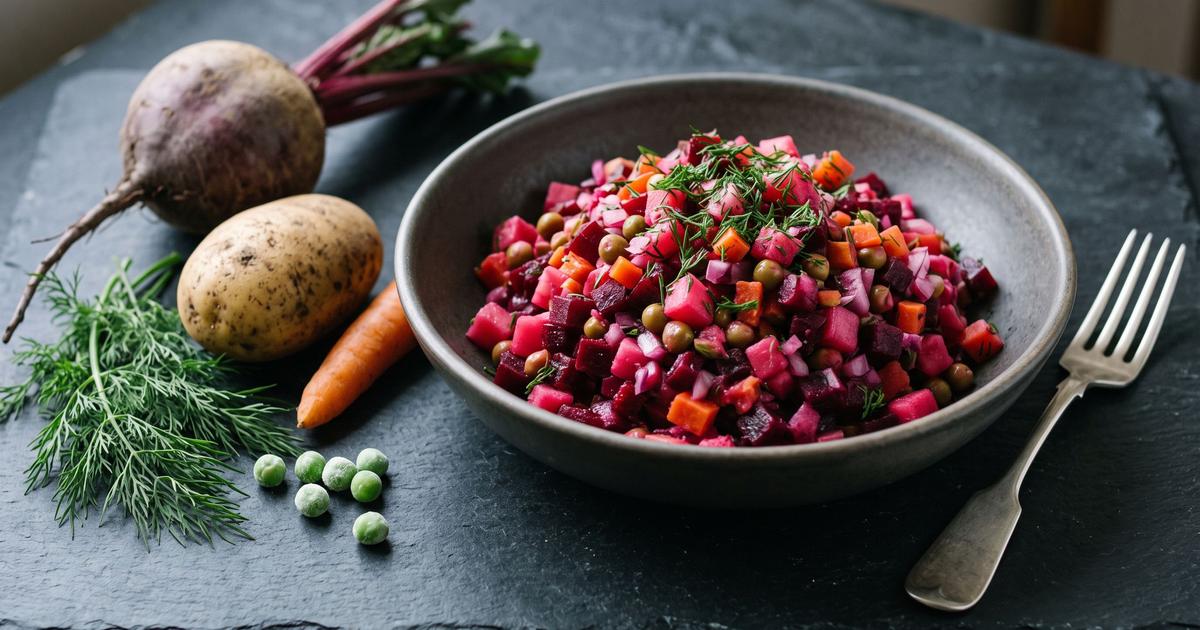
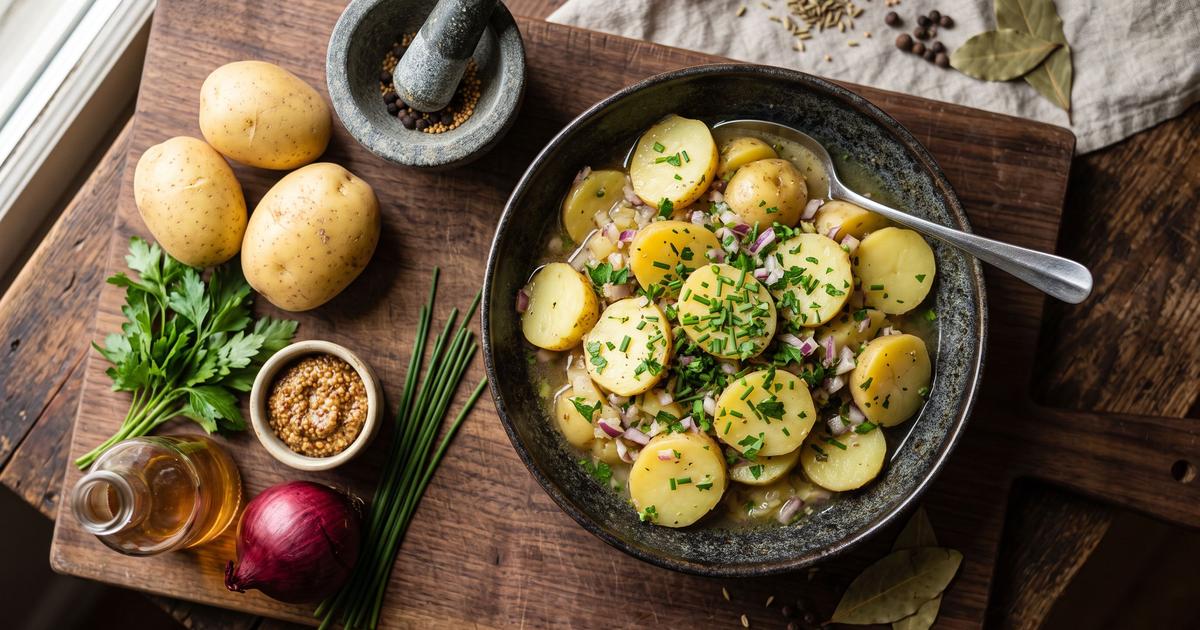
Ensaladilla rusa is the potato salad on every Spanish bar counter, usually bound with so much oil-heavy mayonnaise that it is the least healthy thing in the case. It does not have to be. Boiled potato, carrot, and peas are cheap and filling on their own; the richness here comes from white beans blended smooth into a dressing that is creamy without oil or egg, sharpened with mustard and lemon. It is a salad built for keeping, better after a night in the fridge, and it feeds a table for almost nothing. Cut everything the same size and let the vegetables cool before they meet the dressing.
Ingredients
- 1 lb Potatoes, peeled and diced small
- 2 Carrots, diced
- 1 cup Frozen peas
- 1 cup Blended white beans
- 1 tsp Dijon mustard
- 2 tbsp Lemon juice
- 1/4 Red onions, minced
- 3 tbsp Flat-leaf parsley, chopped
- 1/4 tsp Black peppercorns, ground
Method
- Dice the potatoes and carrots into even half-inch (1 cm) cubes and boil in unsalted water until just tender, about 10 minutes, adding the peas for the last minute. Cooking the vegetables the same size means they finish together, and pulling them while they still hold shape keeps the salad from going to mush.
- Drain well and spread on a tray to cool and dry. Dressing warm, wet potatoes waters down the dressing and makes it slide off, so let them steam dry first.
- Whisk the blended white beans with the dijon, lemon juice, and black pepper into a pourable dressing. The blended beans do the job of the mayonnaise, creamy and rich with no oil and no egg, while the mustard and lemon sharpen it.
- Fold the dressing through the cooled vegetables with the minced onion and parsley. Fold gently, since overmixing crushes the potato and turns the salad pasty.
- Chill at least an hour before serving. Like most potato salads it wants time for the flavors to settle and the dressing to set, which also makes it the one to build the day before a crowd.
Nutrition
Estimated per serving: 165 calories, 6 g protein, 6 g fiber, 70 mg sodium. Computed from USDA FoodData Central reference values for the main ingredients. This is an approximation, not a laboratory measurement. How these are computed.
Cost per serving is estimated from US national-average retail prices for cheap staple forms, using BLS dried-bean prices and USDA produce prices. Prices vary by store and season, so treat it as a guide, not a receipt. How this is computed.