Vinegret, Russian Beet and Potato Salad
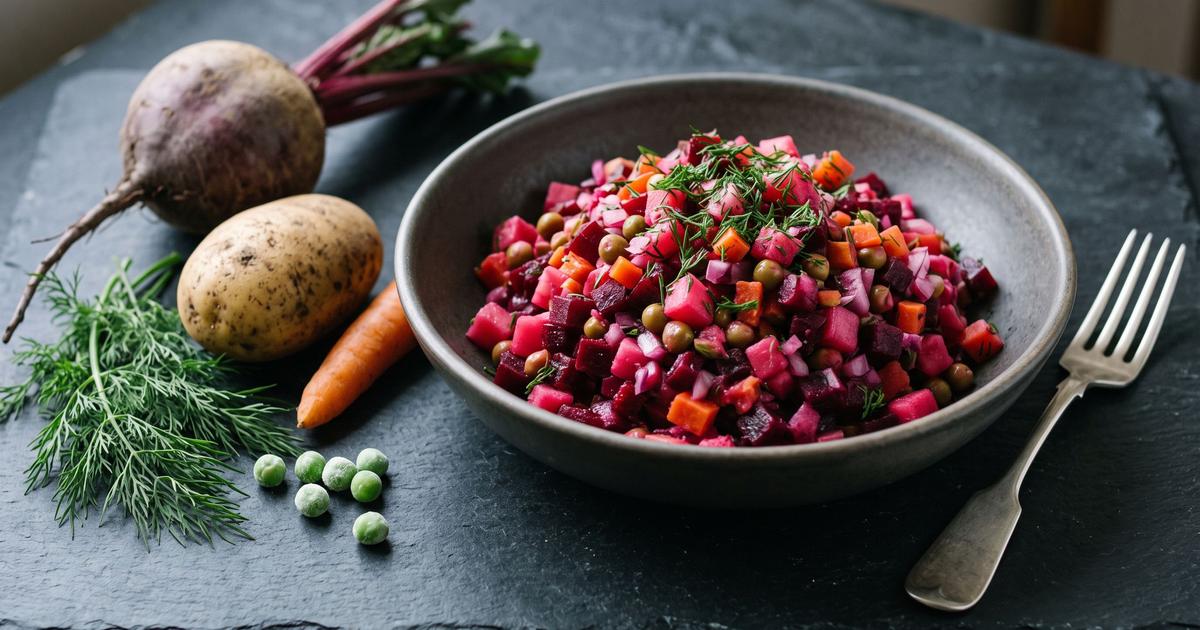
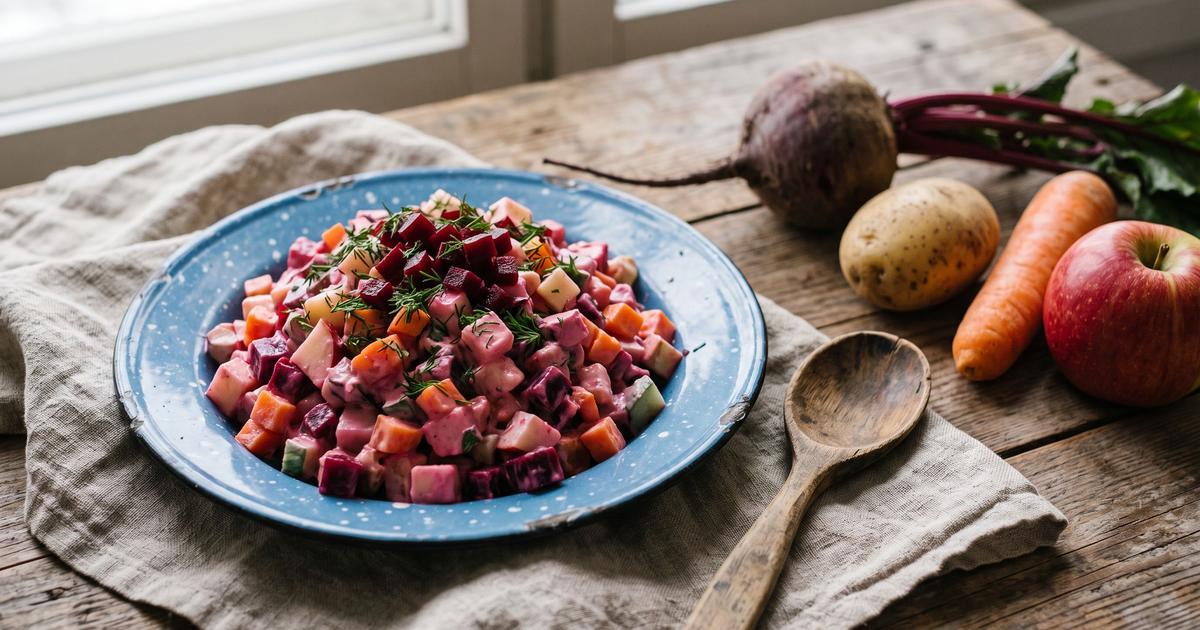
Vinegret is the everyday Russian salad, a bowl of cooked root vegetables cut into small cubes and turned bright magenta by the beets. Unlike the mayonnaise-heavy salads of the same table, it is dressed only with vinegar, which is where its name comes from. The traditional version folds in chopped dill pickles and a little sauerkraut for a briny sour edge; here vinegar-soaked beets and raw onion carry that sourness without the salt those add, so the dish stays sharp and clean. Everything is cheap, it is entirely plant-based to begin with, and it is meant to be made ahead and eaten cold. Cut the vegetables small and dress the beets first if you want to keep the other colors from disappearing.
Ingredients
- 3 wholes Beets, cooked and peeled
- 1/2 lb Potatoes, cooked in the skin, then peeled
- 2 wholes Carrots (cooking), cooked
- 3/4 cup Frozen peas, thawed
- 1/2 whole Red onions, finely diced
- 2 tbsp Apple cider vinegar
- 1 tsp Dijon mustard
- 3 tbsp Dill, chopped
- 1/4 tsp Black peppercorns, freshly ground
Method
- Cut the cooked beets, potatoes, and carrots into small, even cubes, roughly a quarter inch (6 mm). Vinegret is defined by its neat little dice; cutting everything the same size is what lets you get all the vegetables on one fork and is most of the work of the dish.
- Toss the diced beets alone with the vinegar and mustard first, and let them sit 5 minutes. Dressing the beets on their own lets them drink up the acid, and it slows the moment when their color bleeds into everything else and stains the whole bowl solid magenta.
- Add the potatoes, carrots, peas, and onion and fold gently to combine. The soured raw onion stands in for the brine of the pickles and sauerkraut a Russian cook would fold in here, giving the sharp, sour backbone the salad is built on without adding salt.
- Stir in the dill and black pepper, then chill at least 30 minutes before serving. Vinegret is always better cold and rested, the flavors trading around the bowl, which is why it is a standing-in-the-fridge, make-ahead salad. Fold once more before serving, when the color will have gone an even deep pink.
Nutrition
Estimated per serving: 120 calories, 4 g protein, 6 g fiber, 80 mg sodium. Computed from USDA FoodData Central reference values for the main ingredients. This is an approximation, not a laboratory measurement. How these are computed.
Cost per serving is estimated from US national-average retail prices for cheap staple forms, using BLS dried-bean prices and USDA produce prices. Prices vary by store and season, so treat it as a guide, not a receipt. How this is computed.