American Potato Salad
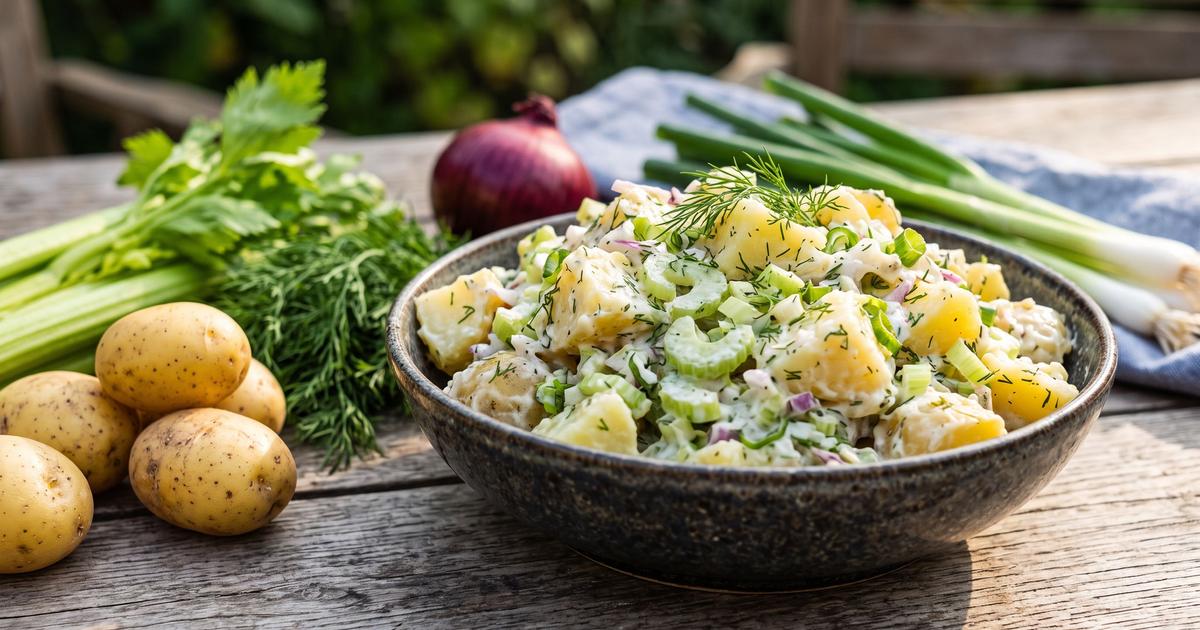
American potato salad is a cookout constant, and the standard build is mostly mayonnaise, which is mostly oil. This one keeps the tang and creaminess and drops the oil entirely: soy yogurt and Dijon whisk into a dressing that clings just as well, and a splash of cider vinegar tossed over the warm potatoes seasons them from within. Waxy potatoes hold their shape instead of turning to mash. Celery, scallion, and diced radish give the crunch, dill gives the herb, and there is no added salt, just the natural sodium in the mustard and yogurt. Make it several hours ahead: like most potato salads, it is better once it has had time to sit and chill.
Ingredients
- 2 lb Potatoes, waxy, cut into 1-inch chunks
- 2 stalks Celery, finely diced
- 1/4 whole Red onions, finely diced
- 3 wholes Scallions, thinly sliced
- 3/4 cup Plain plant yogurt, unsweetened soy-based
- 2 tbsp Dijon mustard
- 2 tbsp Apple cider vinegar
- 3 tbsp Dill, chopped
- 5 wholes Radishes, diced
- 1/2 tsp Black peppercorns, freshly ground
Method
- Put the potato chunks in a pot, cover with cold water, and bring to a boil. Simmer until a knife slides in with no resistance, about 12 minutes, then drain well. Starting them in cold water cooks them evenly from the outside in, so the edges do not blow out before the centers are done.
- While the potatoes are still warm, toss them with the cider vinegar. Warm potatoes drink in the vinegar the way they would drink in oil, seasoning them from the inside and doing the job salt usually does in this salad. Let them cool for 10 minutes.
- Whisk the plant yogurt and Dijon together into the dressing. Soy yogurt brings the tang and body of the mayonnaise and sour cream this normally leans on, and the Dijon emulsifies it smooth with no oil at all.
- Fold the cooled potatoes together with the celery, red onion, scallions, radishes, and dill, then stir through the dressing until everything is coated. The diced radish is here for the sharp crunch a dill pickle would give, without the brine.
- Grind in the black pepper and chill at least an hour before serving. The rest lets the dressing set and the flavors meld, and cold is how this salad is meant to be eaten.
Nutrition
Estimated per serving: 160 calories, 4 g protein, 3 g fiber, 150 mg sodium. Computed from USDA FoodData Central reference values for the main ingredients. This is an approximation, not a laboratory measurement. How these are computed.
Cost per serving is estimated from US national-average retail prices for cheap staple forms, using BLS dried-bean prices and USDA produce prices. Prices vary by store and season, so treat it as a guide, not a receipt. How this is computed.