Waldorf Salad
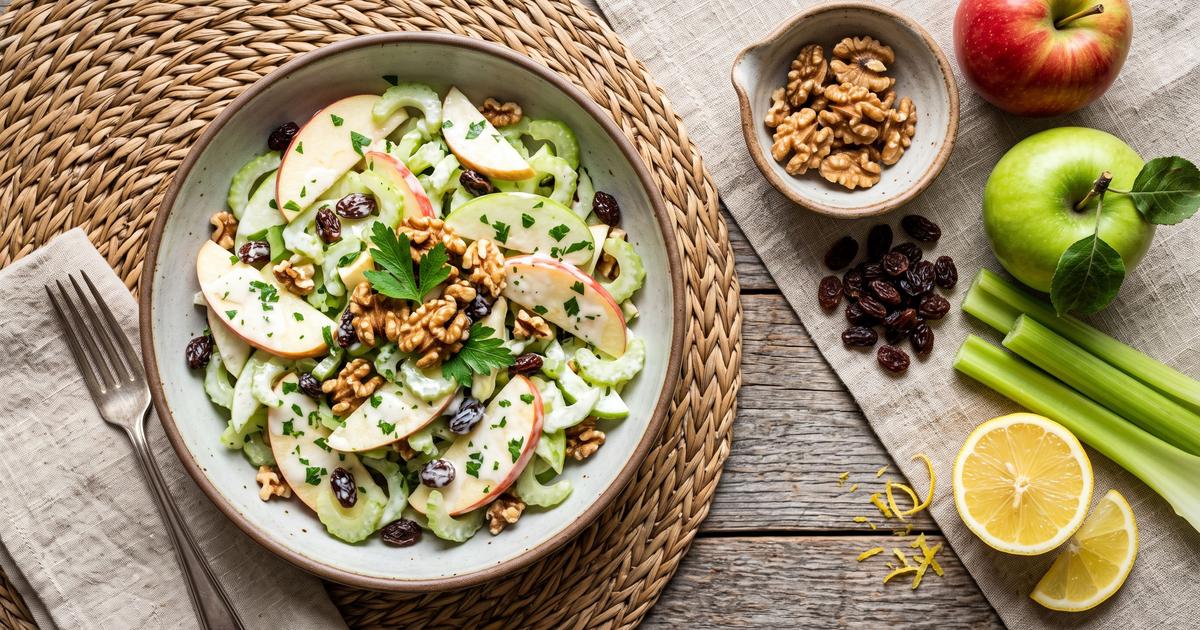
The Waldorf salad was invented at a New York hotel in the 1890s as apple, celery, and mayonnaise, with walnuts and grapes joining later. Stripped back to whole foods it is even better, because the crisp apple and celery were always the real appeal and the heavy dressing only masked them. Here unsweetened plant yogurt sharpened with lemon and enriched with a spoon of tahini gives the same creamy tang without eggs or oil, and raisins bring the sweetness grapes used to, with fiber attached. Toast the walnuts, slice the celery thin, and cut the apple into lemon juice at the last minute so it stays pale and crunchy. It comes together in one bowl, travels well to a potluck, and is best eaten the day it is made.
Ingredients
- 3 wholes Apples, cored, diced
- 3 stalks Celery, sliced thin
- 1/2 cup Walnuts, toasted, chopped
- 1/3 cup Raisins
- 1/2 cup Plain plant yogurt, unsweetened
- 2 tbsp Lemon juice
- 1 tbsp Tahini
- 1/2 tsp Black peppercorns, freshly ground
Method
- Dice the apples last, straight into a bowl with the lemon juice, and toss to coat. The acid keeps the cut apple from browning, and since the apple is the whole point of a Waldorf, you want it staying pale and crisp rather than turning brown and soft.
- Whisk the yogurt, tahini, and pepper into the lemony apple juices at the bottom of the bowl. Tahini stands in for the richness the classic gets from mayonnaise, and whisking it into the acid first loosens it into a pourable dressing instead of a stiff paste.
- Fold in the sliced celery, the toasted walnuts, and the raisins. The original balances soft apple against crunchy celery and nut, so slice the celery thin for snap, and toasting the walnuts first drives off their raw bitterness and deepens them.
- Chill for at least 15 minutes before serving on a leaf of lettuce, the traditional bed. A short rest lets the raisins soften slightly and the flavors marry; much longer and the celery starts to weep, so this is a salad to dress within a few hours of eating.
Nutrition
Estimated per serving: 190 calories, 4 g protein, 4 g fiber, 35 mg sodium. Computed from USDA FoodData Central reference values for the main ingredients. This is an approximation, not a laboratory measurement. How these are computed.
Cost per serving is estimated from US national-average retail prices for cheap staple forms, using BLS dried-bean prices and USDA produce prices. Prices vary by store and season, so treat it as a guide, not a receipt. How this is computed.