Salade Cauchoise, Norman Potato and Apple Salad
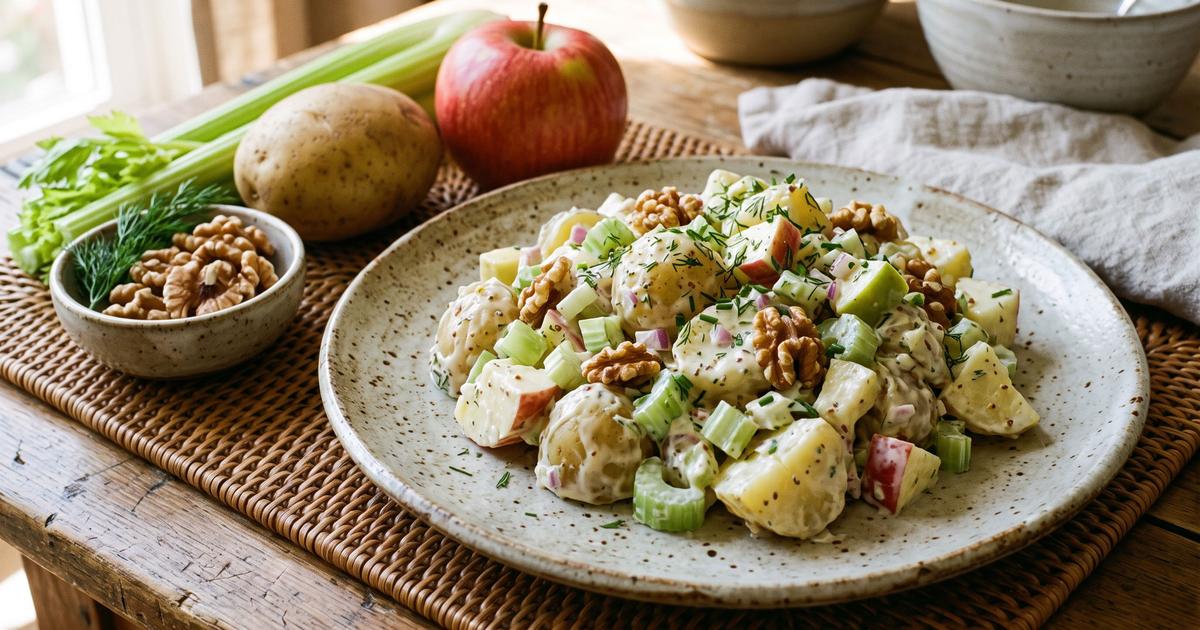
The Pays de Caux, in Normandy, gives this salad its name and its character: potatoes and celery bound in something creamy, with apple and walnuts for the orchard sweetness the region is known for. The classic uses cream and often ham, and neither is missed here. Plain plant yogurt loosened with Dijon makes a dressing that clings with no oil, the vinegar seasons the warm potatoes from the inside, and the apple and toasted walnuts carry crunch and a little sweetness in place of salt. It holds well in the fridge, which makes it a good thing to bring somewhere.
Ingredients
- 1 lb Potatoes, waxy, scrubbed
- 2 ribs Celery, thinly sliced
- 1 whole Apples, cored and diced, skin on
- 1/4 cup Walnuts, toasted and roughly chopped
- 1/2 cup Plain plant yogurt
- 1 tsp Dijon mustard
- 1 tbsp White wine vinegar
- 2 tbsp Chives, snipped
- 1/2 tsp Black peppercorns, freshly ground
Method
- Boil the potatoes whole in their skins until a knife slides in easily, about 18 minutes, then drain and let them cool just enough to handle. Cooking them whole keeps them from waterlogging, and waxy potatoes hold their shape in a salad where floury ones would break down.
- Peel if you like, dice into bite-size pieces, and while they are still warm, toss them with the white wine vinegar. Warm potatoes drink in acid the way cold ones will not, which seasons them all the way through instead of just on the surface.
- Whisk the yogurt and Dijon together into a dressing. The mustard does two jobs: it carries a savory sharpness in place of salt, and it thickens the dressing so it clings without any oil.
- Fold the celery, apple, and walnuts into the cooled potatoes, then coat everything in the dressing. The apple and walnuts are the Norman signature, standing in for the region's cream and cider with sweetness, acid, and crunch.
- Chill for at least an hour so the flavors settle, then finish with the chives and a good grind of black pepper. Taste and add a little more vinegar if it needs waking up.
Nutrition
Estimated per serving: 190 calories, 5 g protein, 4 g fiber, 100 mg sodium. Computed from USDA FoodData Central reference values for the main ingredients. This is an approximation, not a laboratory measurement. How these are computed.
Cost per serving is estimated from US national-average retail prices for cheap staple forms, using BLS dried-bean prices and USDA produce prices. Prices vary by store and season, so treat it as a guide, not a receipt. How this is computed.