Surówka, Polish Carrot and Apple Slaw
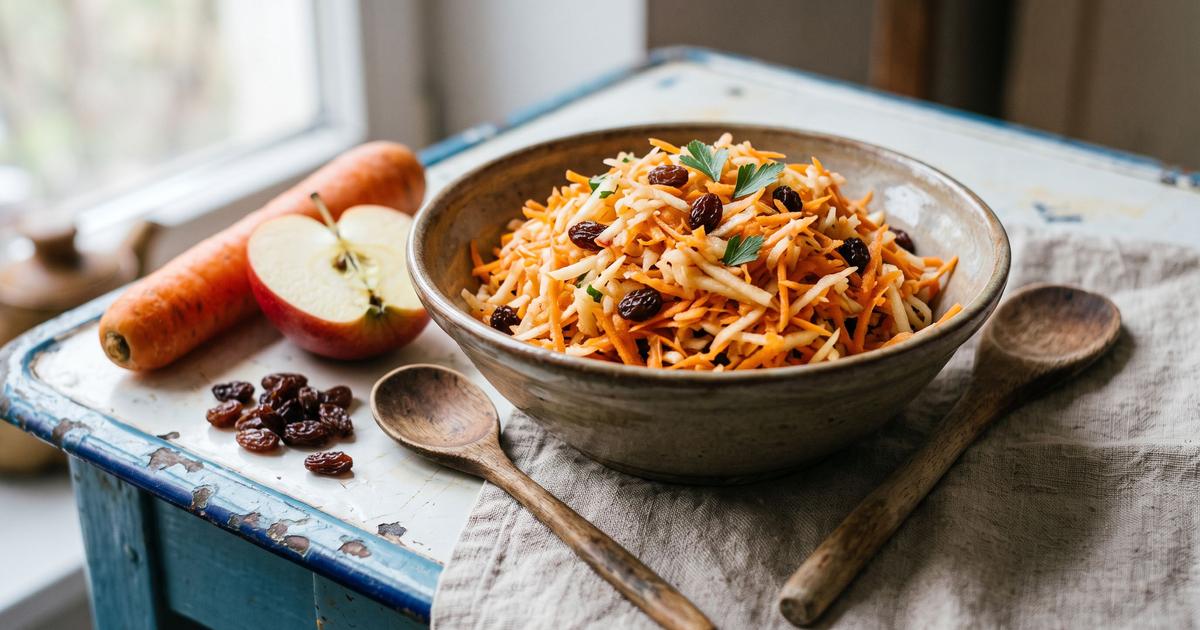
In Poland a surówka is the raw vegetable slaw that lands beside dinner every night, grated fresh and dressed with nothing more than acid. This one is the sweet carrot-and-apple version: both grated coarse, tossed at once with lemon so the apple stays pale, then sharpened with cider vinegar. Raisins plumped in hot water bring the sweetness with fiber attached, dill gives it the herb that says Eastern Europe, and toasted sunflower seeds add crunch. There is no oil and no salt, just two acids doing the seasoning. Let it rest a few minutes so the carrot softens and drinks up the dressing, and add the seeds at the very end.
Ingredients
- 4 wholes Carrots, grated
- 1 whole Apples, grated, peel on
- 2 tbsp Lemon juice, fresh
- 1 tbsp Apple cider vinegar
- 3 tbsp Raisins
- 2 tbsp Dill, chopped
- 2 tbsp Sunflower seeds, toasted
- 1/4 tsp Black peppercorns, freshly ground
Method
- Plump the raisins in hot water for 5 minutes, then drain. Soaking them first makes them soft and juicy so they burst sweet against the crisp carrot, instead of staying hard and chewy.
- Grate the carrots and apple on the coarse side of a box grater and toss them immediately with the lemon juice. The acid hits the apple right away, which keeps it from browning and starts to soften the raw carrot into something you can eat by the forkful.
- Add the cider vinegar, drained raisins, dill, and black pepper and toss well. The two acids together do the seasoning that dressing and salt would in a heavier slaw, keeping this one light and sharp.
- Let it sit 15 minutes before serving. The rest lets the carrot shed a little water and drink up the acid, so the flavors marry and the raw edge softens without the slaw going soggy.
- Toss in the toasted sunflower seeds just before serving. Adding them last keeps them crunchy against the soft slaw, since folded in early they lose their snap to the released juices.
Nutrition
Estimated per serving: 120 calories, 2 g protein, 4 g fiber, 45 mg sodium. Computed from USDA FoodData Central reference values for the main ingredients. This is an approximation, not a laboratory measurement. How these are computed.
Cost per serving is estimated from US national-average retail prices for cheap staple forms, using BLS dried-bean prices and USDA produce prices. Prices vary by store and season, so treat it as a guide, not a receipt. How this is computed.