Mizeria, Polish Cucumber Salad
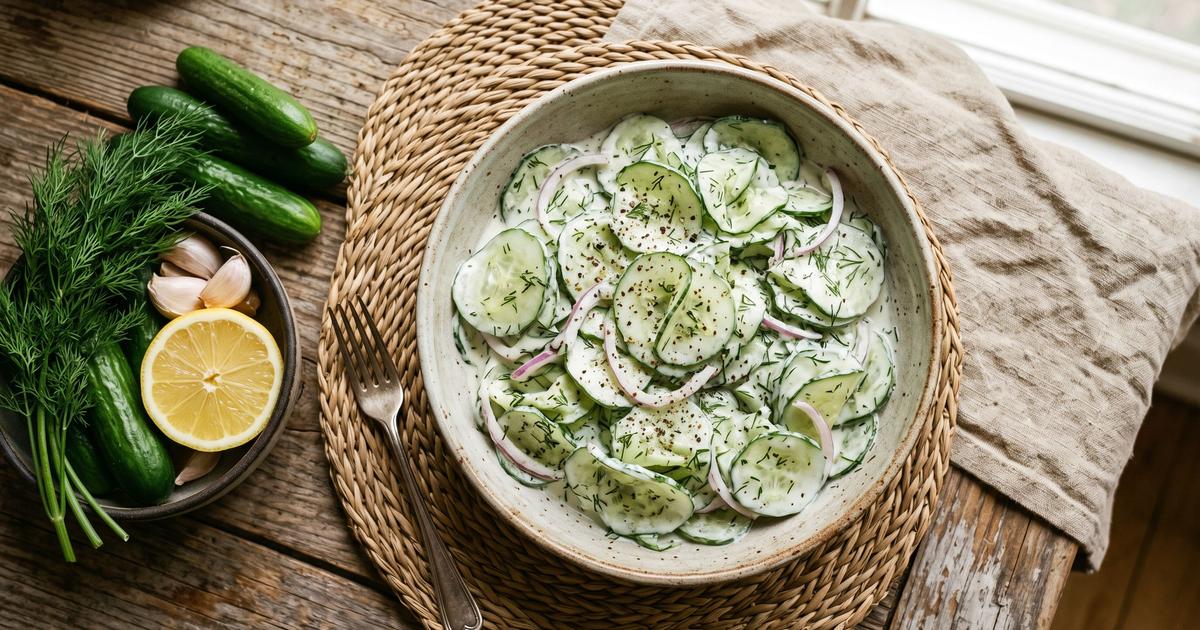
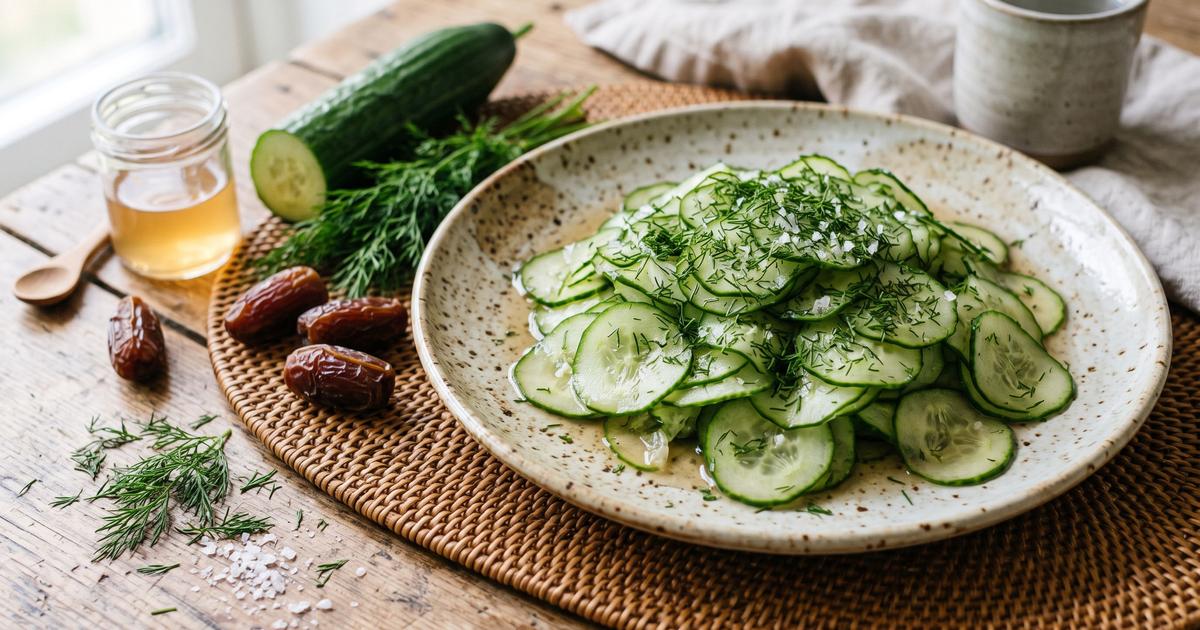
Mizeria is the cucumber salad on every Polish summer table, its name said to nod to the tears of a homesick queen, though it tastes like anything but sorrow. It is simply cucumbers sliced as thin as paper and dressed in something cool and creamy, here unsweetened plant yogurt loosened with vinegar and lemon and loaded with fresh dill. The one technique worth respecting is drawing the water out of the cucumbers first: the classic uses salt, but pressing the thin slices and letting them drain accomplishes the same thing and keeps the dressing thick. Dill and chives are non-negotiable, the herbs that make it read as Polish. Serve it alongside boiled potatoes or anything off a summer grill.
Ingredients
- 2 wholes Cucumber, sliced paper-thin
- 1/2 cup Plain plant yogurt, unsweetened
- 3 tbsp Dill, chopped
- 1 tbsp White wine vinegar
- 1 tbsp Lemon juice
- 2 tbsp Chives, snipped
- 1/2 tsp Black peppercorns, freshly ground
Method
- Slice the cucumbers as thin as you can, ideally on a mandoline. Thinness is the whole texture of mizeria: near-translucent slices go soft and silky in the dressing rather than staying blunt and watery.
- Pile the slices in a colander and press them gently with your hands, then let them drain 10 minutes while you make the dressing. The traditional recipe salts the cucumbers to pull their water; pressing and draining does the same job so the dressing does not turn thin and weepy, without adding salt.
- Whisk the yogurt, vinegar, lemon juice, dill, and black pepper in a serving bowl. Building the dressing separately lets you balance the tang before the cucumbers dilute it; it should taste sharper than you want the finished salad to be.
- Press the cucumbers once more, then fold them and the chives into the dressing. Serve cold. It is best after 20 minutes in the fridge, once the slices have relaxed into the cream, and it keeps a day, though it loosens as it stands.
Nutrition
Estimated per serving: 60 calories, 4 g protein, 2 g fiber, 45 mg sodium. Computed from USDA FoodData Central reference values for the main ingredients. This is an approximation, not a laboratory measurement. How these are computed.
Cost per serving is estimated from US national-average retail prices for cheap staple forms, using BLS dried-bean prices and USDA produce prices. Prices vary by store and season, so treat it as a guide, not a receipt. How this is computed.