Chłodnik, Polish Cold Beet Soup
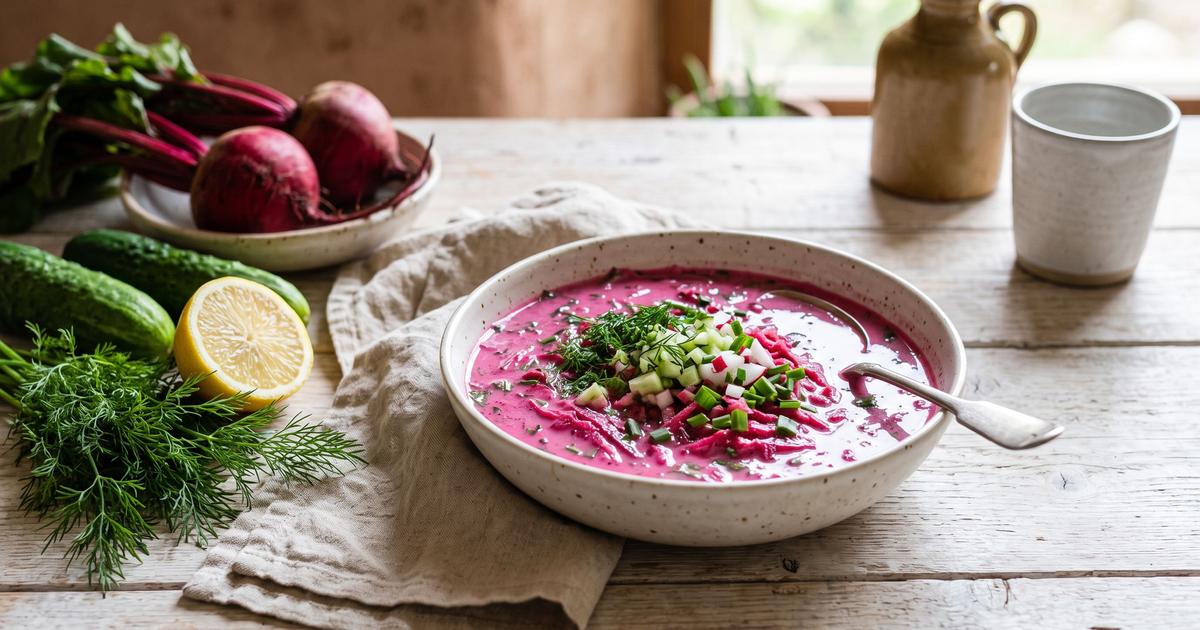
Chłodnik is the cold beet soup that Poland, Lithuania, and Belarus live on through the hottest weeks of summer, a bright pink bowl eaten straight from the fridge. It is traditionally built on soured milk, kefir, or buttermilk and often finished with a chopped hard-boiled egg. This version keeps the cold, sour, dill-heavy character and builds the base from cultured soy yogurt thinned with soy milk, which brings its own tang and enough protein to make the soup a light meal. Everything here is raw or already cooked, so it comes together in one bowl with no stove time beyond boiling the beets. The one rule is the cold: make it the day before, chill it hard, and serve it colder than you think you should.
Ingredients
- 1 lb Beets, cooked, peeled, and grated
- 1 whole Cucumber, grated
- 2 cups Plain plant yogurt
- 1 cup Unsweetened soy milk
- 2 tbsp Lemon juice
- 1/4 cup Dill, chopped
- 3 wholes Scallions, thinly sliced
- 1 clove Garlic, grated
- 4 wholes Radishes, thinly sliced
- 1/2 tsp Black peppercorns, freshly ground
Method
- Grate the cooked beets rather than using them raw. Cooking first turns them sweet and tender and lets them bleed their color through the whole bowl, which is where the soup's electric magenta comes from; raw beet would stay hard and taste of dirt.
- Whisk the plant yogurt, soy milk, and lemon juice together into a smooth, pourable base. The tang is the backbone of chłodnik, standing in for the soured milk or kefir a Polish kitchen would use, so lean into the acid.
- Fold in the beets, cucumber, dill, scallions, and grated garlic, then season with the black pepper. The raw garlic and cucumber keep the soup fresh and sharp against the sweet beet, and the dill is the herb that makes it unmistakably Polish.
- Chill at least 3 hours, ideally overnight. Chłodnik must be served genuinely cold, and the resting time is not optional: it is when the flavors marry, the garlic mellows, and the color deepens to full magenta. Top each bowl with the sliced radishes for crunch.
Nutrition
Estimated per serving: 130 calories, 7 g protein, 4 g fiber, 140 mg sodium. Computed from USDA FoodData Central reference values for the main ingredients. This is an approximation, not a laboratory measurement. How these are computed.
Cost per serving is estimated from US national-average retail prices for cheap staple forms, using BLS dried-bean prices and USDA produce prices. Prices vary by store and season, so treat it as a guide, not a receipt. How this is computed.