Ab-Doogh-Khiar, Persian Cold Yogurt Soup
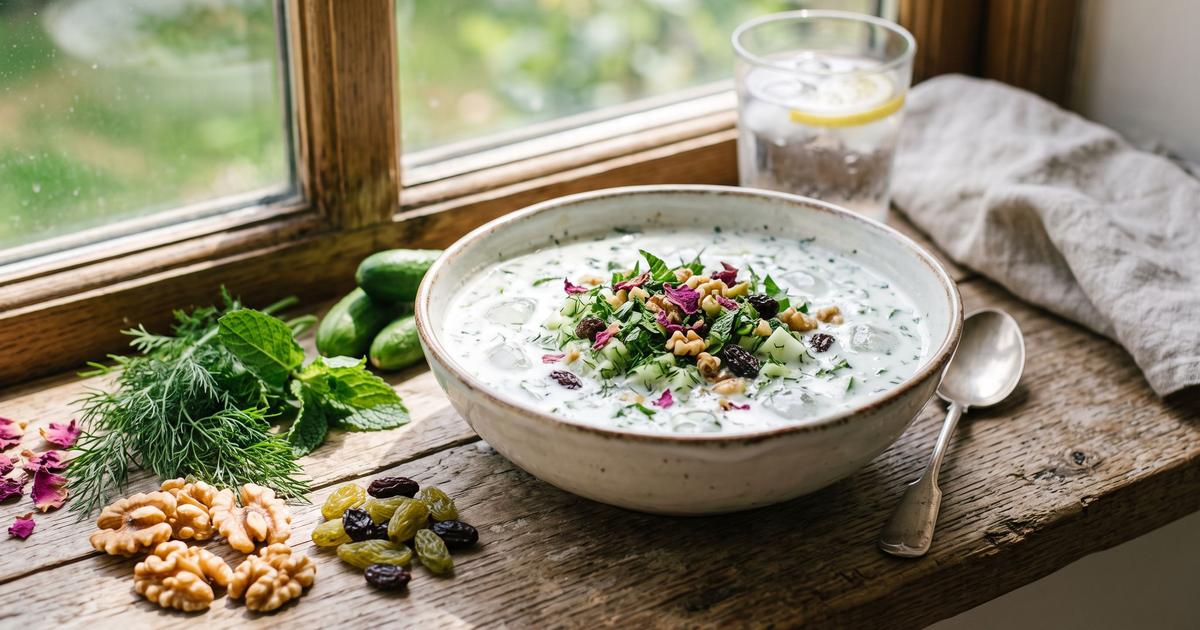
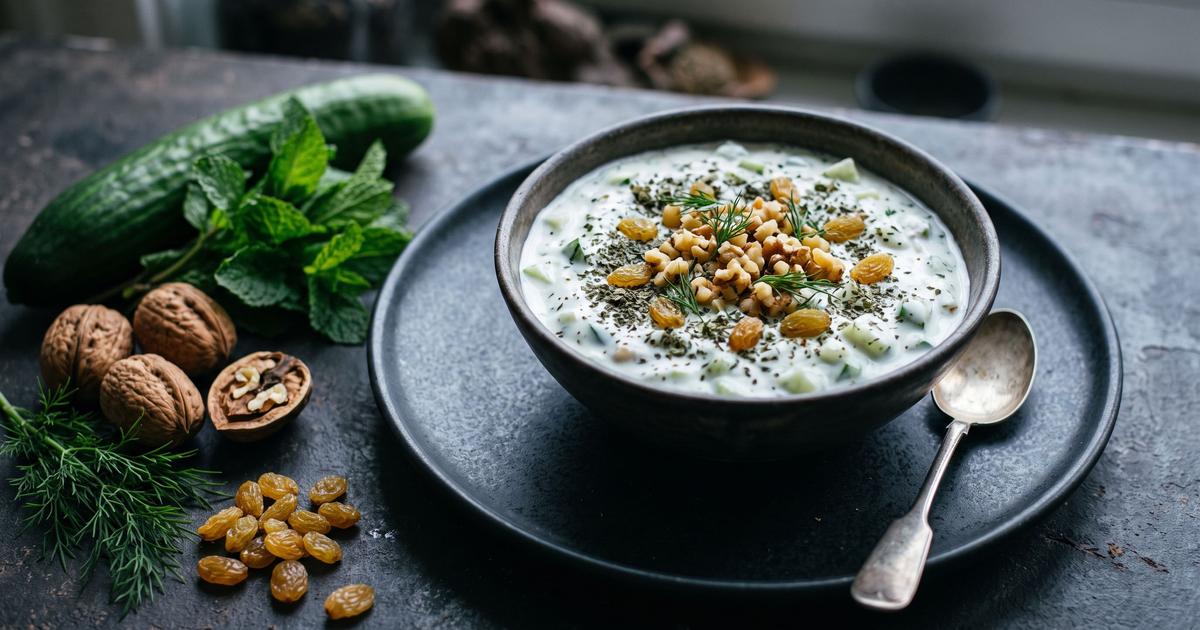
Ab-doogh-khiar is what Iranians eat when it is too hot to cook: a cold yogurt soup from the same family as mast-o-khiar but thinned with iced water into something you ladle into a bowl and eat with a spoon. The distinction matters. Mast-o-khiar is a thick side you scoop; ab-doogh-khiar is a soup you drink, looser, colder, heavier on herbs, and often bulked with torn bread. Soy yogurt gives it enough protein to stand as a light meal. There is no oil and no salt, because the walnuts carry the richness, the raisins carry a thread of sweetness, and the sheer cold carries the rest. Keep everything ice cold from start to finish.
Ingredients
- 2 cups Plain plant yogurt, unsweetened, soy for protein
- 2 wholes Cucumber, about 1 lb (450 g), diced small
- 1/3 cup Walnuts, toasted and coarsely chopped
- 3 tbsp Raisins, soaked in warm water 10 minutes, drained
- 3 tbsp Dill, chopped
- 3 tbsp Mint, chopped
- 3 wholes Scallions, thinly sliced
- 1 tsp Dried mint
Method
- Whisk the yogurt with 1.5 to 2 cups (360 to 480 ml) of ice-cold water until it pours like heavy cream. This is the step that makes it a soup and not a dip: doogh means thinned yogurt, and the dish is meant to be ladled and half drunk, not scooped.
- Stir in the diced cucumber, drained raisins, and most of the walnuts. Hold back a little walnut for the top, since it goes soft once it sits in the liquid and you want some crunch at the table.
- Fold in the dill, fresh mint, and scallions. Persians would add a handful of whatever tender herbs are around, so treat the quantities as a floor, not a ceiling; the herbs, not salt, are what make it taste of something.
- Crush the dried mint over the top between your fingers. Dried and fresh mint do different jobs, one deep and one bright, and using both is what gives the bowl its length.
- Chill hard, at least an hour, or drop in ice cubes to serve. It should be shockingly cold; served warm it turns flat, and the cold is doing the work salt would in a hot soup.
- Ladle into bowls and finish with the reserved walnuts. Torn pieces of stale whole-grain bread are the classic addition if you have them, softened right in the bowl.
Nutrition
Estimated per serving: 150 calories, 7 g protein, 3 g fiber, 60 mg sodium. Computed from USDA FoodData Central reference values for the main ingredients. This is an approximation, not a laboratory measurement. How these are computed.
Cost per serving is estimated from US national-average retail prices for cheap staple forms, using BLS dried-bean prices and USDA produce prices. Prices vary by store and season, so treat it as a guide, not a receipt. How this is computed.