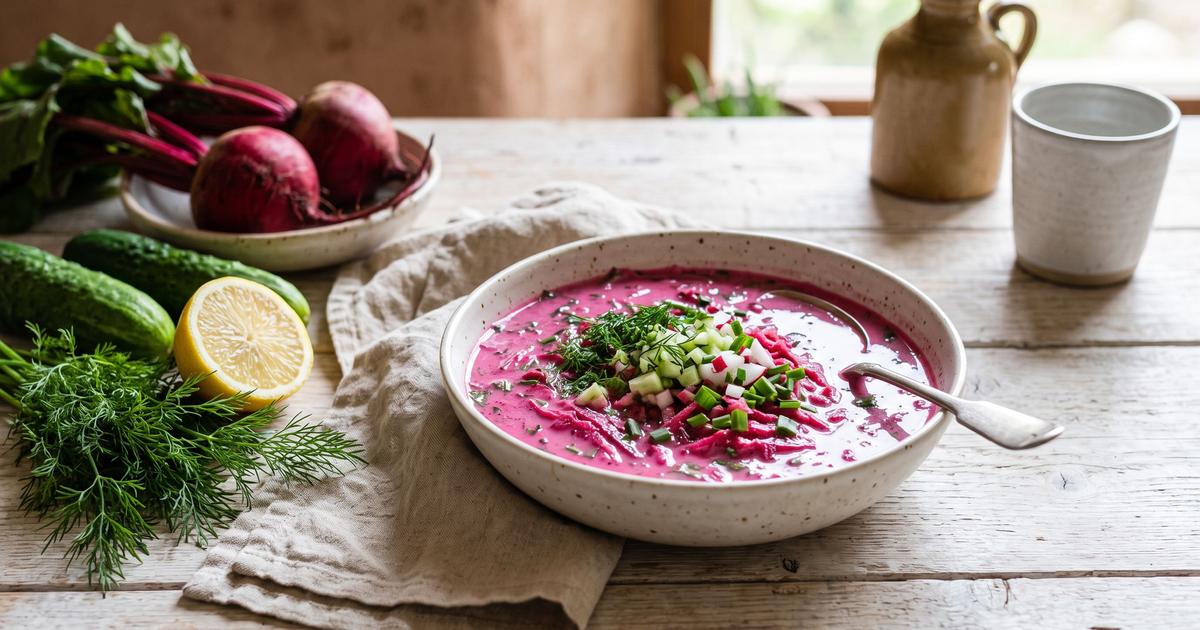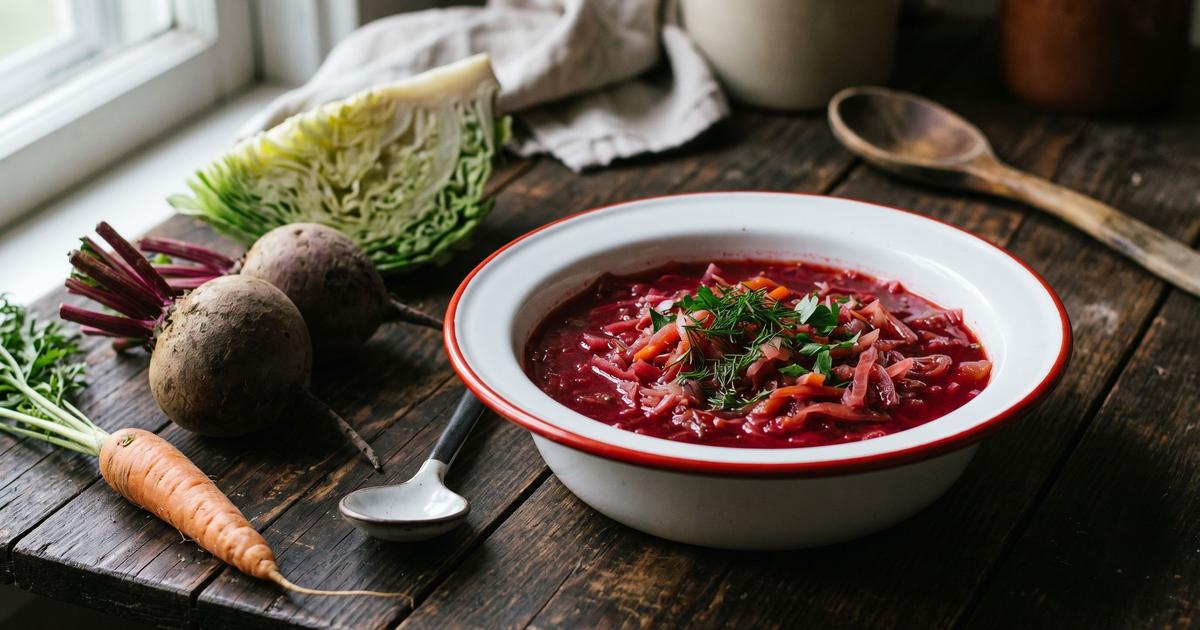
Tarator, Bulgarian Cold Cucumber and Walnut Soup

Tarator is how Bulgaria eats through a heat wave, a cold, garlicky cucumber and yogurt soup that is closer to a drinkable salad than a stew. It is naturally built on whole foods: yogurt for tang and protein, cucumber for its cooling water, dill and garlic for punch, and walnuts for richness and crunch. Using a soy-based plant yogurt keeps the protein comparable to the dairy original, and thinning it with a little unsweetened soy milk gives the classic pourable body. There is no cooking beyond toasting the nuts. Make it ahead and keep it cold; the flavors settle and sharpen in the fridge, and it is only good when eaten chilled.
Ingredients
- 1 1/2 lb Cucumber, diced small or coarsely grated
- 2 cups Plain plant yogurt
- 1/3 cup Walnuts, chopped
- 1 clove Garlic, grated to a paste
- 3 tbsp Dill, chopped
- 1 tbsp White wine vinegar
- 1/2 cup Unsweetened soy milk, cold
- 1/4 tsp Black peppercorns, freshly ground
Method
- Toast the chopped walnuts in a dry pan over medium heat until fragrant, about 3 minutes, then let them cool. Toasting deepens their flavor and firms them so they stay crunchy in the cold soup instead of turning soft.
- Whisk the yogurt, cold soy milk, garlic paste, and vinegar together in a bowl until smooth and pourable. Thinning the yogurt with soy milk gives it a drinkable, soup-like body while keeping the protein up; grating the garlic to a paste spreads its bite evenly through the bowl.
- Stir in the cucumber, dill, most of the walnuts, and the black pepper. Cucumber is almost all water, so it loosens the soup further as it sits and gives it its cool, clean backbone; the dill and garlic are what make it Bulgarian rather than just cucumber and yogurt.
- Chill for at least 30 minutes, then taste and thin with a little cold water if you like it looser. Serve cold, scattered with the reserved walnuts. It is meant to be eaten straight from the fridge; the vinegar and garlic stand in for salt and read sharpest when the bowl is truly cold.
Nutrition
Estimated per serving: 130 calories, 5 g protein, 2 g fiber, 90 mg sodium. Computed from USDA FoodData Central reference values for the main ingredients. This is an approximation, not a laboratory measurement. How these are computed.
Cost per serving is estimated from US national-average retail prices for cheap staple forms, using BLS dried-bean prices and USDA produce prices. Prices vary by store and season, so treat it as a guide, not a receipt. How this is computed.