Nordic Cucumber Salad (Pressgurka)
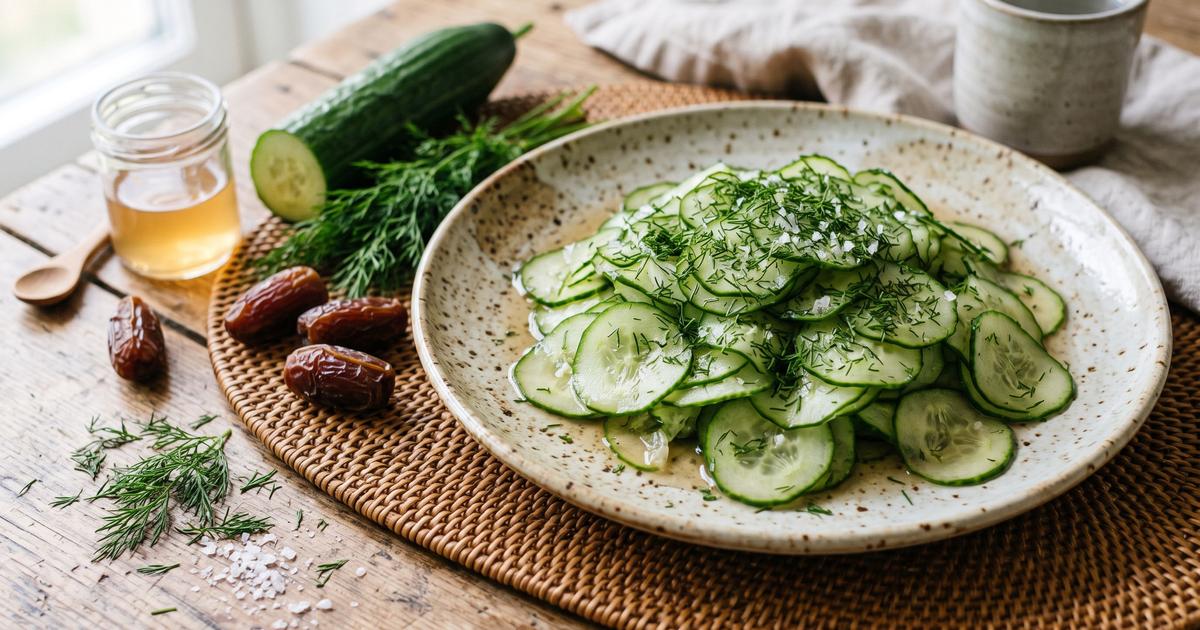
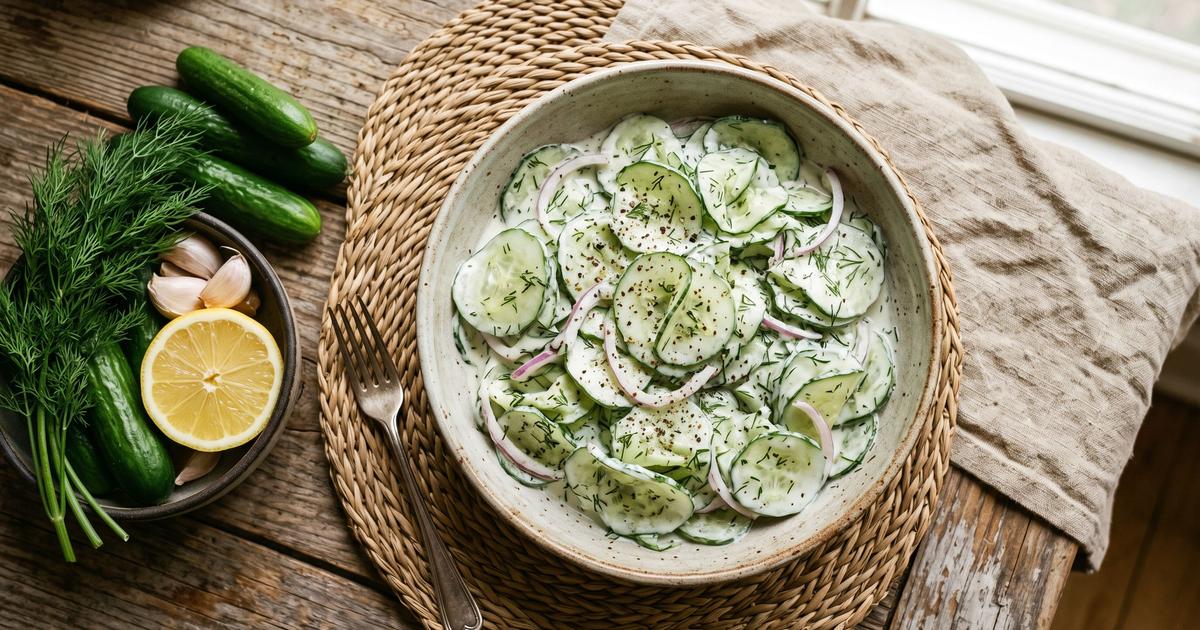
Pressgurka is the cool, sharp counterpoint on a Swedish plate, the thing set beside anything rich or roasted. The name means pressed cucumber, and the pressing is the method: paper-thin slices are weighted under a sweet-sour brine until they wilt, give up their water, and drink the vinegar back in. The usual recipe uses salt to draw the moisture and sugar to balance the acid; here the weight does the drawing on its own, and blended dates round out the vinegar in place of the sugar. What is left is bright, translucent, and faintly sweet, with dill folded through at the very end. It is a fifteen-minute job plus a rest, and it belongs next to almost anything.
Ingredients
- 2 wholes Cucumber
- 1/3 cup White wine vinegar
- 3 wholes Deglet noor dates, pitted
- 3 tbsp Dill, chopped
- 1/2 tsp Black peppercorns, freshly ground
Method
- Slice the cucumbers as thin as you can, ideally on a mandoline. Thinness is the point of pressgurka: wafer slices collapse and turn translucent under the brine, where thick ones stay crunchy and watery and never take on the sweet-sour flavor.
- Blend the dates with the vinegar and 2 tablespoons (30 ml) water into a smooth, sweet-sour brine. Traditional pressgurka is sweetened with a heavy hand of sugar to balance the vinegar; blended dates do the same job, rounding the sharp vinegar into something mellow while keeping their fiber.
- Toss the cucumber slices with the brine and black pepper in a bowl, then set a plate directly on top with a weight, a can or two, on that. The pressing is what gives the dish its name: the weight forces water out of the cucumbers and pulls the brine in, so they wilt and season at once with no salt needed to draw the moisture.
- Press 30 minutes at room temperature, then drain off most of the liquid that has gathered. Fold in the dill just before serving. The salad keeps three days in the fridge and the flavor only deepens, though the cucumbers soften further each day.
Nutrition
Estimated per serving: 45 calories, 1 g protein, 1 g fiber, 5 mg sodium. Computed from USDA FoodData Central reference values for the main ingredients. This is an approximation, not a laboratory measurement. How these are computed.
Cost per serving is estimated from US national-average retail prices for cheap staple forms, using BLS dried-bean prices and USDA produce prices. Prices vary by store and season, so treat it as a guide, not a receipt. How this is computed.