Rödkålssallad, Swedish Raw Red Cabbage and Orange Salad
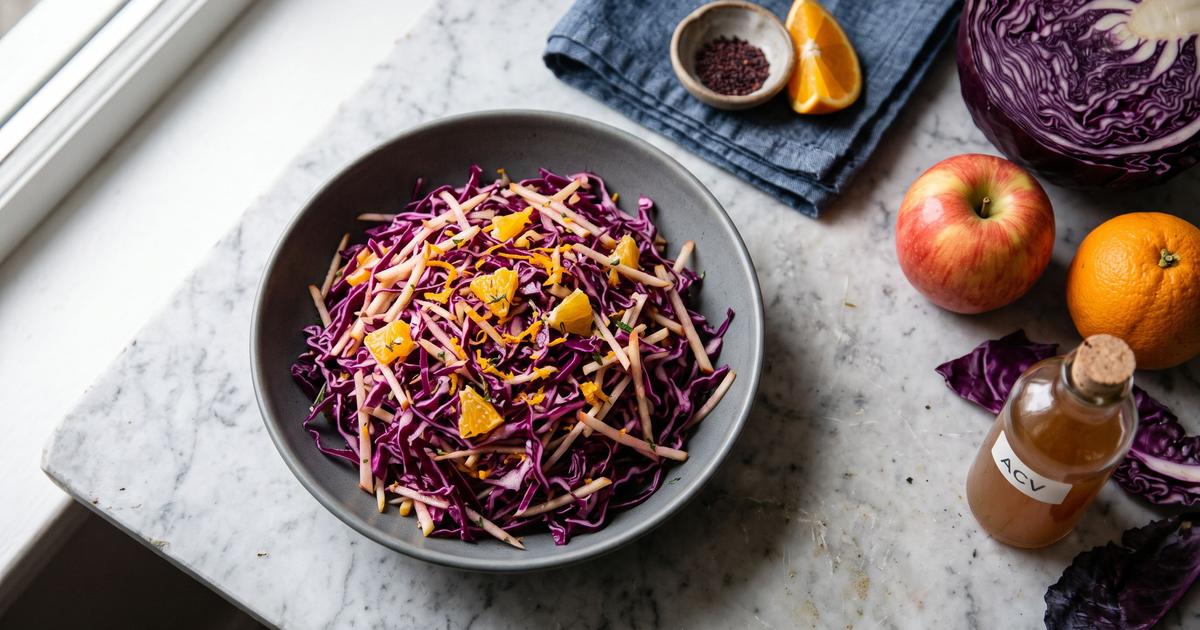
Rödkålssallad is the raw counterpart to the braised red cabbage that anchors a Swedish Christmas table, a bright winter slaw of finely shredded cabbage worked with apple, orange, and vinegar. Where the braise is soft and dark, this stays crunchy and sharp, made in minutes from the cheapest cabbage in the store. The one technique that matters is the kneading: raw red cabbage is stubborn, so work it hard with the vinegar until it weeps and softens, which does the job salt usually does. Orange zest and fresh segments carry the flavor north, grated apple brings the faint sweetness the classic gets from sugar, and toasted caraway and walnuts finish it. It keeps for two days and only improves, so make it ahead and add the nuts at the last moment.
Ingredients
- 1/2 small head red cabbage, cored, shredded paper-thin
- 1 whole Apples, grated
- 2 wholes Oranges
- 3 tbsp White wine vinegar
- 1/2 tsp Caraway, toasted
- 1/3 cup Walnuts, toasted, chopped
- 1/2 tsp Black peppercorns, freshly ground
Method
- Shred the red cabbage as fine as you can and put it in a big bowl with the vinegar. Knead it hard with your hands for a couple of minutes until it darkens, softens, and gives up some liquid. Raw red cabbage is tough and squeaky; kneading with acid collapses the cell walls the way salt would, so it turns tender and glossy with none added.
- Zest one orange over the bowl, then peel both and cut the segments free, working over the cabbage so the juice falls in. The acid keeps doing its work, and the citrus is what turns a plain slaw into something Scandinavian and bright against the deep winter cabbage.
- Fold in the grated apple and the toasted caraway. The apple brings a mild sweetness with fiber attached, standing in for the spoon of sugar a traditional rödkålssallad often gets, and the caraway ties it to the northern table.
- Let it sit at least 20 minutes, or up to two days cold, then fold in the toasted walnuts and pepper just before serving. Time lets the cabbage relax fully into the dressing; the walnuts go in last so they stay crisp rather than turning soft in the juice.
Nutrition
Estimated per serving: 100 calories, 2 g protein, 4 g fiber, 25 mg sodium. Computed from USDA FoodData Central reference values for the main ingredients. This is an approximation, not a laboratory measurement. How these are computed.
Cost per serving is estimated from US national-average retail prices for cheap staple forms, using BLS dried-bean prices and USDA produce prices. Prices vary by store and season, so treat it as a guide, not a receipt. How this is computed.