Rosolli, Finnish Beetroot Salad
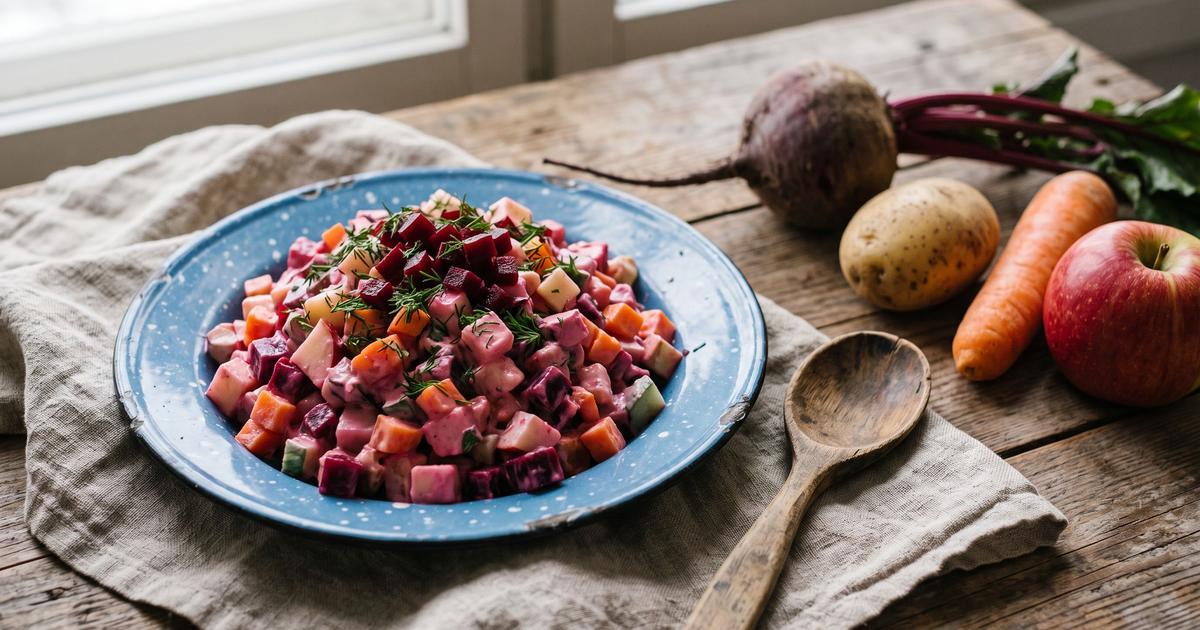
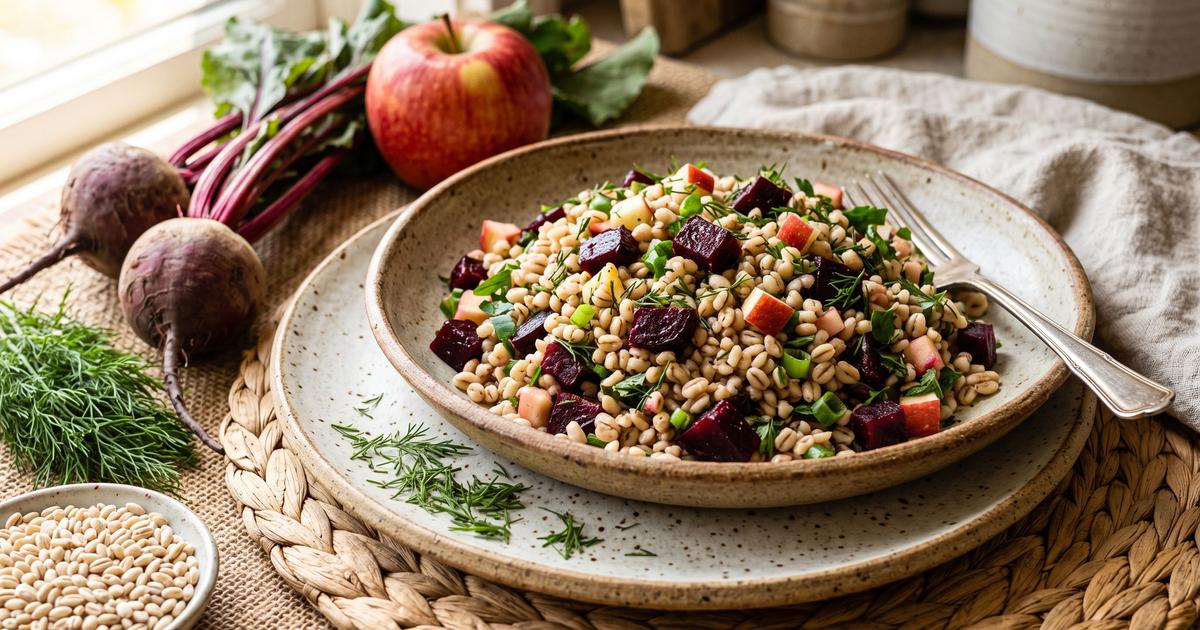
Rosolli is the beetroot salad that anchors the Finnish Christmas table, a calm mix of diced root vegetables brightened with apple and a little tang, always served with a beet-pink dill cream spooned over the top. It is winter food built from what keeps in a cold cellar: beets, potatoes, carrots, an apple, all cheap and all storing for months. The care is in the handling, not the ingredients. Boil the roots separately and cool them before you cut so the salad stays distinct cubes rather than pink mush, and keep the cream on the side until the last moment. Here plant yogurt tinted with a spoonful of beet water makes the classic rosy dressing without dairy. Make it a day ahead.
Ingredients
- 3 mediums Beets
- 2 mediums Potatoes
- 2 wholes Carrots
- 1 whole Apples, diced
- 1/2 whole Cucumber, diced
- 1/4 whole Red onions, finely minced
- 2 tbsp White wine vinegar
- 1/2 cup Plain plant yogurt, unsweetened
- 3 tbsp Dill, chopped
- 1/2 tsp Black peppercorns, freshly ground
Method
- Boil the beets, potatoes, and carrots in separate pots until each is just tender, then cool them fully before peeling and dicing into even cubes. Cooking them apart keeps the beet from bleeding its color into the paler roots, and dicing only after they cool keeps the cubes sharp-edged instead of mashing.
- Toss the cooled roots with the diced apple, cucumber, minced onion, and the vinegar. The vinegar stands in for the brine of the pickled cucumber the classic uses, macerating the raw onion and seasoning the roots as they sit.
- Stir a teaspoon of the reserved beet cooking water into the yogurt until it turns pale pink, then fold in the dill and black pepper. The rosy cream is the signature of rosolli; keep it separate from the salad until serving so the whole bowl does not turn a uniform beet red.
- Chill the salad and the dressing separately for at least an hour. The flavors settle and the vinegar softens the roots, which is why rosolli is always made ahead. Spoon the pink cream over just before it goes to the table.
Nutrition
Estimated per serving: 110 calories, 3 g protein, 4 g fiber, 60 mg sodium. Computed from USDA FoodData Central reference values for the main ingredients. This is an approximation, not a laboratory measurement. How these are computed.
Cost per serving is estimated from US national-average retail prices for cheap staple forms, using BLS dried-bean prices and USDA produce prices. Prices vary by store and season, so treat it as a guide, not a receipt. How this is computed.